The War Built the Border: Sudan’s Partition Before the Ceasefire
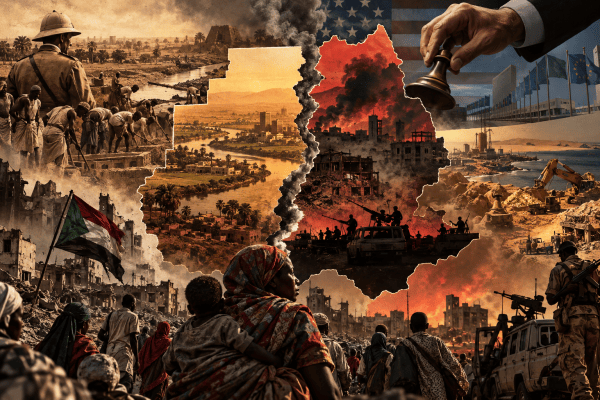
The War Built the Border: Sudan’s Partition Before the Ceasefire This essay argues that Sudan’s threatened partition didn’t begin with Washington’s latest ceasefire proposal. It traces the crisis through British colonial extraction, unequal development, Western creditor power, military accumulation, and the unfinished struggle opened by the December Revolution. As SAF and RSF turned on each other, war hardened front lines into rival economies, institutions, and systems of rule. The ceasefire therefore confronts a division already being built rather than creating it from nothing. Beneath the armies and foreign diplomacy, Sudanese civilian networks continue defending another basis for sovereignty rooted in the people who keep the country alive.
From Alliance to Containment: How Anglo-American Power Engineered the Cold War

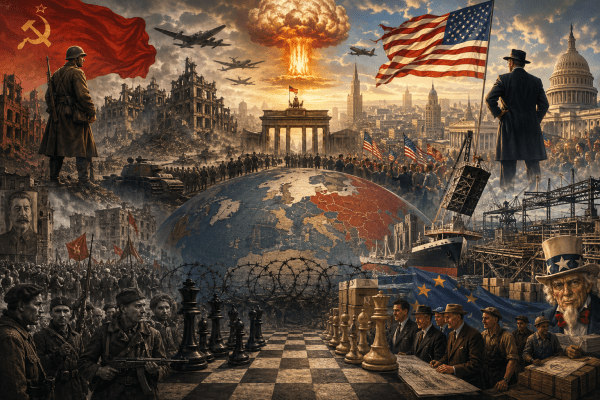
The essay provocatively dismantles the myth that the Cold War was merely a reaction to "Soviet aggression." Instead, it reveals it as America's calculated strategy to reinforce a capitalist world order post-World War II, driven by anxieties over rising leftist movements and anti-colonial uprisings. It highlights how the U.S. initiated a campaign of political warfare and economic reconstruction through the Marshall Plan, effectively shaping Europe and other regions under its imperial influence. To Washington, the real danger was not communism but the threat of genuine independence that challenged capitalist dominance. The Cold War was less about ideological battles and more about inter-imperialist struggles to determine global economic control.

Website Powered by WordPress.com.

Up ↑