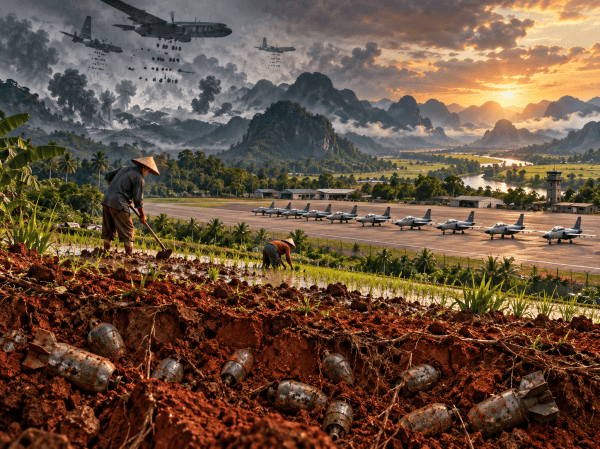
Eight small military jets at a joint Chinese-Lao training facility become a looming threat in The New York Times, while Laos’ sovereignty and revolutionary history disappear behind Washington’s geopolitical anxieties. Beneath the runway lies the legacy of American covert warfare, colonial devastation, and a socialist-rooted state struggling to build its productive and defensive capabilities. China’s cooperation offers genuine opportunities for national development while exposing contradictions involving debt, labor, land, and economic dependence. Weaponized Information excavates the imperial narrative to reveal the deeper struggle over material sovereignty, working-class interests, and the right of oppressed nations to determine their own future.
The New York Times’ China Guy: How Kevin Rudd Manufactures an Imperial Xi Jinping
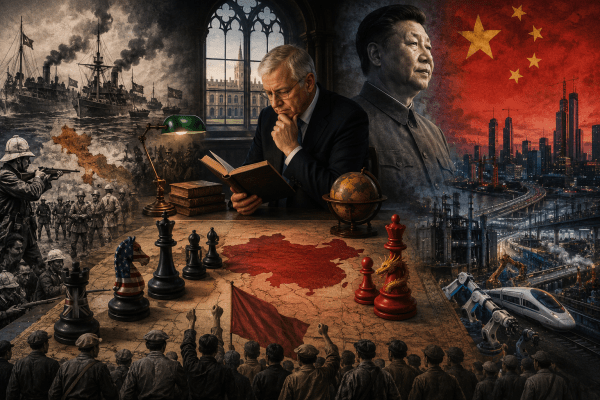
The New York Times promises to explain what Xi Jinping wants, but its interview with former Australian Prime Minister Kevin Rudd performs a far more revealing task: it manufactures imperial expertise while burying the history that produced modern China. Through credential laundering, great-man theory, the caricature of Marxism, and the erasure of colonialism, China is reduced to the psychology of one leader instead of understood as the product of revolution, socialist construction and a century-long struggle against imperial domination. This Weaponized Propaganda Excavation dismantles the interview piece by piece, exposing how liberal media transforms ideology into common sense while presenting it as objective analysis.
Iran Under Fire, Empire Exposed: The U.S., Israel, and the New York Times’ War Narrative
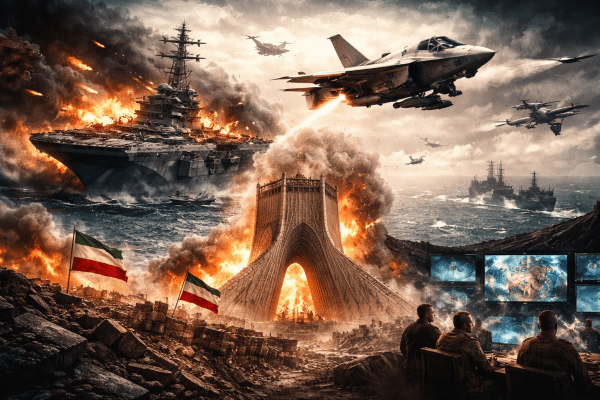
The New York Times frames imperial vulnerability as logistical inconvenience, masking the political meaning of exposure. The reconstructed facts reveal a war fought across an integrated system of bases, airspace, and energy choke points from Hormuz to Kharg. The deeper contradiction shows an empire that can still project force but can no longer prevent that... Continue Reading →