The Bill for Command: Hormuz, Treasury Yields, and the Rising Cost of American Power

NBC presents falling stocks, rising Treasury yields and volatile oil as separate market reactions to war. Put the pieces back together and a deeper political economy appears. The struggle over Hormuz is raising the cost of energy and global circulation while Washington is already refinancing enormous debts under sharply higher real yields. Those pressures don’t fall evenly: workers, indebted households and vulnerable importing countries absorb higher costs while energy producers and concentrated technology capital occupy very different positions. What looks like market turbulence is really a struggle over the rising material and financial cost of American command—and who gets forced to pay the bill.

The Shield Became the Target: Washington Moved the Battlefield Into the Gulf

The Gulf monarchies, once loyal to Washington's military dominance, are now scrambling for survival in a world where Iranian aggression opposes their established security framework. The ongoing war has exposed a perilous contradiction: the very American military infrastructure meant to protect the Gulf states has rendered them vulnerable to Iranian strikes. As the U.S. becomes a less reliable ally, these nations are cautiously seeking dialogue with Tehran, marking a seismic shift in regional politics. Their actions aren't a break from American influence but a pragmatic response to an urgent need for stability amidst rising tensions. The question remains—can they navigate this treacherous terrain without abandoning old alliances?

Tomorrow’s Russian Tank: How a Hypothetical War Rearms Europe Today

CNN warns that Russia could someday “test” NATO, but the military transformation supposedly justified by that future threat is already underway. Europe is being rearmed, civilian infrastructure reorganized for military mobility, and productive capacity redirected toward an expanding war economy as U.S. weapons stocks strain under commitments spanning Ukraine, Iran, Russia, and China. The deeper story is not a proven Russian timetable for invasion, but an American-centered imperial bloc confronting the rising cost of reproducing its military reach and hardening Europe as a Western Rear. What Russia could do tomorrow becomes the argument for what Europe must militarize today.

NATO’s Plantation Ledger: When Spain Refused the War Chain

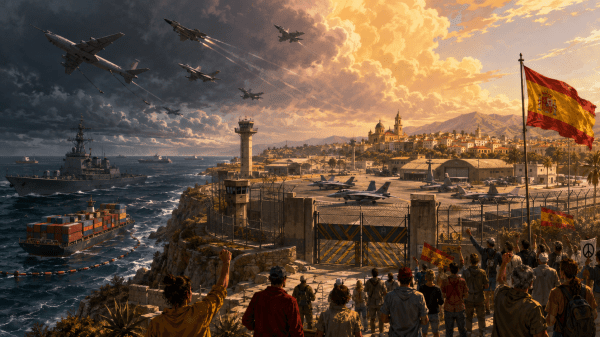
Trump’s threat to cut trade with Spain was not a diplomatic feud. It was imperial discipline. TIME reported the spectacle, but the real story sits beneath the headline: Spain refused to let Rota, Morón, and its airspace become automatic instruments of the U.S. war on Iran, while rejecting NATO’s demand to raise military spending to 5 percent of GDP. Washington’s response exposed the alliance for what it is: a command system that turns allied territory into launchpads, public budgets into war tribute, and dissent into a target for economic coercion.

Website Powered by WordPress.com.

Up ↑