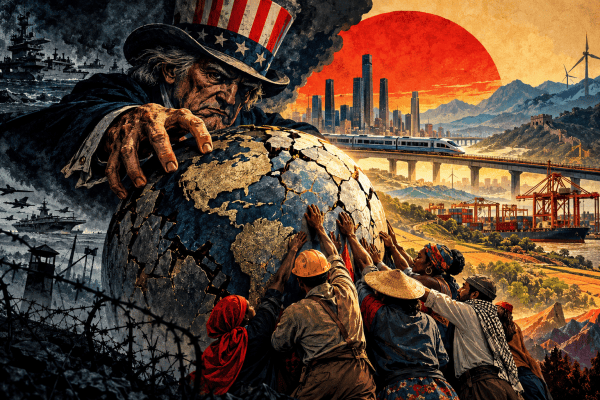
The imperialist façade is cracking as formerly colonized nations wield newfound agency, emboldened by China's socialist rise and BRICS collaboration. However, the narrative masks a grim reality: national sovereignty does not guarantee liberation from domestic exploiters. The struggle continues within, where local elites may replace imperial masters but retain the chains of economic subordination. This interplay reveals that power dynamics hinge on who decisively controls production and profits. As multipolarity expands possibilities, the essential question looms—will the working class finally seize genuine control over the fruits of their labor, or remain spectators in their own liberation? The era demands they reclaim agency—no more invitations.
The Empire Lost Its Monopoly: Multipolarity, Class War, and the Fight to Own the Future