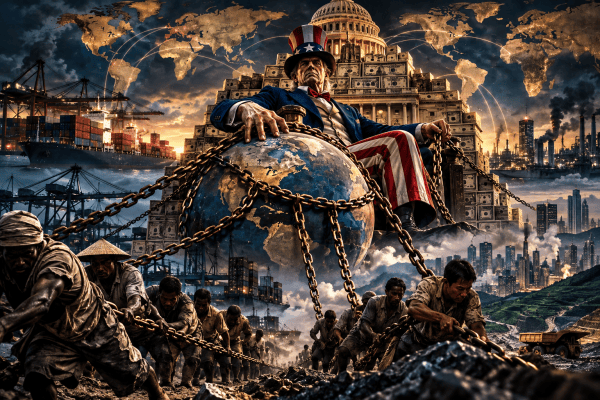
Humanity Built Civilization: Empire Claims the Title Deed
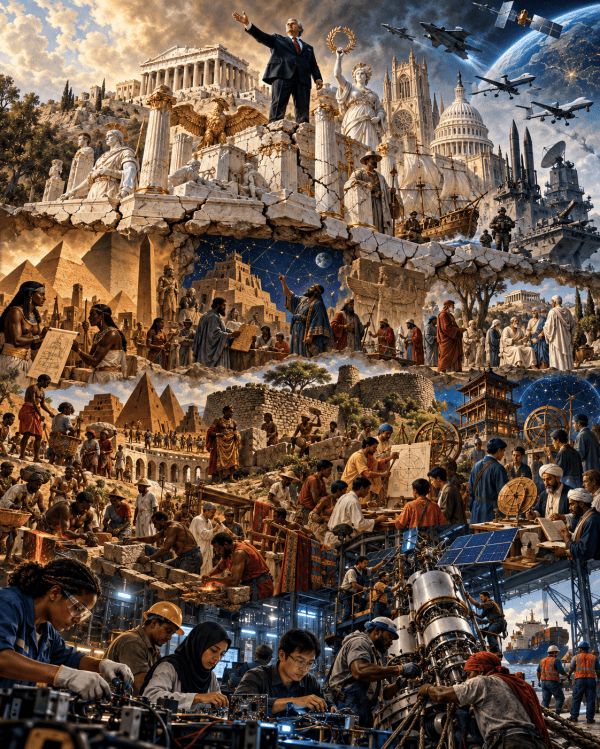
Marco Rubio's celebration of Western civilization conceals a history written through African and Asian scientific achievement, colonial conquest, capitalist exploitation, and revolutionary resistance. From ancient Greece to modern NATO, his manufactured civilizational inheritance transforms imperial domination into historical destiny while erasing the peoples whose labor built the world. Drawing on anti-colonial and Marxist scholarship, this investigation exposes how the political West was constructed through imperial rivalry, socialist revolutions, and struggles for national liberation. Beneath Rubio's mythology lies an American-led imperial bloc seeking renewed command over technology, finance, resources, and military power—and a continuing struggle to reclaim humanity's future.

The Bill for Command: Hormuz, Treasury Yields, and the Rising Cost of American Power

NBC presents falling stocks, rising Treasury yields and volatile oil as separate market reactions to war. Put the pieces back together and a deeper political economy appears. The struggle over Hormuz is raising the cost of energy and global circulation while Washington is already refinancing enormous debts under sharply higher real yields. Those pressures don’t fall evenly: workers, indebted households and vulnerable importing countries absorb higher costs while energy producers and concentrated technology capital occupy very different positions. What looks like market turbulence is really a struggle over the rising material and financial cost of American command—and who gets forced to pay the bill.

The Debtor Became the Banker: How America Learned to Rule the World by Owing It Money

Michael Hudson's "Super Imperialism" reveals capitalism's peculiar twist: the U.S. transitioned from a great creditor to a dominant debtor, utilizing its debts as leverage in a world where power dynamics are shifting. Post-World War I, American financial institutions crafted a system that exploited other nations through debt, claiming to promote development while actually enforcing dependency. The contradiction lies in the U.S. controlling the world's currency even as its productive supremacy fades. As the global landscape evolves, the implications of dollar dominance become increasingly tenuous, demanding us to confront a crucial question—who ultimately commands the productive forces that money can influence but not generate?

The Collateral of Empire: Debt, Power, and the Future

America's staggering $81.9 trillion debt is more than just a number; it's a complex web of financial claims overshadowing the real economic landscape. The nation's ability to issue dollars grants it a unique power, allowing it to leverage future incomes to accommodate debt—while the average worker grapples with mortgages, credit cards, and student loans. This contradictory system—where public power fuels private finance—disguises the inequality at play. As lenders profit, households struggle, further entrenching societal divides. The U.S. isn’t just a massive debtor; it’s a realm where debt serves as both a lifeline and a constraint, revealing the capitalist dance between ownership and obligation.

Website Powered by WordPress.com.

Up ↑