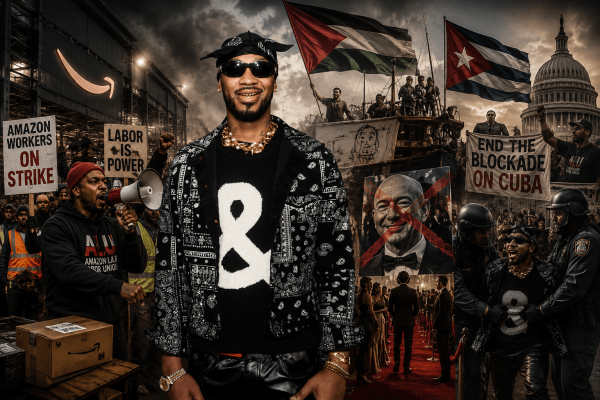
Chris Smalls, once heralded as a labor hero, now finds himself a casualty of overblown ego in the eyes of Jacobin. Yet, this portrayal dangerously obscures a deeper truth: his evolution from solely confronting Amazon to advocating for Palestinian and Cuban solidarity reveals an unsettling fear among the respectable Left. They're comfortable with labor militancy as long as it remains contained and domesticated; once it branches into anti-imperialism, they recoil. Smalls symbolizes a challenge to the status quo, an unfiltered confrontation with empire that threatens to redefine labor politics as an international struggle. In essence, the fear of a Black worker embracing a global perspective exposes the fragile backbone of contemporary Leftist thought.
They Called It Ego: Jacobin, Chris Smalls, and the Policing of Black Anti-Imperialist Labor