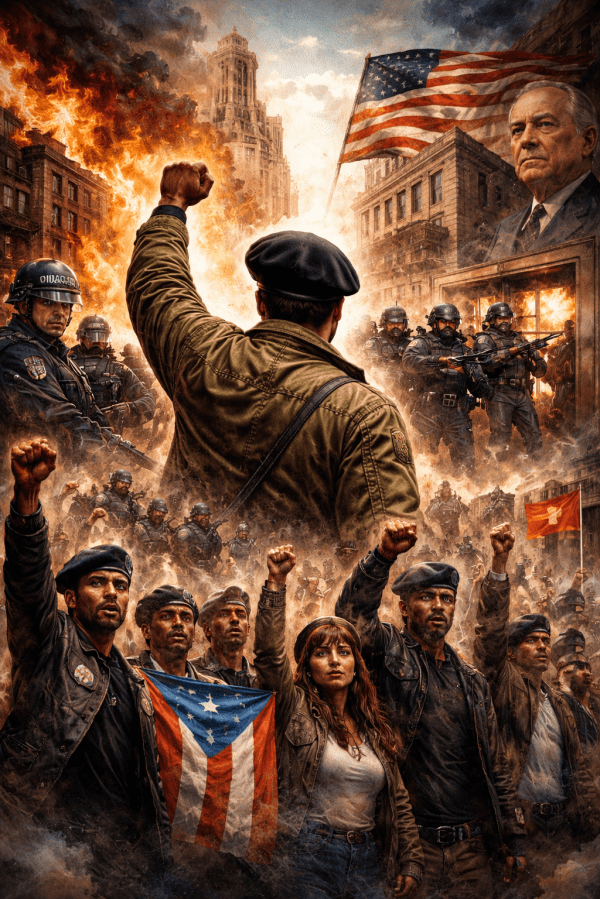
Ward Churchill’s Perversions of Justice exposes the legal machinery through which Indigenous sovereignty is recognized just enough to legitimize treaties, land cessions, resource extraction and colonial administration—then restricted whenever it threatens settler possession or state power. Following that contradiction from conquest and property into uranium mining, blood quantum, AIM repression and U.S. imperial expansion, this review tests both Churchill’s strongest insights and his strategic limits. His final wager—that the colonizer’s own law can be weaponized to fracture legitimacy and withdraw consent—remains powerful. But the deeper revolutionary question is what turns that rupture into organized material counter-power.
The Divided Empire: Prashad, Buze and the Contradiction Between Hyper-Imperial Unity and Capitalist Rivalry
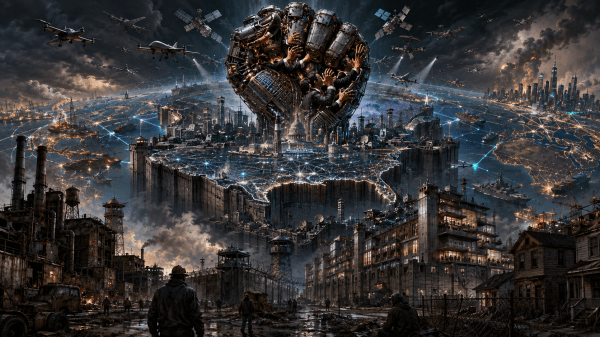
In a time when U.S.-led imperialism tightens its grip, nuanced debates emerge about the new American Pole—a daunting fusion of military, financial, and technological power that suppresses dissent while promising security. Vijay Prashad argues for a hyper-imperialism consolidating state control and aggressiveness against external defiance, while Özcan Buze highlights lingering national rivalries within the empire’s core. As cities devolve into ghost towns stripped of industry and sovereignty is commodified, the left is urged to unite struggles for worker power, national liberation, and social ownership. The empire’s contradictions must fuel a revolutionary response—a call to dismantle the machinery that perpetuates exploitation, rather than aspiring for a mere return to past privileges.
Democracy With a Gun to Your Head: George Jackson and the American Fascist Order
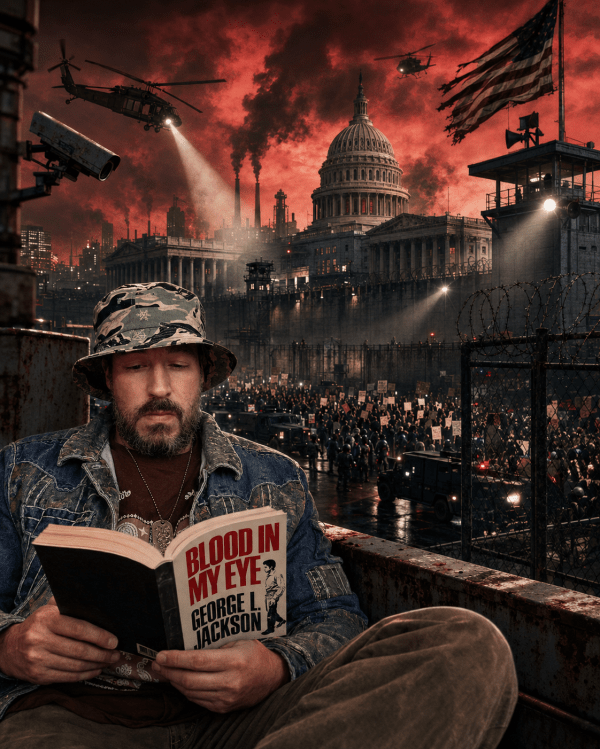
George Jackson wrote from inside the cage and exposed the system beyond it. In Blood in My Eye, prison, property, racial domination, monopoly capital, and imperial war appear not as separate problems but as parts of one American order. Jackson’s theory of secure fascism revealed how counterrevolution can rule through elections, reform, consumerism, surveillance, and controlled opposition as effectively as open terror. His strategic errors matter too: revolutionary potential is not consciousness, and militant initiative cannot substitute for organized mass power. This review recovers Jackson as a living weapon—one to be studied, sharpened, corrected, and returned to the struggle.
Freedom Trucks and Forgotten Crimes: Trump, PragerU, and the Rolling War Over America’s Past
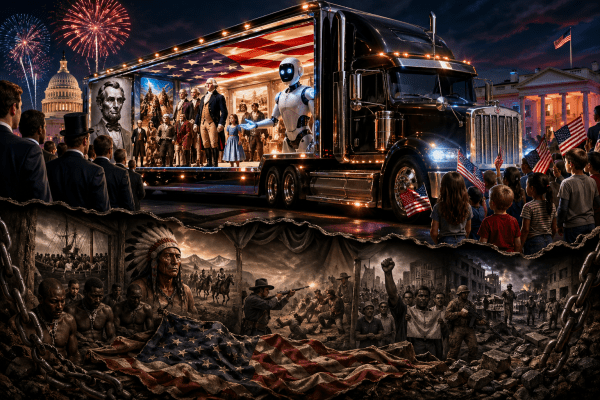
The Freedom Trucks, a mobile spectacle promoted by Trump’s campaign and supported by federal and corporate funding, embody a calculated effort to sanitize American history. Behind the facade of patriotic education lies a strategic apparatus that whitewashes the nation's origins: the triumph of freedom inescapably intertwined with slavery and genocide. As kids engage with AI-enhanced exhibits glorifying historical figures, the truth becomes obscured within a mythic narrative designed for obedience, not inquiry. In response, educators and activists are building a counter-history rooted in truth, pushing back against this historical manipulation. As the ruling class desperately rewrites the past, the need for authentic resistance grows ever urgent.
Fred Hampton and the Revolutionary Meaning of Solidarity
Chicago is shown here not as a northern refuge of progress, but as what it actually was and remains: an internal colony where segregation, poverty, and police occupation shaped Fred Hampton into a revolutionary Marxist with no illusions about the system he was up against. From those conditions came a politics willing to go where... Continue Reading →
Tunis Campbell and the Black Republic That White Power Destroyed
Born free in a slave republic, Campbell became an architect of Black self-rule after emancipation. On Georgia’s Sea Islands, freedpeople built land-based democracy before federal power restored white property. Rising to state leadership, he was criminalized as Reconstruction turned into counterrevolution. His life reveals Reconstruction as an unfinished revolution over land, labor, and power. Prince... Continue Reading →
Lil’ Bobby Hutton and the Generation That Refused to Beg
A teenage Panther whose life exposed the colonial reality inside the United States. His political awakening marked the rise of organized Black revolutionary youth. His killing revealed how the state responds when the oppressed build power.His memory remains a lesson in struggle, organization, and historical continuity. Prince Kapone | Weaponized Information | Black History Matters... Continue Reading →
Unmasking the Harvest Myth: Thanksgiving, Colonial Amnesia, and the Struggle for Truth
How a Settler Holiday Became a Political Weapon — and Why Indigenous Resistance Still Leads the WayBy Prince Kapone | Weaponized Information | November 27, 2025Staging Innocence, Branding Dissent: How Fox Frames a ‘Decolonized’ Thanksgiving as a ThreatThe Fox News piece “Universities, school districts nationwide call for ‘decolonizing’ Thanksgiving: ‘Day of mourning’”, written by Andrew... Continue Reading →
The Original Psy-Op: Race and the Making of the American Empire
Long before propaganda and mass media, there was race—the ruling class’s first great psychological operation. It turned conquest into freedom, slavery into destiny, and a continent of nations into one empire under disguise.By Prince Kapone | Weaponized InformationOctober 4, 2025Preface: Excavating the Mask to Clarify the TerrainThis essay sits inside the Race/Class 101 project as... Continue Reading →
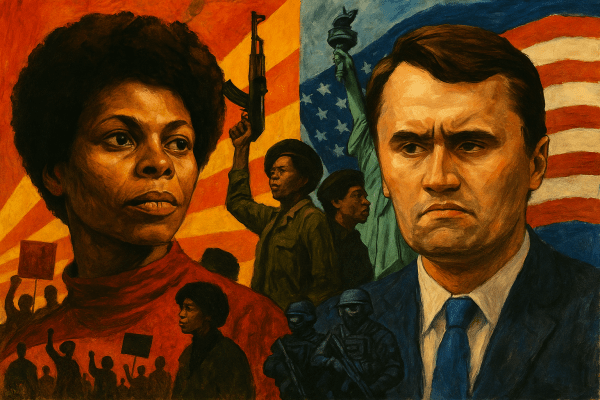
Assata Shakur and Charlie Kirk: Two Martyrs, Two Americas
One died free in exile, a symbol of liberation; the other died at home, a symbol of reaction. Their lives and deaths mirror the split soul of America, caught between empire and freedom.By Prince Kapone | Weaponized Information | September 26, 2025Death as a Mirror of EmpireIn September 2025, two deaths shook the American political... Continue Reading →