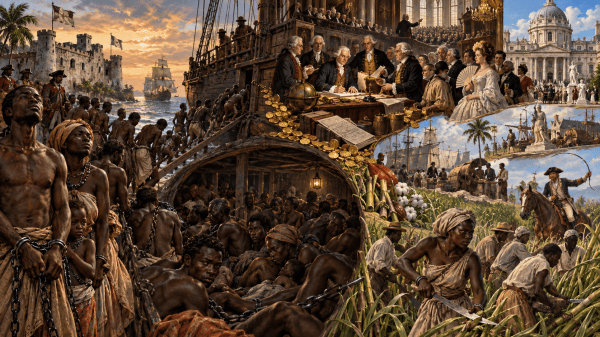
Britain’s slave trade wasn’t a barbaric side story to the rise of modern freedom. It was woven into the property system through which merchants, investors and institutions accumulated wealth while African captives were turned into human commodities. Parliament widened access to the trade, slave-linked fortunes entered industry, science and philanthropy, and abolition later compensated former owners while forcing the formerly enslaved through apprenticeship. The deeper contradiction wasn’t simply freedom versus slavery, but a society where the freedom of property holders could expand through the unfreedom of the owned. Today, reparations movements are reopening that buried ledger.
The Free Man and the Human Commodity: Britain’s Liberty Grew Inside a Slave Order