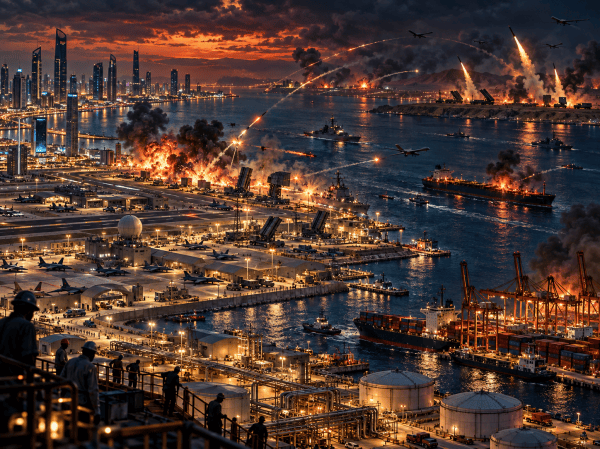
The Gulf monarchies, once loyal to Washington's military dominance, are now scrambling for survival in a world where Iranian aggression opposes their established security framework. The ongoing war has exposed a perilous contradiction: the very American military infrastructure meant to protect the Gulf states has rendered them vulnerable to Iranian strikes. As the U.S. becomes a less reliable ally, these nations are cautiously seeking dialogue with Tehran, marking a seismic shift in regional politics. Their actions aren't a break from American influence but a pragmatic response to an urgent need for stability amidst rising tensions. The question remains—can they navigate this treacherous terrain without abandoning old alliances?
No Annexation Required: Greenland Gets a Seat Inside Washington’s Arctic Wall
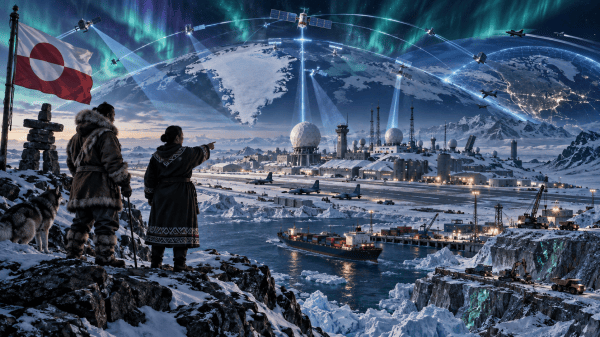
Forget the surface-level headlines; the Greenland agreement is a complex chess game, far beyond Trump's land-grab fantasies. The U.S. and Denmark superficially box Greenland into negotiations, overshadowing its own quest for agency and self-determination in the face of imperial maneuvering. As the Arctic transforms into a geopolitical battleground against rising powers like China and Russia, Greenland finds itself asserting its rights while navigating the treacherous waters of dependency. The true question isn't merely who controls the territory but whether Greenland can leverage its newfound strategic significance into genuine autonomy and prosperity over its resources, contracts, and future.
The Coup Didn’t Come From Nowhere: Niger, Base 101, and the Empire Inside the State
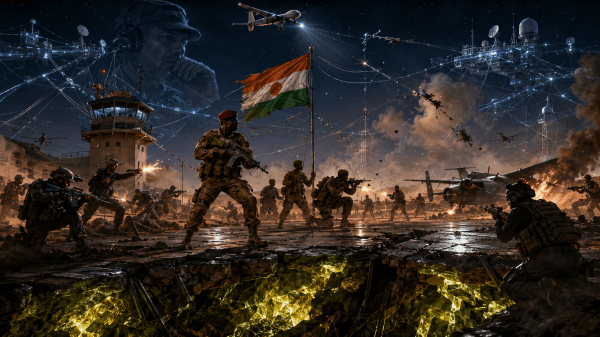
BBC framed Niger’s August 29 Base 101 uprising as a story about mutinous soldiers and a frightening weapons cache. The deeper record reveals something far more consequential: a fractured special-operations apparatus, credible evidence of Bazoum-linked and foreign contacts, an inherited Western security system, and a state still fighting to reclaim control over its military, uranium, and foreign relations. As France and the United States adapt to lost bases through smaller footprints, partner forces, and strategic networks, Niger is building alternative relationships through the AES, Russia, and Algeria. The coup didn’t come from nowhere—and neither did the empire trying to survive its retreat.
Democracy With a Visa Stamp: Washington’s Election War on Brazil
Reuters exposed an alleged Trump administration attempt to enter Brazil and cast doubt on its 2026 election, but treated the affair as partisan misconduct rather than part of a wider imperial campaign. Tariffs structured around U.S. economic needs, sanctions against Brazilian judicial officials, terrorism designations and long-standing security ties reveal a coordinated effort to discipline Brazilian sovereignty. The confrontation also belongs to Washington’s imperialist recalibration: consolidating the American Pole as Brazil deepens economic and technological relations with China. The real struggle is over who governs Brazil—its people, or an empire determined to supervise its courts, elections and developmental future.
Free Trade Behind Barbed Wire: Europe’s Treaty War on China
The Council on Foreign Relations claims Europe must “take on China” to save free trade. Behind that contradiction lies a wider campaign to turn tariffs, export controls, investment screening and trade agreements into a coordinated architecture of containment. Western governments subsidize their own industries while treating Chinese planning and technological advance as violations of the market. This essay exposes how “free trade” becomes selective access for European capital and selective restriction for China, tracing the struggle back to imperial domination and forward to the danger of economic war becoming military confrontation. The answer is organization before the fine print becomes a front line.
Crouching Tiger, Hidden Shareholder: The Empire Goes on the Auction Block
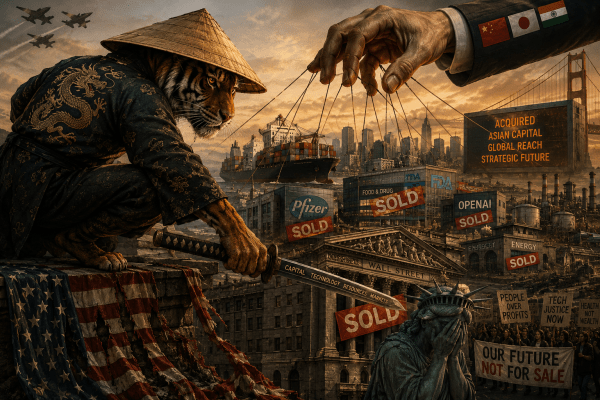
What if the façade of Asian firms acquiring American assets is merely a veneer masking a broader crisis of imperial power? The Asia Times' portrayal presents a triumphant narrative of capital flows, yet ignores the brutal realities behind ownership transitions. As firms like Sun Pharma and Mitsubishi grasp at American infrastructure, the underlying forces of deindustrialization, labor exploitation, and geopolitical tensions are left unexamined. This isn't progress—it's a manipulation of perception. The real question remains: who controls these vital resources? Without a radical reimagining of ownership, the future remains shackled to elite interests, while workers are forced to celebrate their own dispossession.