The Debtor Became the Banker: How America Learned to Rule the World by Owing It Money
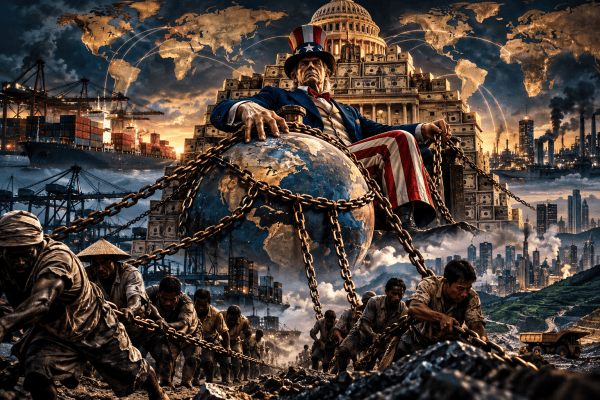
Michael Hudson's "Super Imperialism" reveals capitalism's peculiar twist: the U.S. transitioned from a great creditor to a dominant debtor, utilizing its debts as leverage in a world where power dynamics are shifting. Post-World War I, American financial institutions crafted a system that exploited other nations through debt, claiming to promote development while actually enforcing dependency. The contradiction lies in the U.S. controlling the world's currency even as its productive supremacy fades. As the global landscape evolves, the implications of dollar dominance become increasingly tenuous, demanding us to confront a crucial question—who ultimately commands the productive forces that money can influence but not generate?

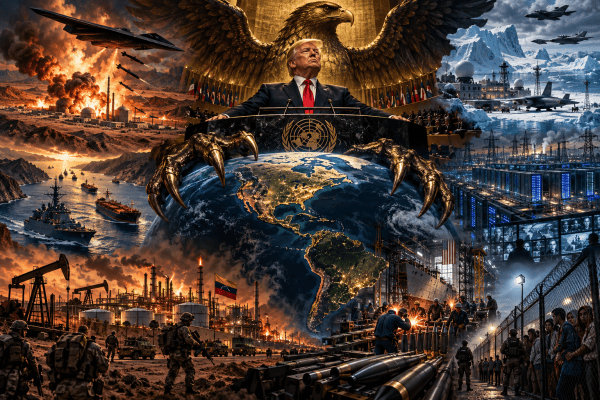
The Golden Age Needs a Gunboat: Trump’s UN Speech and the Rising Cost of American Command

Trump's United Nations address declares America’s resurgence, yet it reveals an empire grappling with an escalating need for military force and economic coercion to maintain supremacy. His speech elevates military spending, sanctions, and immigration enforcement as signs of strength while ignoring the underlying contradictions—an empire that once commanded effortlessly now relies heavily on intimidation. The reality is that the U.S. must work harder to enforce its will both abroad and domestically as competition grows and global power dynamics shift. Instead of showcasing dominance, Trump's rhetoric underscores a declining ability to produce consent, exposing the fragility of American imperialism. The mask of effortless domination is slipping.

Website Powered by WordPress.com.

Up ↑