The Debtor Became the Banker: How America Learned to Rule the World by Owing It Money
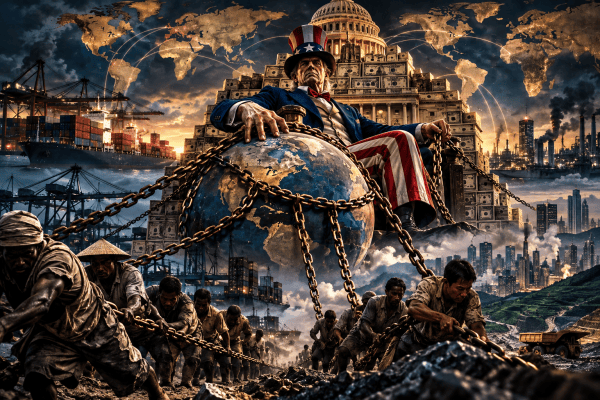
Michael Hudson's "Super Imperialism" reveals capitalism's peculiar twist: the U.S. transitioned from a great creditor to a dominant debtor, utilizing its debts as leverage in a world where power dynamics are shifting. Post-World War I, American financial institutions crafted a system that exploited other nations through debt, claiming to promote development while actually enforcing dependency. The contradiction lies in the U.S. controlling the world's currency even as its productive supremacy fades. As the global landscape evolves, the implications of dollar dominance become increasingly tenuous, demanding us to confront a crucial question—who ultimately commands the productive forces that money can influence but not generate?

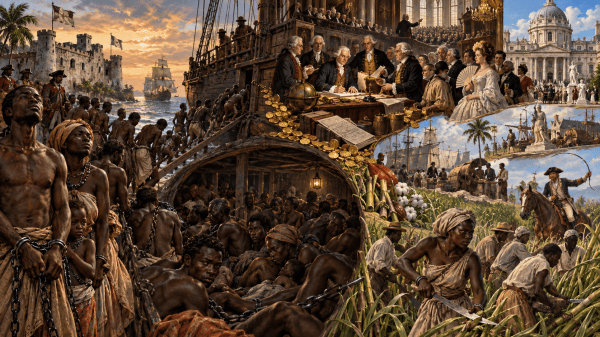
The Free Man and the Human Commodity: Britain’s Liberty Grew Inside a Slave Order

Britain’s slave trade wasn’t a barbaric side story to the rise of modern freedom. It was woven into the property system through which merchants, investors and institutions accumulated wealth while African captives were turned into human commodities. Parliament widened access to the trade, slave-linked fortunes entered industry, science and philanthropy, and abolition later compensated former owners while forcing the formerly enslaved through apprenticeship. The deeper contradiction wasn’t simply freedom versus slavery, but a society where the freedom of property holders could expand through the unfreedom of the owned. Today, reparations movements are reopening that buried ledger.

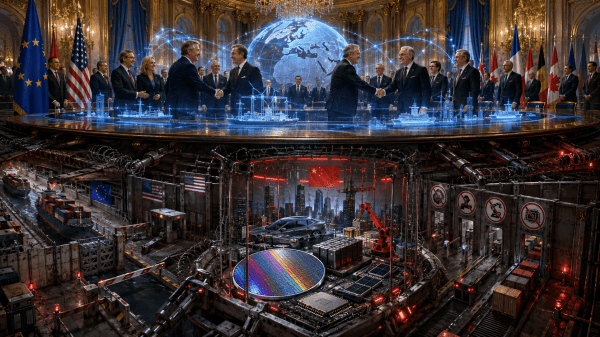
Free Trade Behind Barbed Wire: Europe’s Treaty War on China

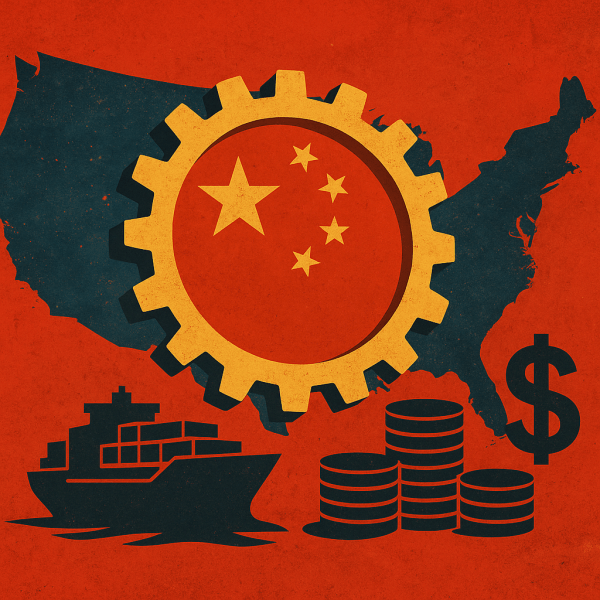
The Council on Foreign Relations claims Europe must “take on China” to save free trade. Behind that contradiction lies a wider campaign to turn tariffs, export controls, investment screening and trade agreements into a coordinated architecture of containment. Western governments subsidize their own industries while treating Chinese planning and technological advance as violations of the market. This essay exposes how “free trade” becomes selective access for European capital and selective restriction for China, tracing the struggle back to imperial domination and forward to the danger of economic war becoming military confrontation. The answer is organization before the fine print becomes a front line.

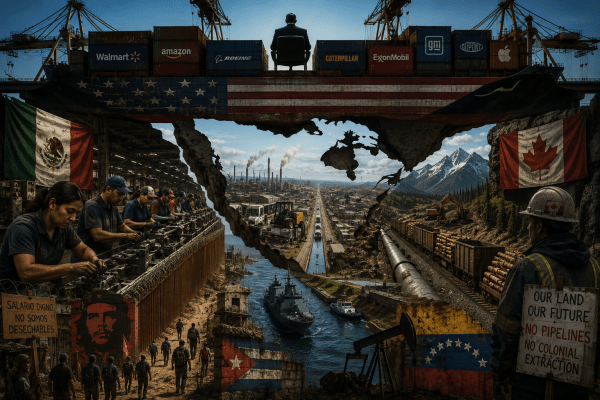
Same Boss, New Contract: USMCA and the Empire’s Grip on Mexico and Canada

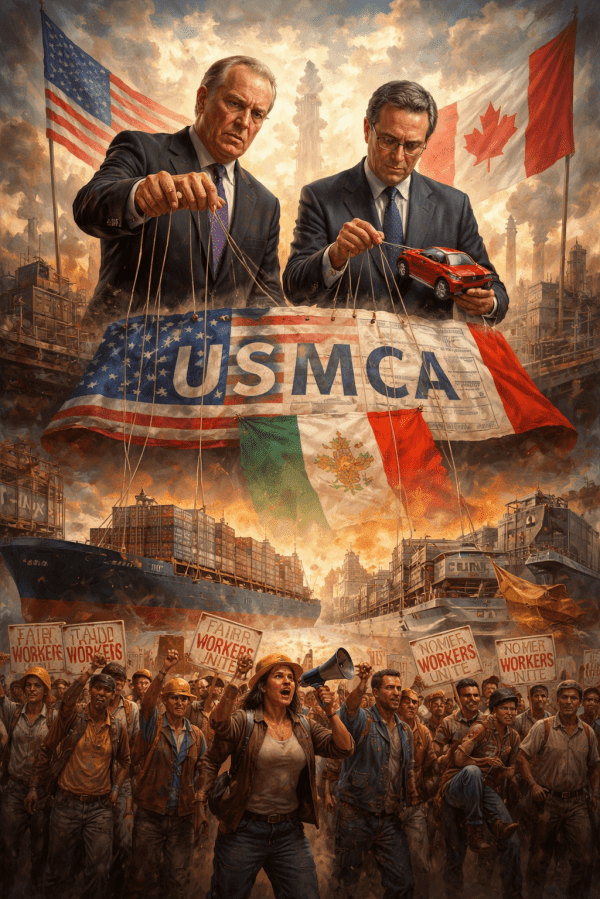
NBC's portrayal of Trump's refusal to renew the USMCA is more than a mere disruption in trade; it’s a calculated move to establish an iron grip over North America. The article frames this as instability, ignoring the deeper narrative of imperial ambition where trade agreements become tools for coercion. The U.S. isn't retreating; it's reconfiguring the continent, tightening control over Mexico and Canada while excluding China from the fold. Workers from all sides suffer under this new order while corporate interests thrive unchallenged. Ultimately, this is not a story of chaos but of empire reshaping subjugation—inviting you to witness the birth of Fortress America instead of its decay.

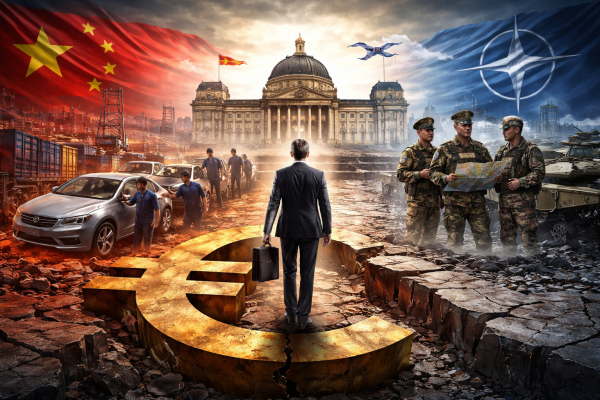
Berlin’s Boardrooms, NATO’s Generals, and Beijing’s Factories: Germany’s Trade Deficit and the Crisis of Imperial Supremacy

A romance metaphor conceals structural strain. The trade ledger exposes export contraction and rising militarization. Industrial rivalry is recoded as security doctrine. Workers and colonized nations confront the costs—and the opening.By Prince Kapone | Weaponized Information | February 19, 2026When the Empire Calls It Heartbreak Our excavation begins with a February 19, 2026 piece from... Continue Reading →

Lutnick, Carney, and the Politics of Permission: How USMCA Discipline Turns Trade Into Obedience

A U.S. trade official scolds Canada for stepping outside its assigned lane, revealing how power speaks through “commentary.” The facts show a bounded policy shift unfolding inside an unstable trade and industrial landscape the story refuses to name. Placed in historical and imperial context, the outrage reads less as economics than as enforcement of hierarchy... Continue Reading →

Software, Sanctions, and the Empire in Decline

How U.S. Economic Warfare Against China Exposes the Crisis of Hyper-Imperialism By Prince Kapone | Weaponized Information | October 22, 2025 The Empire’s Invisible Hand on the Newswire On October 22, 2025, Reuters published a story announcing that the United States is “considering” sweeping new export restrictions on any product “containing or made with U.S.... Continue Reading →

Website Powered by WordPress.com.

Up ↑