Reuters exposed an alleged Trump administration attempt to enter Brazil and cast doubt on its 2026 election, but treated the affair as partisan misconduct rather than part of a wider imperial campaign. Tariffs structured around U.S. economic needs, sanctions against Brazilian judicial officials, terrorism designations and long-standing security ties reveal a coordinated effort to discipline Brazilian sovereignty. The confrontation also belongs to Washington’s imperialist recalibration: consolidating the American Pole as Brazil deepens economic and technological relations with China. The real struggle is over who governs Brazil—its people, or an empire determined to supervise its courts, elections and developmental future.
The Guardian’s Missing Clause: How Imperial Elections Became “Democracy” in Nicaragua
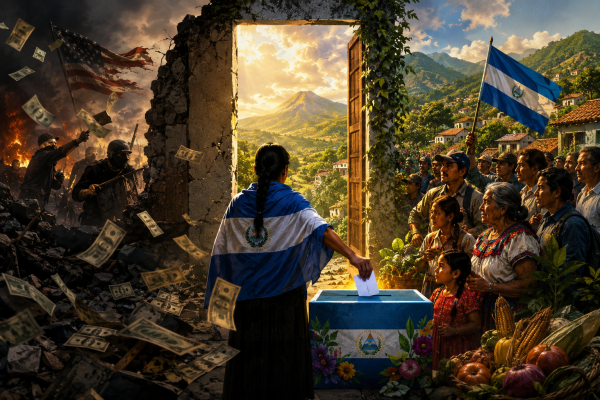
Daniel Ortega’s recent announcement that Nicaragua will cease future elections is portrayed by The Guardian as a blatant rejection of democracy, conveniently ignoring the historical context of imperial influences shaping Nicaraguan electoral politics. The claim that opposition parties are the embodiment of democracy is a façade; previous elections were tainted by U.S. interference, corporate financing, and foreign-imposed sanctions. Ortega's call to defend the Sandinista Revolution against imperial restoration isn’t about tyranny; it’s about reclaiming sovereignty from an electoral process manipulated by outside forces. Instead of clinging to an imperial framework, this moment presents an opportunity for Nicaragua to build a democracy rooted in popular power and authentic participation.
The Foreign Enemy Fraud: From Russiagate’s Thought Police to Chinagate’s Electoral Cage
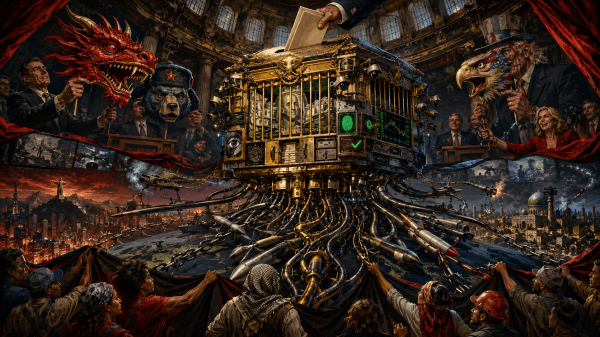
David Corn's resurrection of Russiagate in response to Trump's accusations of Chinagate exposes the absurdity of electoral politics in a billionaire-dominated America. By framing the discourse as a conflict between foreign adversaries—Russia or China—Corn obscures the true culprits: a corrupt ruling class manipulating the political system to protect its interests. Both narratives serve to distract the populace from the reality of a plutocracy masquerading as democracy. The ongoing chaos is but a struggle within the elite, each side reinforcing the structures of oppression while preventing real power from reaching the working class. True resistance demands unity against this imperial façade.
The Mercy Department: How USAID Laundered Empire Through the NGO-Industrial Complex
USAID did not simply deliver humanitarian aid—it institutionalized a model of empire that fused relief, civil society, media, governance, and development into the machinery of U.S. foreign policy. Excavating an NPR interview with former USAID Administrator Samantha Power, this essay exposes how liberal narratives of compassion obscure the agency's role inside the broader NGO-industrial complex. Drawing on anti-imperialist scholarship and Global South perspectives, it argues that the real choice is not between aid and no aid, but between imperial dependency and sovereign development. The struggle ahead is to defend the people harmed by aid cuts while dismantling the donor architecture that transforms solidarity into supervision.
The Lithium Frontier: Empire, Oligarchs, and the Struggle for the Salt Flats of the Andes
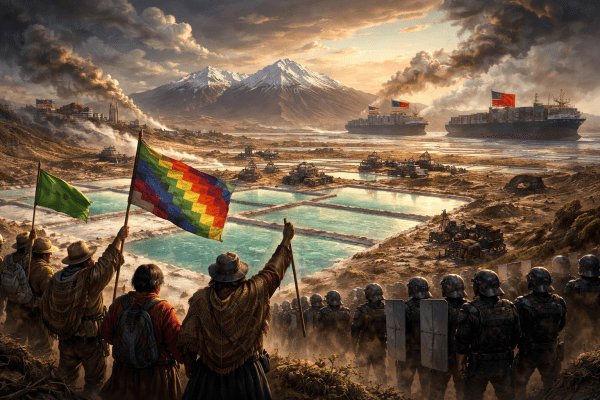
Beneath the investor narratives of strategic minerals and geopolitical competition lies a deeper struggle over land, labor, and sovereignty. As the global economy reorganizes itself around electrification and battery technology, the salt flats of the Andes have become a new frontier in the long history of resource extraction in Latin America — where communities, states,... Continue Reading →