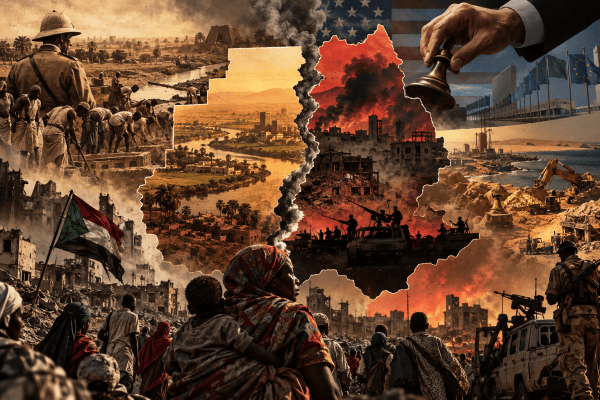
The War Built the Border: Sudan’s Partition Before the Ceasefire This essay argues that Sudan’s threatened partition didn’t begin with Washington’s latest ceasefire proposal. It traces the crisis through British colonial extraction, unequal development, Western creditor power, military accumulation, and the unfinished struggle opened by the December Revolution. As SAF and RSF turned on each other, war hardened front lines into rival economies, institutions, and systems of rule. The ceasefire therefore confronts a division already being built rather than creating it from nothing. Beneath the armies and foreign diplomacy, Sudanese civilian networks continue defending another basis for sovereignty rooted in the people who keep the country alive.
The Empire Still Holds the Gates: Multipolarity Builds Roads Around Them
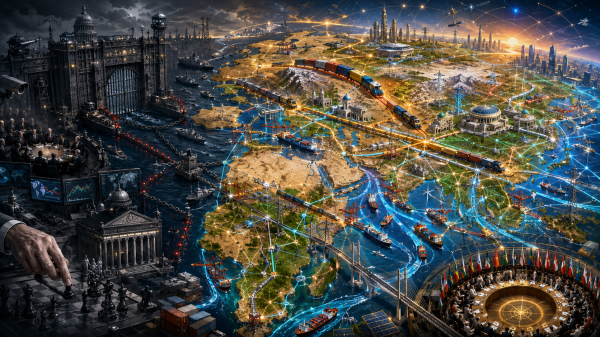
Multipolarity isn't a new empire but a complex web of power dynamics where countries strive for developmental autonomy without severing ties to imperial centers. Though emerging institutions like BRICS and SCO offer alternatives, they reveal a deeper truth: political independence doesn't guarantee economic sovereignty. The geopolitical landscape is increasingly messy; states are interconnected yet vulnerable. For every summits attended and partnerships forged, underlying dependencies remain unchallenged. The real question isn’t where countries sit on a world map; it’s who controls resources and technology within their borders. True liberation from exploitation lies not in diplomatic participation but in addressing internal inequalities and class power.
No Pride in Empire: Seattle’s Rainbow Classroom and the World Cup War Machine
The Seattle Pride Match is not just a progressive celebration but a vehicle for imperial propaganda, co-opting the cultural struggles of predominantly Muslim nations like Iran and Egypt. This event frames the West as a moral authority while masking the brutal realities of sanctions, military finance, and surveillance that underpin these dynamics. The local organizers, corporate sponsors, and FIFA collaborate to transform a football match into a colonial lesson, undermining the very values they profess to uphold. The real challenge lies in recognizing this manipulation and reframing the narrative: embracing genuine solidarity and resistance against imperial structures, rather than succumbing to an illusion of moral superiority.
The World System Before European Hegemony: How the West Hijacked a System It Did Not Build
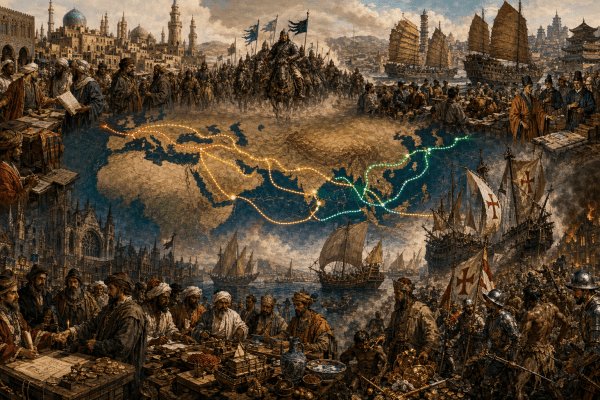
Janet Abu-Lughod's "Before European Hegemony" ruthlessly dismantles the myth that Europe rose to global prominence due to inherent superiority or brilliance. Instead, it reveals a pre-existing world economy crafted by diverse, thriving civilizations from which Europe, late to the game, benefited through exploitation and rupture. By tracing this narrative, Abu-Lughod forces us to confront uncomfortable truths: Europe did not create history; it emerged through the erosion of powerful systems created by others. History wasn’t predestined; it was violently reshaped.
Bernal vs. The Aryan Machine: How European Empire Whitened Greece and Called It Civilization
In this Weaponized Intellects book review of Black Athena (Vol. 1), we follow Martin Bernal’s argument that Greece was cut off from its Afroasiatic roots at the very moment Europe was rising to imperial power. We trace how the Ancient Model of Mediterranean entanglement was pushed aside and replaced by the Aryan Model, then cemented... Continue Reading →
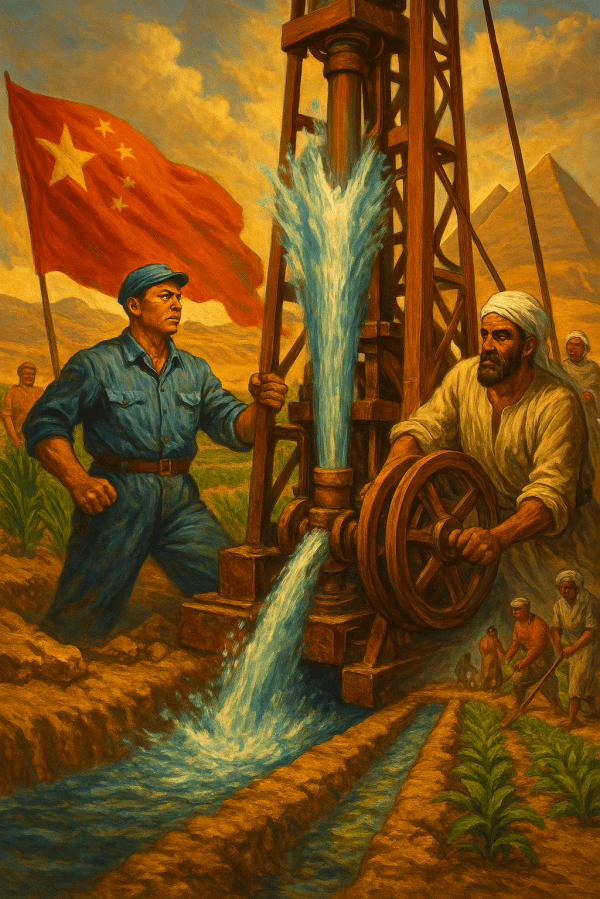
Wells of the Future: China, Egypt, and the Infrastructure of Anti-Imperialist Sovereignty
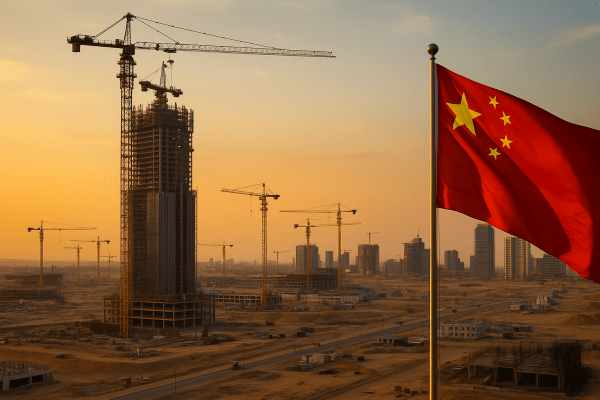
The Iconic Tower’s shadow stretches over 30,000 state workers relocated to the desert—and 1.2 million Cairenes left in crumbling colonized neighborhoods. China brings bricks. The West brings bombs.By Prince Kapone | Weaponized Information | June 10, 2025The Logistics of Consent: Excavating the Narrative BlueprintOn June 9, 2025, the South China Morning Post published a short,... Continue Reading →
Red Sea Bridge: Infrastructure in the Crosshairs of Multipolar Realignment
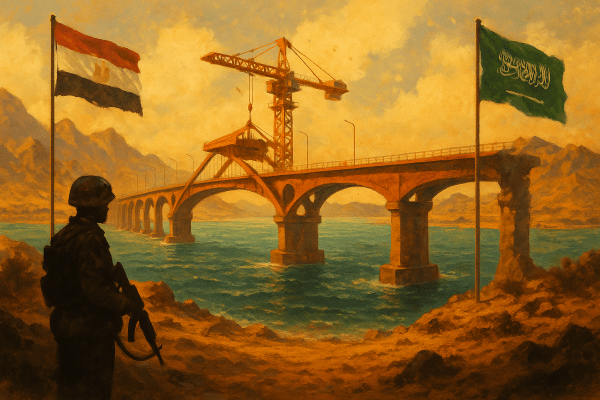
Saudi and Egyptian elites want you to believe a bridge across the Red Sea is about trade and tourism. But this isn’t just steel and concrete—it’s a contested front in the war over infrastructure, sovereignty, and empire’s unraveling grip. By Prince Kapone | Weaponized Information June 6, 2025 Architecture Without Politics—The Technocratic Mirage of Dezeen... Continue Reading →
Redlines: June 5, 2025
AFRICAWorld Bank Resumes Loans to Uganda—Colonial Finance with a Rainbow FilterThe World Bank just greenlit new funding to Uganda—two years after “pausing” loans over its brutal anti-LGBTQ law that legalized death sentences and mass repression. But what changed? Not the law. Not the violence. Just the PR. The Bank now claims new “mitigation measures” will... Continue Reading →
Redlines: June 4, 2025
Redlines – June 4, 2025 Daily Dispatches from the Frontlines of Empire: Exposing Capitalist Crisis, Imperialist Recalibration, and the Global Struggle for Liberation AFRICA Namibia Courts Western Energy Investors in Bid for “Green Powerhouse” Status Namibia is being hailed as the continent’s next renewable energy “leader” after launching a new round of hydrogen and solar... Continue Reading →
Wells of Defiance: China, Egypt, and the Revolutionary Infrastructure of Multipolarity
Where empire left famine, China drills for food. In the sands of Egypt’s Western Desert, water flows—not as charity, but as strategy. And the crops rising from that soil are a warning to the old world: sovereignty is being rebuilt underground. By Prince Kapone | Weaponized Information | June 3, 2025 Digging Beneath the Headlines:... Continue Reading →