The 2026 U.S.-Israeli assault on Iran was a strategic miscalculation, intended to reassert imperial dominance in Western Asia but instead revealing the fragility of Atlantic hegemony. As the old security architecture eroded, alternative infrastructures and regional alliances emerged, facilitating trade and cooperation beyond Western control. The ongoing crises connected Gaza, Yemen, and the vital sea lanes, illustrating that military aggression has backfired, prompting regional states to recalibrate and seek resilience against imperialism. This war exposed a transformative geopolitical landscape, where logistics and diplomatic maneuvers are increasingly driven by necessity, carving out a multipolar future and undermining the sheer authority once held by the empire.
The World System Before European Hegemony: How the West Hijacked a System It Did Not Build
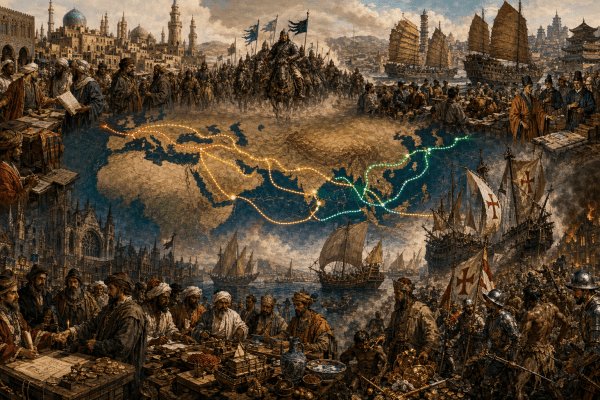
Janet Abu-Lughod's "Before European Hegemony" ruthlessly dismantles the myth that Europe rose to global prominence due to inherent superiority or brilliance. Instead, it reveals a pre-existing world economy crafted by diverse, thriving civilizations from which Europe, late to the game, benefited through exploitation and rupture. By tracing this narrative, Abu-Lughod forces us to confront uncomfortable truths: Europe did not create history; it emerged through the erosion of powerful systems created by others. History wasn’t predestined; it was violently reshaped.
Burkina Faso, Ghana, and Business Insider Africa: Corridor Cooperation in the Shadow of Uneven Sovereignty
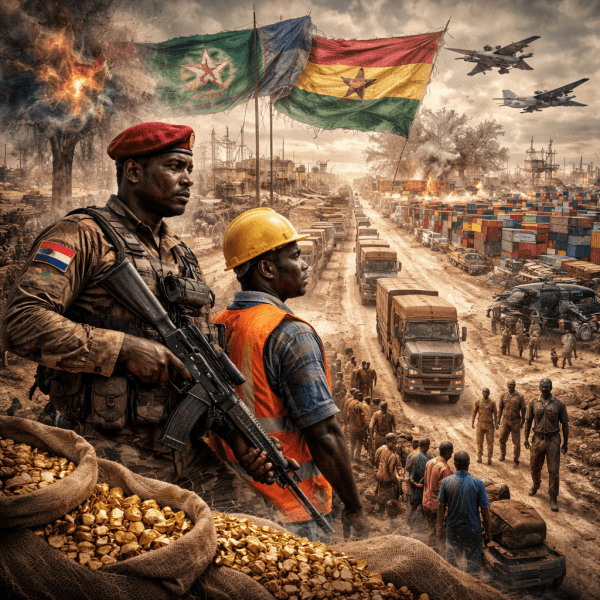
Business Insider Africa frames the Ghana–Burkina agreements as a pragmatic security and trade reset, and we begin by excavating how that cooperation is narrated. We then map the documented terrain beneath the headline: ECOWAS rupture, AES consolidation, French military withdrawal, AFRICOM continuity, gold extraction circuits, CFA monetary tether, IMF discipline, and multipolar infrastructure competition. From... Continue Reading →