Capitalism After the Robbery: Adam Smith, the Wealth of Nations, and the Clean Alibi of Bourgeois Political Economy

Adam Smith’s The Wealth of Nations is a twisted tale masquerading as a free-market manifesto, one that defies the naive faith bestowed upon it by neoliberals. It exposes capitalism's fundamental contradictions, revealing how labor produces wealth while class divides it unjustly. Smith acknowledges the state's crucial role in maintaining this order, contradicting the myth of an autonomous market. He scrutinizes colonialism and monopoly yet ultimately upholds capitalist structures. Historical materialism challenges his framework, demanding accountability from the beneficiaries of this exploitation. As we dissect Smith's insights, we unearth his omissions, seeking a world where labor governs—transforming capitalism's alibi into an indictment of its foundation.

Black Gold, Broken Chains: The AES, China, and the Sahel’s Revolt Against Empire

The recent oil agreements between Niger and Chinese firms aren't just another business deal; they expose a seismic shift in Africa's political landscape. As Western powers cling to outdated neocolonial frameworks, Niger is bargaining fiercely for sovereignty over its vast resources, rejecting mere extraction in favor of local control. This isn't a clean break; it’s messy and contradictory, revealing the power struggle over who governs the circulatory systems of wealth. The Sahel countries are navigating a new reality where they challenge traditional dependency and assert their agency. History is shifting beneath our feet—can Africa carve out a new path, or will old patterns reassert themselves?

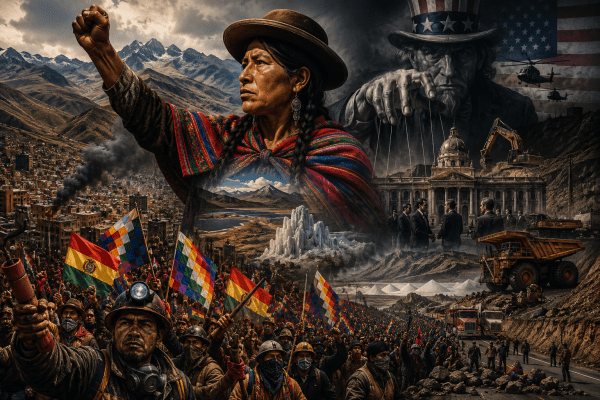
Cocaine Cowboys and Lithium Indians: Bolivia, the Monroe Doctrine, and the Return of the Colonial Republic

Bolivia is ablaze, but The New York Times misses the mark, framing protests as mere chaos ignited by a presidential betrayal. The truth is far more profound: a collision of historical projects poised for supremacy. Behind the unrest lies a struggle against neocolonial forces, with President Paz's agrarian reforms threatening Indigenous and campesino sovereignty. The culprits are not just disenfranchised voters but a systematic push toward resource extraction and imperialism. The uprising is a collective cry not just for policy change but for self-determination, land rights, and a unified front against re-colonization. The narrative must shift from superficial crisis to deep-rooted rebellion.

Website Powered by WordPress.com.

Up ↑