The Collateral of Empire: Debt, Power, and the Future

America's staggering $81.9 trillion debt is more than just a number; it's a complex web of financial claims overshadowing the real economic landscape. The nation's ability to issue dollars grants it a unique power, allowing it to leverage future incomes to accommodate debt—while the average worker grapples with mortgages, credit cards, and student loans. This contradictory system—where public power fuels private finance—disguises the inequality at play. As lenders profit, households struggle, further entrenching societal divides. The U.S. isn’t just a massive debtor; it’s a realm where debt serves as both a lifeline and a constraint, revealing the capitalist dance between ownership and obligation.

Reopening the Cage: Bretton Woods Returns to a Country That Refused to Kneel

The article presents IMF and World Bank re-engagement as routine normalization, masking a political event shaped by years of institutional blockade and external pressure. Beneath that surface lies a struggle over sovereignty, where constitutional legitimacy, sanctions, and anti-neoliberal memory redefine what “recognition” actually means. The return of global finance collides with a still-living project of... Continue Reading →

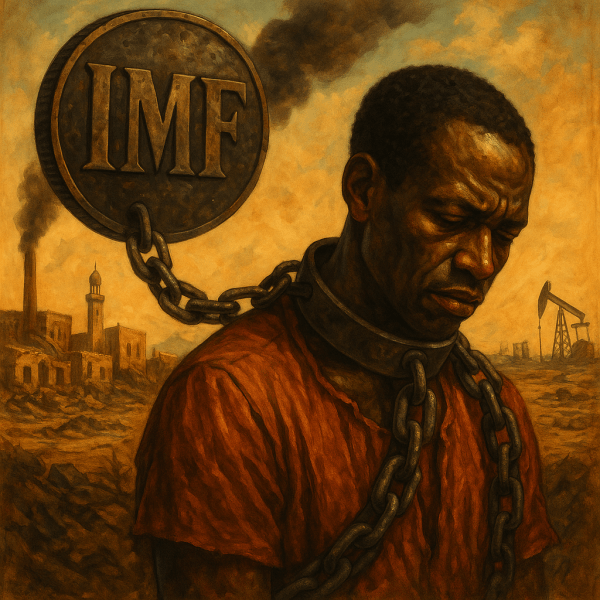
Chains of Reform: How the IMF Turned Senegal’s Crisis into a Weapon

What they call “debt sustainability” is imperial sabotage by spreadsheet—colonial extraction repackaged as fiscal responsibility, and enforced through technofascist obedience.By Prince Kapone | Weaponized Information | June 25, 2025Polite Chains and Quiet Crimes: How Financial Journalism Launders Empire “Senegal’s Debt Burden Reaches Critical Threshold” isn’t just a report—it’s a weapon. Dressed up as economic commentary,... Continue Reading →

Website Powered by WordPress.com.

Up ↑