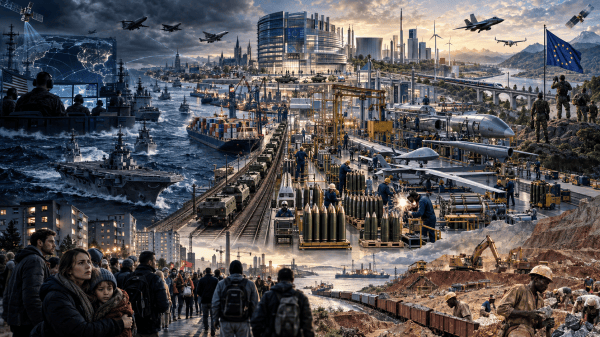
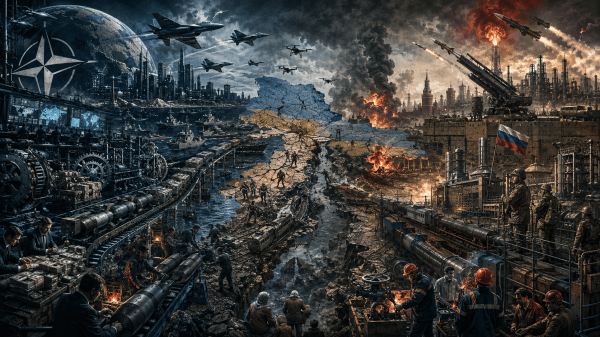
Europe stands at a crossroads, teetering between aspiration and disillusionment. While citizens envision a unified continent brimming with strength, their faith in existing structures crumbles under the weight of slow responses and dependency on America. With rising defense spending and manufacturing capacities, the stakes are high: will this newfound power serve the elite monopolies or empower the working class? The far-right feeds on feelings of decline, masking deeper questions about control and ownership. The real issue isn't a lack of imagination but the dire need for command: who controls Europe’s burgeoning power? The fight for true sovereignty—socially and politically—has only just begun.
The Rear Grew Teeth: Europe Rearms the Empire and Builds the Means to Defy It