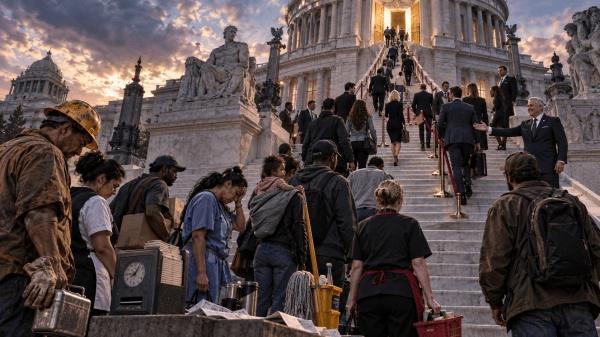
Bloomberg uncovered a brutal democratic fact: working people make up most of the labor force, yet barely appear in legislatures. This essay follows the worker beyond that statistic and shows how the disappearance happens—through inflexible work schedules, lost wages, primary elections, party recruitment, professional political careers, and repeated institutional filtering before voters ever reach the ballot. The problem isn’t that workers lack ambition or governing ability. It’s that formal political equality rests on a social order that distributes time, money, networks, and political experience by class. If workers are to enter politics in force, organization has to change who gets produced as a political leader.
Peggy Noonan Calls Capitalism Organic: The Wall Street Journal Buries the Violence That Built It
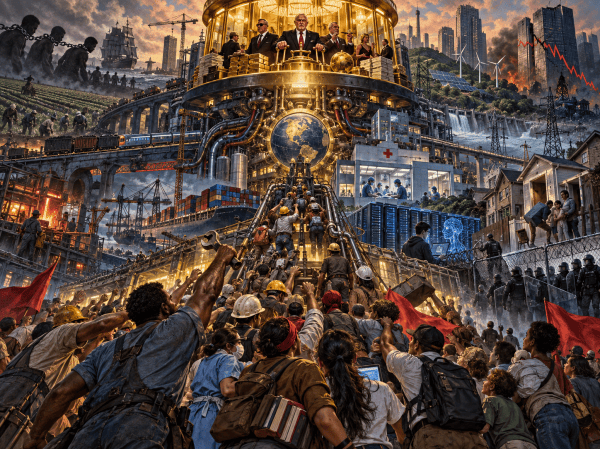
Peggy Noonan's alarm over socialism's surge reveals her flawed analysis: she blames the consciousness of the wounded instead of capitalism, which thrives on historical injustices like dispossession and slavery. As the capitalist structure crumbles under its contradictions—where collective production is shackled by private ownership—Noonan dismisses the urgency of socialism, painting it as a radical force aimed at destruction. Yet, socialism is rising not from whimsical ideology but out of necessity, as younger generations face economic precarity and disillusionment. The question isn’t whether capitalism is natural or just; it’s who truly controls the wealth and future built by the collective.
Empire’s Unions, Empire’s Wages: A Weaponized Intellects Review of Blue-Collar Empire
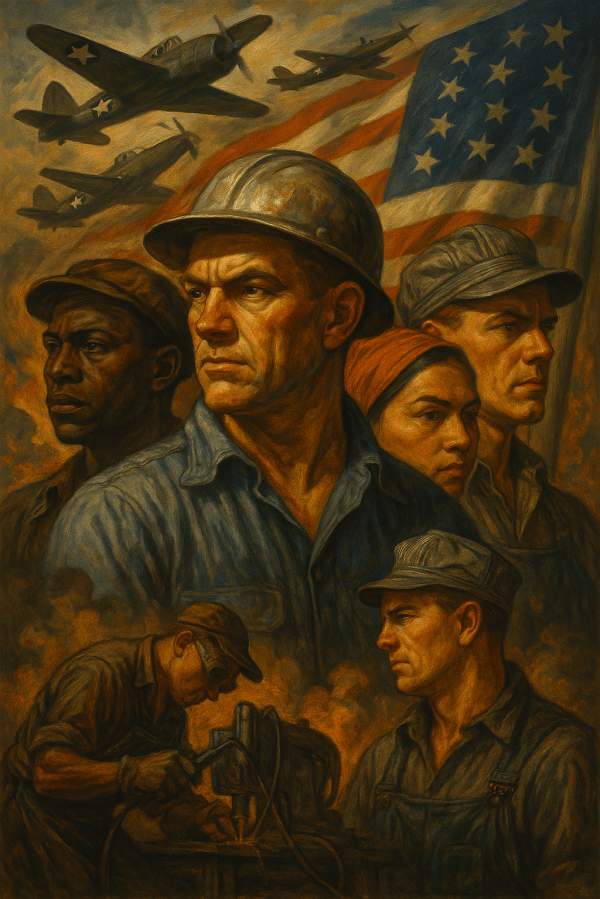
How the AFL-CIO Became the Empire’s Labor Army and Why Revolutionary Labor in the U.S. Requires Rupture With the Settler BargainBy Prince Kapone | Weaponized Information | October 3, 2025Imperial Unions, Imperial WagesJeff Schuhrke’s Blue-Collar Empire lifts the lid on a history the U.S. labor establishment would prefer remain buried: the story of the AFL-CIO... Continue Reading →