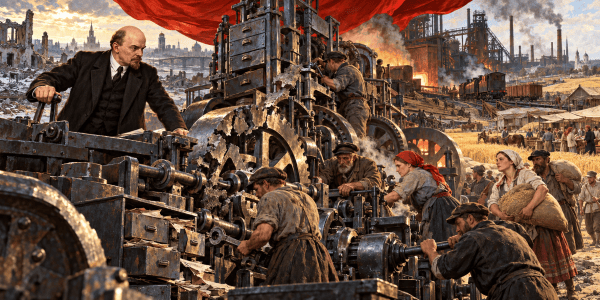
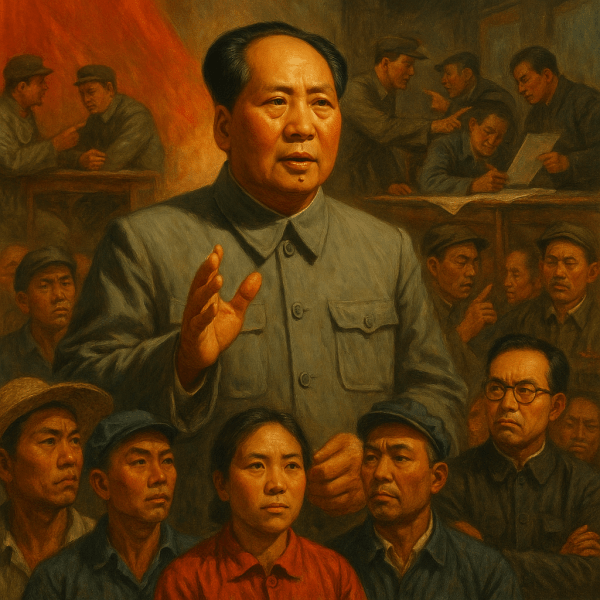
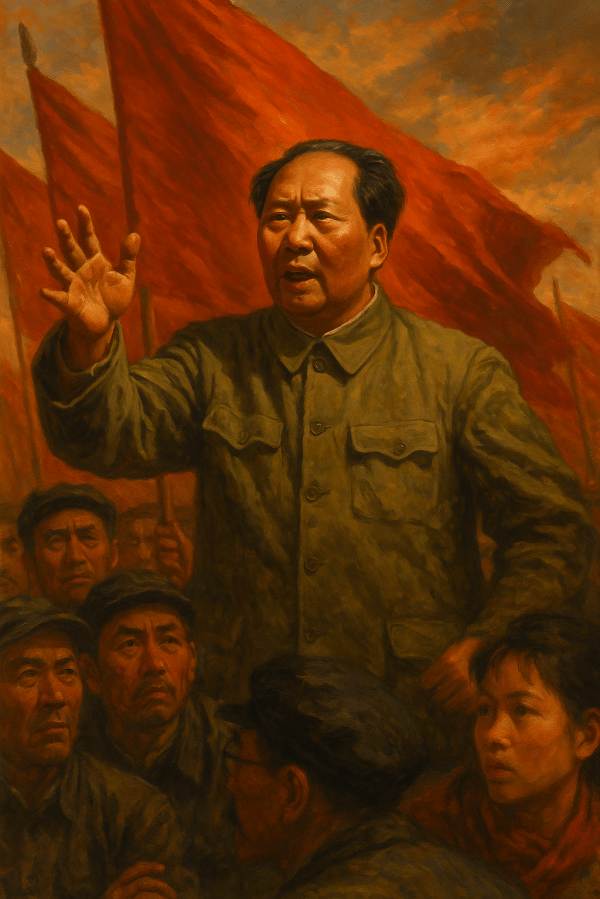
On March 27, 1922, Lenin laid bare the haunting reality: the very Communists who seized power found themselves ensnared by its apparatus. This stark confession at the Eleventh Party Congress revealed a party entangled in bureaucratic paralysis while popular hunger and dissatisfaction grew. Lenin's urgent demand for practical economic leadership served as a clarion call to reconnect with the peasant workforce crucial for reconstruction. He confronted the failure to actualize revolutionary ideals, asserting that maintaining authority required genuine engagement with people’s needs. In essence, he challenged the Bolshevik leadership: Could they transform power into effectiveness before disillusionment turned into revolt? The stakes were sky-high, a failure to adapt would be their undoing.
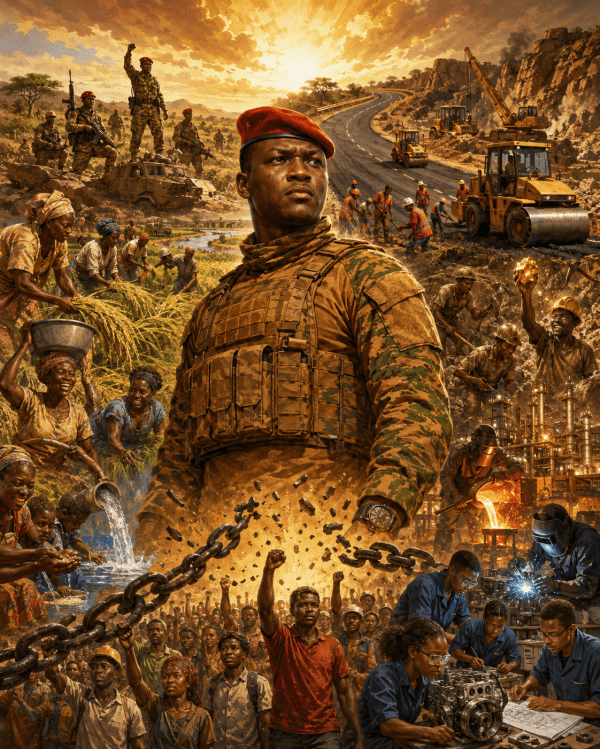
The Road, the Rifle and the Rice Field: Ibrahim Traoré’s War Against the Machinery of Dependence
Ibrahim Traoré’s speech is more than a declaration of national resolve. It is a sustained confrontation with the machinery of African dependency: roads promised but never built, minerals exported without transformation, imported goods replacing productive capacity, universities producing credentials instead of machines, and local elites profiting from national weakness. Through the recurring question—“Are we cursed?”—Traoré rejects racial fatalism and insists that Africa’s condition has a history, a structure and beneficiaries. This intervention excavates the speech’s strongest contradictions while asking whether state-led sovereignty can become genuine popular power rather than another project administered above the people.
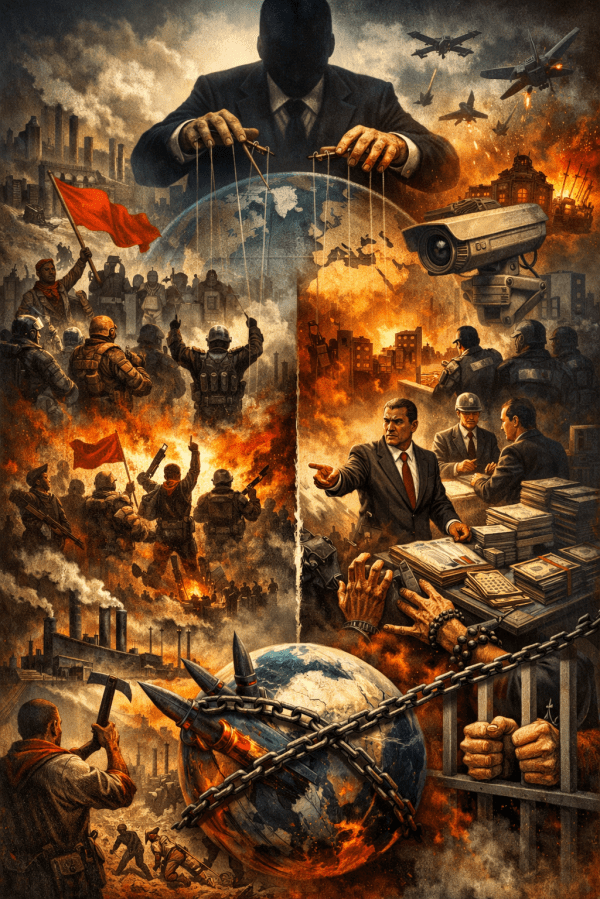
Author, Authority, and Empire: How “Authoritarian” Became Political Science’s Favorite Weapon Against Mass Power
This essay is part of Weaponized Information’s larger project to forge a new discipline of political science—one that treats politics as the scientific study of power: how it is accumulated, organized, enforced, and resisted. In “Towards a New Political Science: Politics as the Science of Power”, we broke with procedural political science and its canon... Continue Reading →
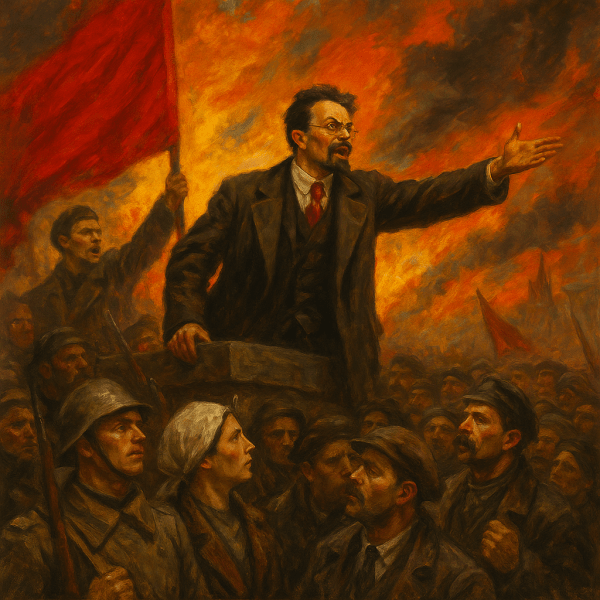
The Revolution Remembered Through a Mirror: Trotsky Between History and Heresy
A militant reading of Trotsky’s classic that honors his eyewitness fire while exposing the seeds of Trotskyism and Western Marxism—reaffirming the Lenin–Stalin line: soviets as organs of power only through the disciplined vanguard, from dual power to October, from poetry to statecraft. By Prince Kapone | Weaponized Information | Weaponized Intellects Book Review: October Revolution... Continue Reading →
Walking in the Light of the Poor: Aristide, Liberation, and the Birth of a People
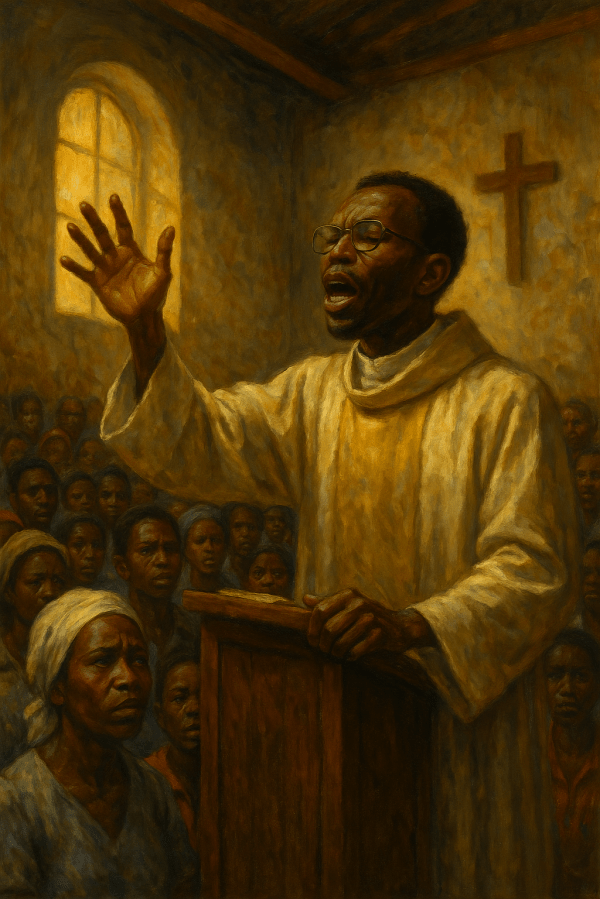
Weaponized Statecraft Series | Jean-Bertrand Aristide at St. Jean Bosco, 1988How a sermon in 1988 lit the fuse of Haiti’s democracy—and exposed the ruling class that would destroy it.By Prince Kapone | Weaponized Information | October 21, 2025In the House of the Poor, A New Power Begins to SpeakBrothers, sisters, workers, and all who have... Continue Reading →
The Party That Wouldn’t Break: Kim Jong Un and the Dialectic of Socialist Permanence
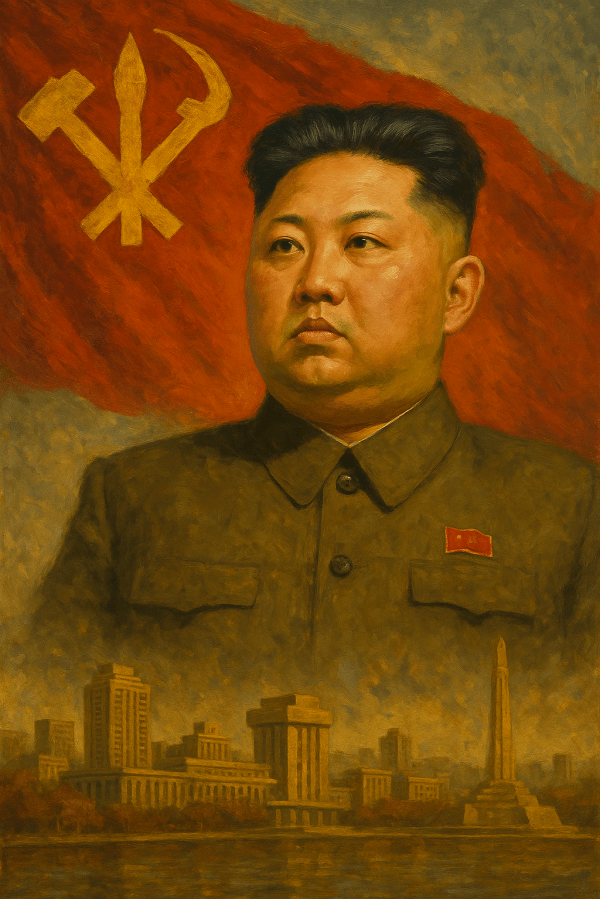
At the 80th anniversary of the Workers’ Party of Korea, Kim Jong Un reasserts the moral and political grammar of a revolution that endures by self-correction, unity, and defiance—transforming siege into pedagogy, hardship into method, and permanence into proof of socialism’s vitality.By Prince Kapone | Weaponized Information | October 11, 2025Pyongyang, October 10 — The... Continue Reading →
Weaponized Statecraft: The Civilizational Declaration — Putin’s 2025 Valdai Address and the Dialectics of Multipolarity
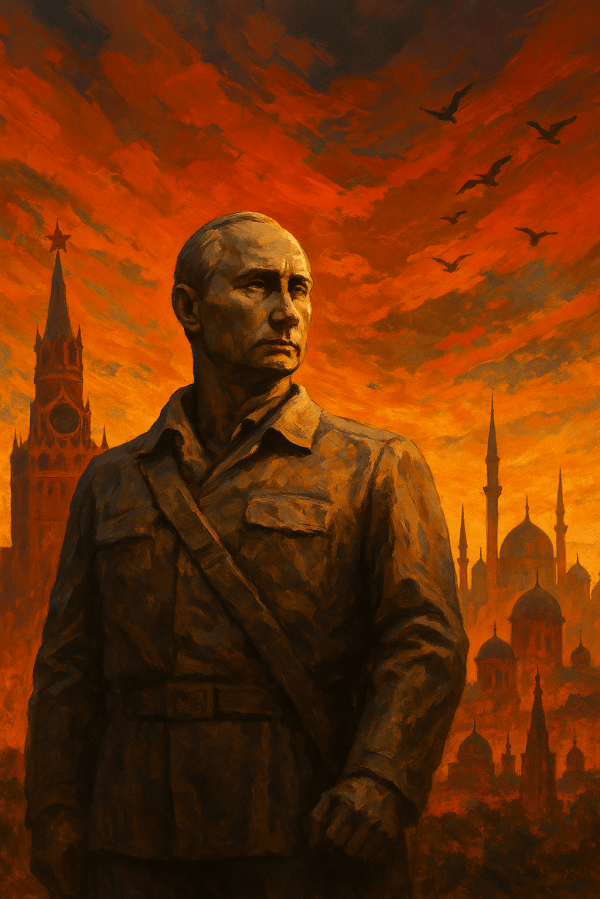
From reactive sovereignty to proactive world-making — how Russia’s Valdai doctrine signals the consolidation of the multipolar epochBy Prince Kapone | Weaponized Information | October 8, 2025The End of Empire’s ScriptThe stage was set in Sochi, under the heavy October air that always seems to carry more than the weather — it carries history. President... Continue Reading →
Hold the Line: Listen Hard, Rectify Fast, Stay Red
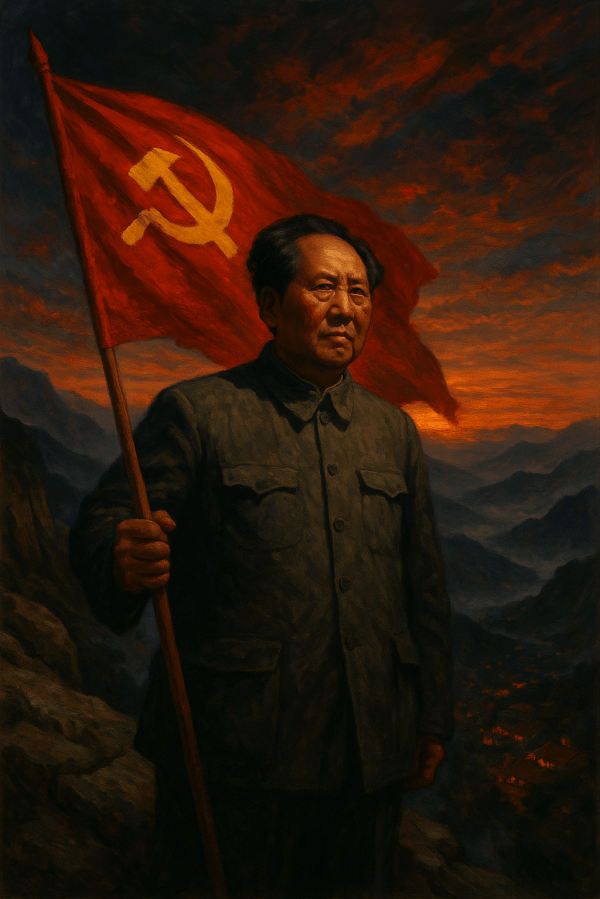
Weaponized Statecraft Series | Mao at Lushan, 1959 In the storm of the Great Leap’s setbacks, Mao did not fold—he listened. At Lushan he turned mistakes into lessons, errors into curriculum, and criticism into a method of survival. He named two illnesses—touchiness and wavering—and prescribed two remedies: endurance and rectification. He defended the communes, corrected... Continue Reading →
Hankow 1958: Mao’s Checklist Against Bureaucratic Decay
From Chengtu’s questions to Hankow’s battlefield, Mao sharpened the class line, armed the masses with democracy, and struck at the overlord style that threatened to hollow out the revolution.Weaponized Statecraft Series | Mao in Hankow, 1958By Prince Kapone | Weaponized Information | September 14, 2025From Chengtu’s Questions to Hankow’s BattlefieldApril 1958, Hankow. Weeks after forcing... Continue Reading →
Mao at Chengtu: Fighting Brain Rot, Forging Creative Revolution
In March 1958, weeks after issuing his Sixty Points on Working Methods in Nanning, Mao gathered Party leaders at Chengtu. If Nanning warned against bureaucratic drift in the wake of victory, Chengtu waged ideological war against dogmatism, empty boasting, and the paralysis of thought. Here Mao demanded investigation over imitation, mass critique over silence, and... Continue Reading →