Electric cars, tractors, gold, housing, and livestock—how Burkina Faso is building an anti-imperialist future brick by brick, field by field
By Prince Kapone | Weaponized Information
May 16, 2025
Not Just Another Coup: Burkina Faso’s Quiet Storm Against Imperialism
Don’t mistake this for just another coup, comrades—West Africa has seen its fair share of puppet regimes, neo-colonial handshakes, and generals wearing shiny uniforms stitched in Paris. But something different is brewing in Burkina Faso, something Sankara himself would have recognized with a knowing smile and a clenched fist raised high.
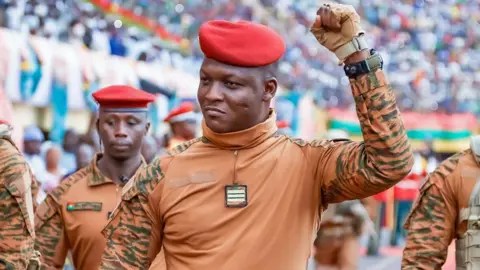
Captain Ibrahim Traoré, barely 36, could easily be dismissed by the bourgeois press as just another young officer seizing power in a continent supposedly incapable of political maturity. But anyone reading history knows better. Traoré isn’t performing the tired dance of the comprador elite—he’s orchestrating a revolutionary rupture with imperialist dependency, austerity schemes cooked up in Washington boardrooms, and the blood-soaked legacy of colonial exploitation.
Under Traoré’s short tenure, Burkina Faso hasn’t merely shaken off the old shackles—it’s methodically dismantling the very structure of imperialist extraction. We’re talking about a state seizing back $18 billion from foreign-controlled gold mines—wealth previously robbed at gunpoint by multinational corporations paying crumbs ($1 billion annually) to placate local elites. Where imperialism saw profits, Traoré sees seeds for a sovereign future.
This isn’t reformist window-dressing. This is class warfare carried out by the oppressed nations against their exploiters. This is nationalization, redistribution, and the beginning of real industrial and agricultural self-sufficiency. The launch of ITAOUA, Burkina Faso’s first indigenously designed solar-powered electric vehicle, is just one bright flash of this larger firestorm. Housing developments for displaced families, massive tractor distributions to peasant farmers, and cement plants employing thousands—these aren’t charity handouts or neoliberal “development schemes.” These are the bricks and mortar of sovereignty.
The Western media? Deafening silence, punctuated only by occasional cries of “dictatorship” and “populism.” But Traoré isn’t courting their applause. His audience is the Burkinabé peasant, the displaced worker, the student now paid a monthly salary by the state, the elderly who can finally turn on their lights without counting coins. This revolution speaks the language of dignity, food, homes, electricity, and jobs. It is a revolution that the working masses and the global South recognize instinctively as their own.
Comrades, Burkina Faso isn’t asking politely—it’s taking back what was stolen. This isn’t just another coup. This is revolution, and it demands our solidarity, our clarity, and our voice.
Sankara’s Blueprint Reborn: Anti-Colonialism in Action
The ghost of Thomas Sankara isn’t resting quietly—it’s marching through Ouagadougou, energizing fields, factories, and the determined faces of millions. Captain Ibrahim Traoré’s Burkina Faso isn’t content with shallow tributes to Sankara, the revolutionary who gave Africa a powerful vision before imperialism silenced him with bullets in 1987. Instead, it’s resurrecting his principles in living, breathing practice.
Sankara’s vision wasn’t a flowery discourse on development—it was a radical break from imperialism, designed to restore dignity and self-sufficiency to a people historically robbed blind. And now, Traoré is forging ahead on this unfinished road. The expulsion of French military forces wasn’t symbolic—it was strategic. Rejecting IMF and World Bank austerity isn’t populist rhetoric—it’s economic necessity. And turning away from the Western corporations eager to extract Burkina Faso’s vast mineral wealth isn’t naïveté—it’s revolutionary realism.
Consider this: under previous comprador regimes, Burkina Faso’s gold, its most abundant resource, enriched foreign capitalists while leaving crumbs for the local population. Today, the nationalization of gold extraction, the suspension of exploitative artisanal gold export permits, and the establishment of the country’s first gold refinery aren’t mere policy tweaks—they’re outright revolutionary acts. Every kilogram refined domestically translates into jobs, hospitals, schools, roads, tractors, and dignity—real sovereignty measured in material terms.
The Western media, predictably silent or hostile, calls this “protectionism.” But we, comrades, know better: it’s self-defense against economic warfare. Import quotas ensuring local production isn’t just policy; it’s survival, it’s the audacity of a people no longer willing to let imperialist thieves feast freely on their resources. And when Burkina Faso’s judiciary throws off the colonial robes for Faso Dan Fani garments woven by local cotton farmers, that’s cultural liberation, the symbolic and tangible recovery of a nation’s soul.
Captain Traoré isn’t acting out of revolutionary nostalgia—he’s mobilizing history to forge a sovereign future. This is Sankara’s vision reborn, vibrant and urgent, demonstrating vividly that the past doesn’t remain silent—it speaks powerfully through those courageous enough to listen and act.
ITAOUA: The People’s Vehicle and the Battle for Technological Sovereignty
Forget Elon Musk’s vanity projects and European greenwashing schemes—Burkina Faso has launched ITAOUA, an electric car crafted not in the Silicon Valley workshops of techno-fascist billionaires, but in the streets of Ouagadougou by Burkinabé engineers and workers. Solar-powered, efficient, and built for local roads and local needs, ITAOUA isn’t merely a car—it’s an anti-imperialist manifesto on wheels.
This is technological sovereignty made tangible: vehicles designed and built in Africa, powered by the Sahel’s abundant sun, breaking the colonial chains of dependency on imported oil and overpriced Western gadgets. ITAOUA’s launch boldly declares: African nations can innovate without imperial tutelage, exploiting neither their environment nor their people.
Imperialism prefers Africa locked into exporting minerals for Western electric vehicles—vehicles that Africans themselves could scarcely afford. Lithium, cobalt, and copper flow from exploited mines into European and American luxury cars, enriching foreign elites while leaving behind poisoned rivers and impoverished workers. But Burkina Faso’s electric car flips the script entirely: local raw materials, local hands, local minds, local consumers. Instead of lining pockets in Paris, Berlin, and Washington, ITAOUA creates jobs, infrastructure, and renewable energy capacity right here in Burkina Faso.
This revolutionary vehicle proves that green technology doesn’t have to replicate colonial extraction—it can dismantle it. While global capitalism offers climate solutions designed to maintain the imperial status quo, Traoré’s Burkina Faso offers a radical alternative: green energy harnessed by and for the Global South, transforming clean technology into a weapon against ecological and economic injustice.
ITAOUA doesn’t just represent a technological advance. It represents a challenge, a rallying cry to the colonized nations of the world: build your own tools, shape your own future, drive your own destiny. It is, simply put, revolutionary sovereignty in motion.
From Seeds to Sovereignty: Burkina Faso’s Agrarian Offensive
Imperialism fears self-sufficient peasants more than it fears generals and presidents. Burkina Faso knows this truth deeply—hence the state’s unprecedented offensive to reclaim its agricultural base from imperial dependency. Under Traoré, tractors have become revolutionary tools, fertilizers the ammunition, and seeds the very bullets in the war against hunger, exploitation, and neocolonial servitude.
Witness the distribution of nearly 69,000 tonnes of fertilizer, 18,000 tonnes of vegetable seeds, 10,000 tonnes of fish food, and thousands of liters of vital phytosanitary products. Over 400 tractors, motorcycles, and motor pumps have been placed directly into the calloused hands of those who work the land—not agribusiness tycoons or IMF consultants—but ordinary Burkinabé farmers. These resources aren’t charity—they’re the rightful reparations owed by a history of colonial extraction.
This revolutionary agrarian campaign has already begun bearing fruit: cereal production surged by 12%, and the state aims ambitiously at another 15% growth in agricultural output this season. Moreover, significant funds—$23.6 million—have been allocated to irrigation infrastructure and storage systems, ensuring that each harvest stays safe from loss, and every farmer has tools not just to plant, but to thrive.
The previous comprador regimes neglected agriculture, preferring imports, aid handouts, and dependency on Western grain corporations. But Burkina Faso’s new revolutionary leadership understands clearly that true sovereignty begins in the fields and the villages. It means tractors instead of foreign debts, fertilizers instead of famines, seeds instead of starvation.
Today, Burkina Faso doesn’t plead for crumbs at the imperial table—it cultivates its own soil, feeds its own children, and reaps the harvest of independence. The agrarian offensive is more than a policy—it is liberation itself, one seed at a time.
Homes, Seeds, and Dignity: The Revolutionary Return of the State
Imperialism steals not just resources—it steals dignity, shelter, food, and hope. Burkina Faso, under Ibrahim Traoré’s leadership, understands this deeply, confronting poverty and displacement head-on through revolutionary state intervention. The state isn’t retreating into neoliberal fantasies; it’s advancing boldly into people’s lives, carrying bricks, seeds, and solutions rather than empty promises.
Take Boussouma: where Western NGOs saw refugees and poverty as charity opportunities, the Burkinabé state saw partners in building a new reality. Three hundred homes, constructed rapidly with local materials, stand ready—not just shelters but hubs of dignity, incorporating innovative soilless agriculture systems and solar-powered irrigation. This isn’t charity—it’s collective resilience, a refusal to let displaced communities be casualties of capitalist exploitation and violence.
The state is also investing deeply in agricultural sovereignty, distributing over 400 tractors, 239 motorcycles, and thousands of motor pumps directly into the hands of Burkinabé farmers. This mechanization and resource distribution isn’t handed down from Washington’s boardrooms or Brussels’ bureaucracies—it comes straight from Ouagadougou, redistributing wealth and power directly to those who feed the nation.
And it doesn’t stop there. In a decisive rejection of IMF austerity, the elderly—those who gave their lives to build the nation—now receive free electricity and water. University students, the intellectual workers of tomorrow, are granted monthly stipends. These actions speak louder than a thousand speeches, affirming that dignity isn’t negotiable, survival isn’t charity, and poverty isn’t destiny.
This is revolutionary governance: the state as the servant of the people, providing homes instead of homelessness, seeds instead of starvation, tractors instead of trauma. Burkina Faso is rewriting the narrative of state power—not as a distant oppressor, but as a tangible ally in the people’s struggle for dignity and self-determination.
Industrial Sovereignty: Cementing the Foundations of Independence
There’s something profoundly revolutionary in turning sand, gravel, and labor into cement—especially in a nation long forced to import the very foundations it stands on. Under Ibrahim Traoré, Burkina Faso isn’t simply building new factories—it’s constructing independence, brick by brick, job by job, and refusing to play the comprador’s game of importing basic goods at inflated imperialist prices.
In under two years, Burkina Faso has launched three major cement factories, the latest employing over a thousand Burkinabé youth. Cement prices are falling dramatically, allowing roads, schools, hospitals, and housing projects to rise at a pace previously unimaginable. These factories aren’t profit machines for foreign multinationals—they’re engines of national dignity and employment, producing locally what imperialism once forced Burkina Faso to buy abroad at gunpoint.
This revolutionary industrial policy dismantles neoliberal lies that claim industrial sovereignty is a myth reserved for wealthy nations. Burkina Faso proves otherwise—asserting that production should serve people, not profits for a distant few. Here, economic sovereignty isn’t an abstract slogan, but concrete walls, sturdy homes, and affordable infrastructure built by Burkinabé hands, using Burkinabé resources.
When Traoré inaugurates a cement factory, he isn’t cutting a mere ribbon—he’s cutting the chains of dependency. It’s not just cement—it’s self-respect poured into foundations, dignity reinforced with every job created. This is a revolutionary industrialization strategy, tearing down the colonial logic of exploitation and replacing it with solidarity, sovereignty, and genuine progress for the masses.
Beneath the feet of Burkina Faso’s youth and workers today lies not just cement—but the firm foundation of liberation itself.
FASO GUULGO and the Feed Revolution: Livestock Sovereignty Takes Root
Imperialism never just steals minerals or money—it steals food from tables, milk from babies, and livestock from peasants. The creation of FASO GUULGO, Burkina Faso’s new state-owned livestock feed plant, marks a decisive blow against this theft. With a capacity to produce 100 tons of high-quality animal feed daily, this isn’t merely another factory—it’s an act of national liberation.
The Koubri facility, previously privatized under neoliberal dictates, has been reclaimed and placed firmly in the hands of the Burkinabé state and its workers. No longer beholden to foreign monopolies inflating prices and imposing scarcity, FASO GUULGO ensures that farmers have reliable, affordable access to feed, directly boosting livestock productivity and rural incomes.
This is revolutionary praxis at work—food sovereignty not as a theoretical construct debated in seminars but as tangible grain, palpable fodder, and accessible nourishment. The expansion of similar plants in Bagré and Samandéni signals clear intent: Burkina Faso is determined to break the chains of import dependency once and for all.
Under the leadership of Ibrahim Traoré, the message is crystal clear: if you control your livestock’s food, you control your food supply; if you control your food supply, you control your future. FASO GUULGO isn’t just producing feed—it’s producing dignity, security, and independence for every livestock farmer in Burkina Faso.
Imperialism once decided who ate and who starved. Today, Burkina Faso decides. This feed revolution isn’t charity; it’s justice. And that, comrades, is revolutionary sovereignty served fresh daily.
Gold and Glory: Burkina Faso Reclaims Its Stolen Wealth
Imperialism wears many masks, but none so brazen as the gold companies that drained Burkina Faso’s mines while throwing crumbs at its people. For decades, multinational corporations extracted billions from Burkinabé soil, enriching foreign shareholders and local collaborators while the nation remained impoverished. Under Traoré’s revolutionary government, the era of stolen gold is ending—swiftly and decisively.
Once, Burkina Faso earned just $1 billion annually from foreign-controlled gold extraction—a paltry sum for a resource that enriched boardrooms from Toronto to Paris. Since Traoré’s ascent, the state has reclaimed $18 billion previously siphoned off by these imperial parasites, reinvesting this newfound wealth directly into the national economy, infrastructure, and social programs.
The establishment of Burkina Faso’s first national gold refinery marks a critical milestone. By refining gold domestically, Burkina Faso ensures that wealth created beneath its soil now stays firmly in the hands of its people—producing hundreds of direct jobs and thousands of indirect ones, dismantling the exploitative chains forged by neo-colonialism.
Further, the government boldly suspended artisanal gold export permits, confronting illicit gold trafficking and redirecting precious resources back to the people. Every gram of gold processed within national borders represents hospitals, roads, schools, tractors—life itself for communities long abandoned by comprador elites and imperial overlords.
This revolutionary reclamation is clear: Burkina Faso is finished with begging imperialists for crumbs from its own table. Now it sets the table itself, serving its people dignity, sovereignty, and prosperity—not as charity, but as justice long overdue.
Investing in the Future: Student Salaries and the Liberation of the Mind
Every genuine revolution understands a fundamental truth: there is no liberation without the liberation of the mind. Under the leadership of President Ibrahim Traoré, Burkina Faso has taken a decisive step toward that truth by transforming education from a privilege into a pillar of national development.
In a landmark policy, the Burkinabé government now provides monthly stipends of 100,000 CFA francs (approximately $160 USD) to university students. This is not charity—it is a political decision rooted in the understanding that students are intellectual workers, and their labor is vital to building the future of the nation.
This initiative challenges the global neoliberal education model, which treats students as debtors and knowledge as a commodity. In contrast, Burkina Faso is investing directly in its youth, ensuring that the next generation of engineers, doctors, educators, and public servants are not financially strangled or forced into emigration, but empowered to serve their country with dignity and commitment.
More than a financial measure, this policy affirms the state’s responsibility to cultivate a skilled, conscious, and rooted citizenry. By supporting students materially, the government is building an education system aligned with national interests—grounded in sovereignty, equity, and social transformation.
In a world where education is increasingly privatized and weaponized against the poor, Burkina Faso offers a radically different model: one where learning is not a pathway to escape, but a foundation for collective liberation.
Protecting the Homeland: Burkina Faso’s Economic Self-Defense
Imperialism’s propaganda calls it “free trade,” but Burkina Faso knows better—it’s economic warfare. Decades of imposed imports flooded Burkina Faso’s markets with foreign goods, strangling local industries, destroying livelihoods, and forcing dependency at gunpoint. Under Traoré’s revolutionary leadership, Burkina Faso is turning this war around, deploying import quotas as strategic weapons of economic liberation.
The government’s decision to limit imports of goods that can be produced domestically isn’t mere policy—it’s a barricade against neoliberal exploitation. Instead of allowing foreign corporations to profit off basic commodities, Burkina Faso now shields local industries, compelling national production to flourish. This isn’t the protectionism derided by capitalist economists—it’s protection of the people’s very right to live and produce without imperialist sabotage.
Consider what this means practically: factories reopening, youth employed in workshops rather than seeking dangerous routes northward to Europe, families fed with local grain rather than foreign charity. It means building from within, crafting goods with local hands, circulating money through local communities—not siphoning wealth to distant imperial capitals.
This economic sovereignty stands firm against the neoliberal onslaught, confronting dependency head-on and challenging the colonial logic that demands perpetual subservience. Burkina Faso’s import quotas are more than economic policy—they’re a revolutionary act of national self-defense, the people’s shield against imperialist aggression disguised as globalization.
Today, Burkina Faso isn’t importing exploitation—it’s exporting a revolutionary lesson: Economic independence isn’t granted; it must be seized.
Cultural Sovereignty in Robes and Fabric: Decolonizing the Judiciary
Revolution isn’t only fought in factories and farms—it must also be waged in symbols, language, and culture. In Burkina Faso, even the courtrooms are joining the struggle. Under the leadership of President Traoré, the judiciary has cast off the colonial-era black robes once inherited from France’s legal system, replacing them with Faso Dan Fani—handwoven Burkinabé cotton garments that speak the language of resistance, tradition, and dignity.
This shift may seem symbolic to the untrained eye, but to the colonized, it’s a profound act of defiance. For generations, African courts mirrored the aesthetics and customs of their former occupiers—French robes, European protocols, Western jurisprudence—all serving to remind the people of who once ruled. Now, judges wear the fabric of the nation itself, woven by local labor, grown from local cotton, stitched with national pride.
The adoption of Faso Dan Fani in the courts is a rejection of the colonial legal imagination and an embrace of indigenous cultural identity. It is a statement that law, like land and labor, must reflect the people it serves. It also bolsters the domestic textile economy, providing economic opportunities to weavers and garment-makers who had long been sidelined in favor of foreign imports.
Traoré’s revolution does not reduce culture to an aesthetic add-on—it integrates it as a core dimension of political power. In Burkina Faso today, to wear Faso Dan Fani is not only an expression of heritage—it is to participate in the remaking of a sovereign nation.
This Is What Revolution Looks Like: The Road from Ouagadougou
What we are witnessing in Burkina Faso is not a policy shift. It is not a populist detour. It is not a military regime playing at reform. It is, in every meaningful sense of the word, a revolution—rooted in sovereignty, driven by mass needs, and aimed squarely at the heart of the imperialist world system.
In less than two years, Ibrahim Traoré’s government has reclaimed $18 billion in stolen gold wealth, launched a national electric vehicle industry, distributed <strongtens of thousands of tonnes of agricultural inputs, housed displaced families, provided free utilities for the elderly, stipends for university students, and nationalized industries once siphoned off by foreign capital. It has banned unnecessary imports, promoted local production, changed how judges dress, and how farmers live. In every sector, it is building—not begging.
And yet, the imperial press remains quiet. The West doesn’t know what to do with a revolution it can’t co-opt. No color revolutions, no sanctioned opposition, no pliant technocrats with Harvard degrees. Just a young captain backed by the people, doing what the comprador class would never dare: redistributing power to the masses.
Burkina Faso is showing the world that revolution in the 21st century is not only possible—it is necessary. It is practical. It is happening. The Sahel is rising, and in its rise is a blueprint for the rest of the Global South. For every colonized people. For every worker robbed of land, labor, and dignity.
Comrades, the lesson is clear: Revolution is not a slogan. It is not a fantasy. It is a process—a daily practice of reclaiming what has been stolen and rebuilding what has been destroyed. Burkina Faso has taken the wheel. The rest of us must follow, defend, and advance the line.
This is what revolution looks like.
 Weaponized Information
Leave a comment