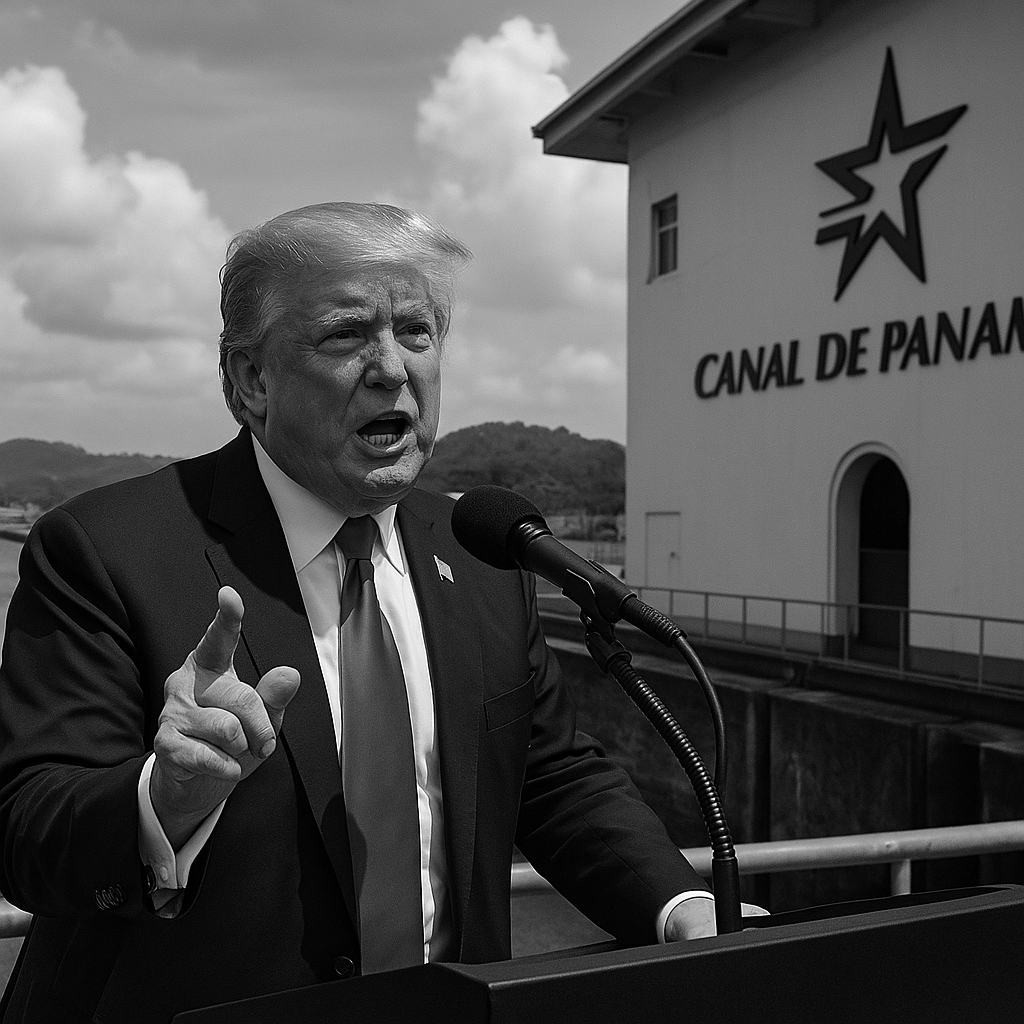
Imperial ambitions resurface as Washington eyes strategic control over global trade routes.
It was always borrowed time. The notion that the United States had relinquished control of the Panama Canal was a convenient narrative for domestic audiences. In reality, imperial interests merely shifted tactics. Now, as the U.S. faces declining global hegemony, the facade is crumbling.
On April 7, President Donald Trump threatened to “take back the Panama Canal,” suggesting potential military intervention. Within 24 hours, Defense Secretary Pete Hegseth was dispatched to Panama under the guise of a “canal security visit.” This move underscores a strategic pivot from covert influence to overt control.
The Panama Canal is not merely a waterway; it is a critical artery of global commerce—a geostrategic chokepoint through which approximately 40% of U.S. container traffic transits annually. Control over such chokepoints has historically enabled empires to exert disproportionate influence over global trade.
In recent years, China has invested heavily in Panama’s infrastructure, including port operations adjacent to the Canal Zone. Notably, Hong Kong-based CK Hutchison Holdings managed key ports at both ends of the canal. However, under U.S. pressure, Hutchison agreed to sell its stake to a consortium led by BlackRock Inc., effectively transferring control to U.S. interests. This maneuver reflects a broader strategy of reasserting U.S. dominance in the region.
Panama’s President José Raúl Mulino has attempted to balance relations, distancing the nation from China’s Belt and Road Initiative while engaging with U.S. security cooperation. Despite these efforts, the U.S. administration’s actions suggest a diminishing tolerance for any semblance of Panamanian sovereignty over the canal.
Furthermore, the Canal has faced operational challenges due to climate-induced droughts, which reduced its capacity by 40% in 2024, delaying over 70% of shipments. These environmental stressors highlight the vulnerabilities inherent in monopolizing such critical infrastructure.
This renewed assertion of U.S. control must be understood within the context of chokepoint imperialism—a strategy we’ve analyzed extensively at Weaponized Information. These nodes of control—ports, canals, undersea cables—are not just transit points; they are digital-era imperial outposts. As we explained in Canals, Chokepoints, Chains and Capital, control over the flow of goods is indistinguishable from control over sovereignty itself.
Trump’s rhetoric and the Pentagon’s subsequent actions signal a blatant disregard for Panamanian sovereignty and an intent to reassert direct control over the canal. This approach not only threatens regional stability but also undermines international norms regarding respect for national sovereignty.
At Weaponized Information, we recognize that the re-colonization of strategic chokepoints like the Panama Canal represents a desperate attempt by declining imperial powers to maintain global dominance. Such actions are indicative of an empire in crisis, resorting to overt coercion as its influence wanes.
Redlines are being drawn. With each act of economic and military aggression, the global community must decide where it stands.
Sources:
- Reuters – “Pentagon’s Hegseth to visit Panama Canal after Trump threatens to take it back” (April 8, 2025)
- AP News – “US defense secretary says China poses a threat to Panama Canal” (April 8, 2025)
- The Wall Street Journal – “Panama Casts Doubt on BlackRock Canal Ports Deal Touted by Trump” (April 8, 2025)
- Woodwell Climate Research Center – “Drought, Climate, and the Panama Canal” (March 2024)
 Weaponized Information
Leave a comment