Tariffs, annexation, and the Arctic chokepoint—welcome to the empire’s northern frontier.
When Donald Trump said he might annex Canada, liberal pundits chuckled. But empires don’t joke. They predict.
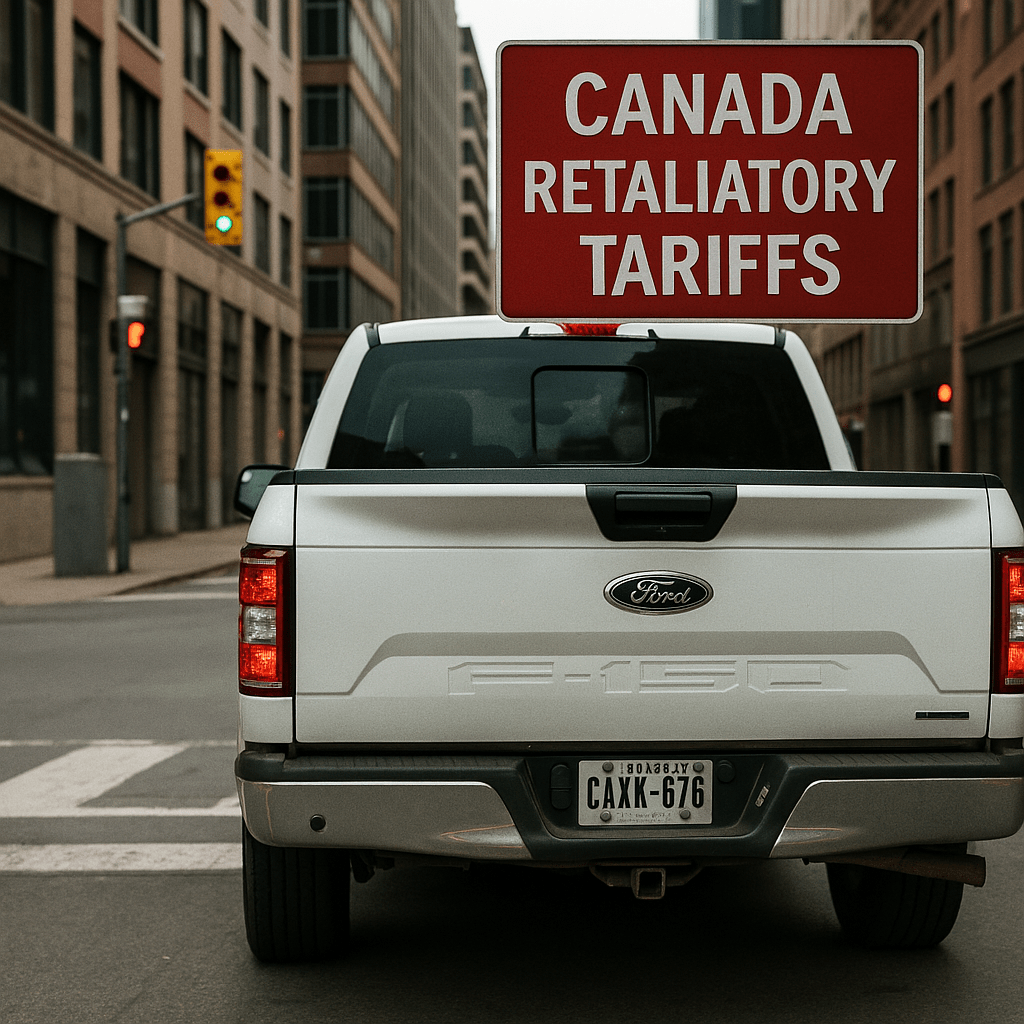
This week, the Canadian government announced that its retaliatory tariffs—25% duties on a range of U.S.-made automobiles—will go into effect on April 9, 2025, in response to Trump’s own sweeping auto tariffs targeting Canadian exports. Prime Minister Mark Carney called Washington’s move “a direct attack.” Ontario’s premier backed him up. But what no one will say aloud is the uncomfortable truth: Canada is under siege by its closest ally, and it’s starting to realize it.
This isn’t just a trade dispute—it’s imperial recalibration, with Canada caught between appearances of independence and the brute reality of U.S. economic domination.
At Weaponized Information, we’ve long argued that Canada isn’t a sovereign nation—it’s a white dominion masquerading as a middle power. Born of British imperialism, matured under American tutelage, and now fully embedded in the digital and military matrix of U.S. empire, Canada has always served as a buffer state in the Western imperial core.
But now, under Trump 2.0, that role is shifting. The U.S. is no longer satisfied with Canadian compliance—it demands consolidation.
That’s why we interpret these latest tariffs not simply as protectionist economic policy, but as part of a broader strategy of continental chokepoint consolidation. Trump’s aggression toward Canada is about more than cars—it’s about locking down the Arctic frontier, securing trade flows and rare earths, and asserting direct command over the northern geostrategic bottleneck in an era of climate breakdown and multipolar unraveling.
The Canadian government confirmed that the tariffs would remain until the U.S. drops its duties. At the same time, Canada filed a WTO dispute arguing the U.S. action violates GATT 1994. But as we’ve seen across the Global South, Washington doesn’t care about the rule of law—it cares about control.
Meanwhile, Canada is expanding its security and data-sharing pacts with the U.S.—deepening joint surveillance, militarizing the border, and syncing its digital infrastructure with Washington’s counterinsurgency grid. This isn’t partnership. It’s digital annexation.
What’s happening to Canada is a mirror of what’s happening globally: the imperial core cannibalizing its own periphery, weaponizing trade, territory, and surveillance to consolidate control over its crumbling empire.
Canada’s retaliatory tariffs are, in this context, not just economic—they’re symbolic. A quiet redline drawn in steel and engines. But symbolism isn’t enough. Because if Canada wants to be more than the polite arm of empire, it must not only retaliate—it must resist.
That means breaking from U.S. military integration, ending participation in border militarization, reversing technofascist surveillance pacts, and rediscovering what it means to be a nation that serves people—not capital.
This isn’t about tariffs. It’s about sovereignty in an era where sovereignty is incompatible with imperial loyalty.
The Global South already knows this. It’s time the North learns too.
Redlines are being drawn across the snow.
And the white empire is cracking under its own frostbite.
 Weaponized Information
Leave a comment