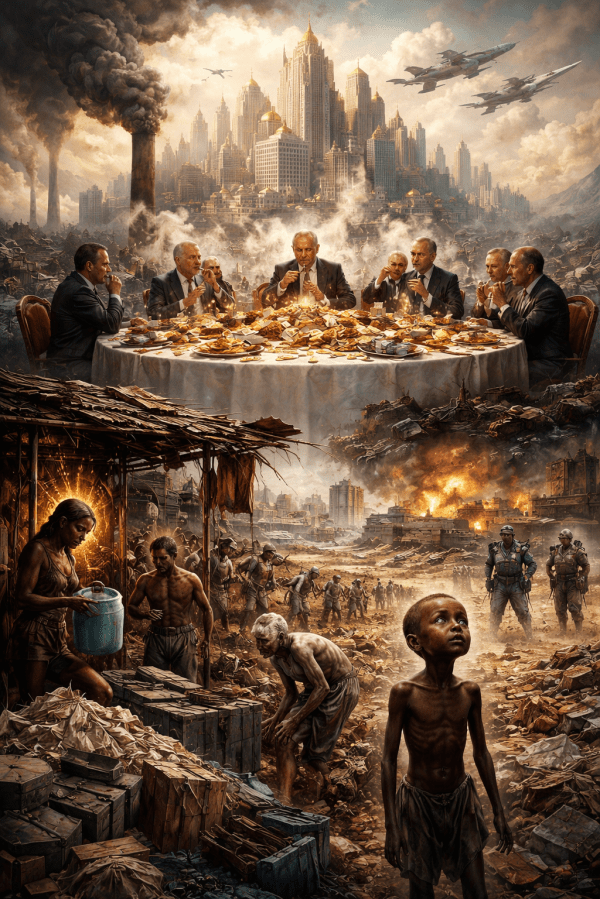
In The Political Economy of Growth, Paul A. Baran dismantles the myth that growth is neutral or benevolent, exposing it as a class project rooted in surplus extraction and imperial power. He shows how monopoly capitalism turns productivity into waste and development into stagnation, both at home and across the colonized world. Against liberal economics... Continue Reading →
How to Kill a Nation: Michael Parenti and the Imperial Instruction Manual — Humanitarian War, Economic Siege, and the Machinery of Regime Destruction
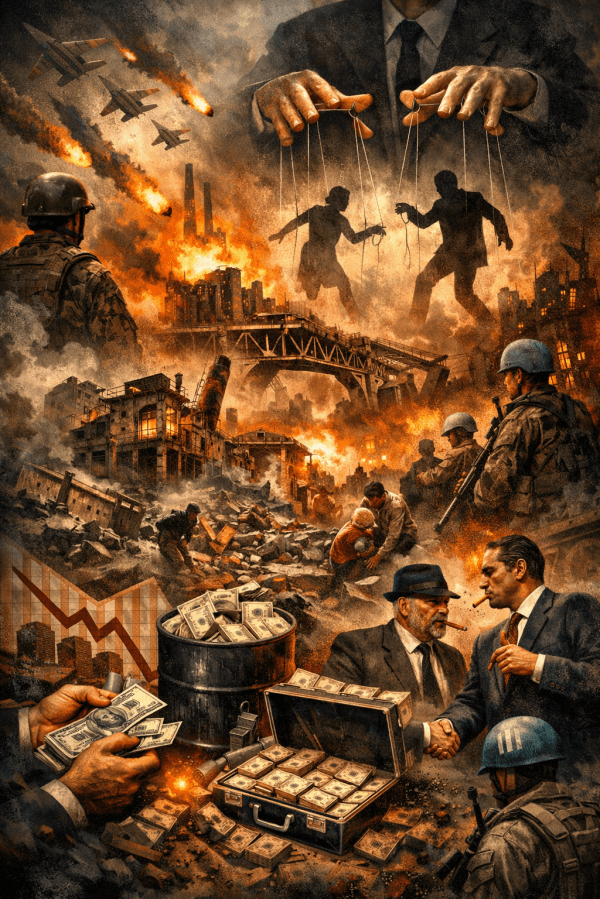
This review reads Michael Parenti’s To Kill a Nation as a field manual for modern empire, tracing how Yugoslavia was destroyed not by accident or ancient hatred but through a disciplined sequence of epistemological warfare, economic siege, political fragmentation, demonization, humanitarian pretext, and infrastructural annihilation, culminating in privatization, permanent dependency, and historical amnesia. By following... Continue Reading →
Empire’s Favorite Lie: Michael Parenti, Anti-Communism, and the Moral Alibi of Capital
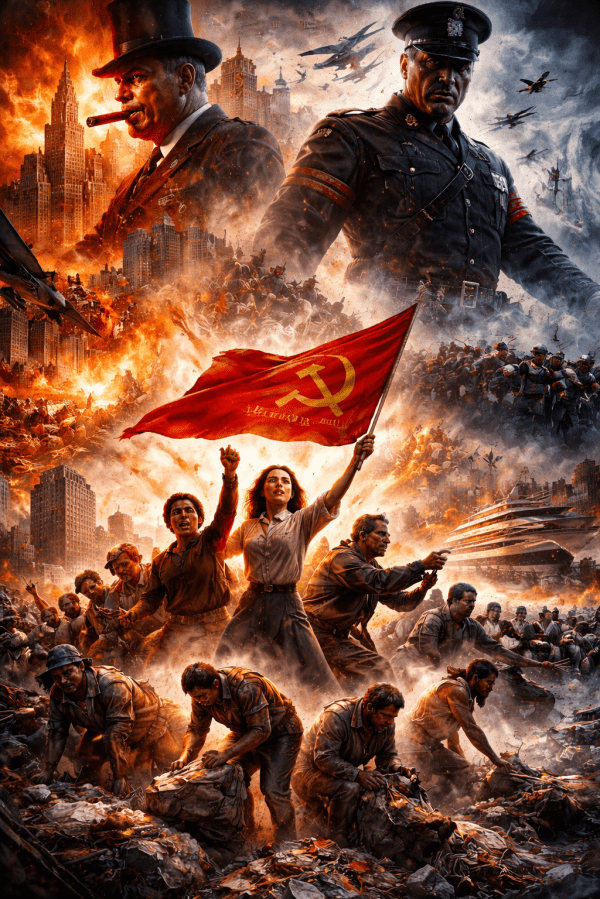
Anti-communism is not an opinion but an environment. The communist is demonized so empire can call itself innocent. Liberal reason disciplines dissent more effectively than repression. Vietnam exposes anti-communism as an ideology that requires bodies. By Prince Kapone | Weaponized Intellects Book Review | Weaponized Information | January 28, 2026 I. When Anti-Communism Becomes the... Continue Reading →
Capital’s Emergency Exit: Michael Parenti, Fascism, and the War on Class Memory
Fascism is not an aberration but a rational instrument deployed when capital loses democratic control. Socialist revolutions expanded freedom for the many and were met with siege, sabotage, and counterrevolution. The restoration of capitalism in the East revealed the market as a system of plunder, repression, and social decay. Anti-communism and class denial function as... Continue Reading →
The Great Lecture Hall and the Small Seminar Room: Michael Parenti Vs. Western Marxism
A tribute to Michael Parenti that situates his life’s work as a living challenge to the academic drift and political retreat of Western Marxism. This essay traces Parenti’s unified analysis of class power, empire, media, ideology, and anti-communism, arguing that his legacy is not a memory to be curated but a method to be used... Continue Reading →
Author, Authority, and Empire: How “Authoritarian” Became Political Science’s Favorite Weapon Against Mass Power
This essay is part of Weaponized Information’s larger project to forge a new discipline of political science—one that treats politics as the scientific study of power: how it is accumulated, organized, enforced, and resisted. In “Towards a New Political Science: Politics as the Science of Power”, we broke with procedural political science and its canon... Continue Reading →
The Mandate of Heaven: Empire, Civilization, and the War Over History’s Future
The ancient Chinese concept of the Mandate of Heaven was never superstition — it was a theory of political legitimacy rooted in material life, popular welfare, and historical judgment. This essay revives that framework as a weapon of analysis, comparing a United States empire that rules through coercion, sanctions, and decline management with a Chinese... Continue Reading →
Socialism of the 21st Century: Hugo Chavez on the Bolivarian Revolution and Socialism
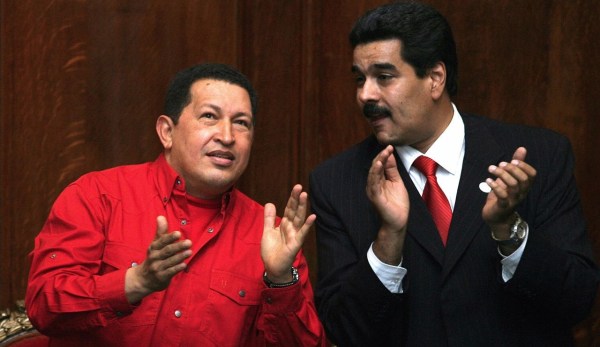
Hugo Chávez’s notebook for militants: party-building, revolutionary ethics, and the commune as the material base of people’s powerEdited by Prince Kapone • January 4, 2026Introduction Socialism of the 21st Century is not a memoir, a slogan, or a museum piece. It is a field manual for a revolution under siege — a set of sharp,... Continue Reading →
Who Owns Venezuela?
Trump’s claim that Venezuela “stole” U.S. oil is not a gaffe or exaggeration—it is an imperial verdict. This essay dismantles that claim by tracing the conflict over Venezuela’s resources through international law, the neoliberal wreckage of the pre-Chávez era, the Bolivarian rupture, Maduro’s Plan de la Patria, and María Corina Machado’s restoration blueprint. What emerges... Continue Reading →
Socialism Under Siege: Civil War, Degeneration, and the Fight to Keep Power in the Hands of the Masses
Socialism has never developed in peace. Forced to build under permanent imperial encirclement, every revolution has faced the same central contradiction: how to defend power without allowing administration to replace politics and coercion to substitute for mass legitimacy. Tracing this struggle from 1917 through Mao and into post-Mao China, this essay argues that siege is... Continue Reading →