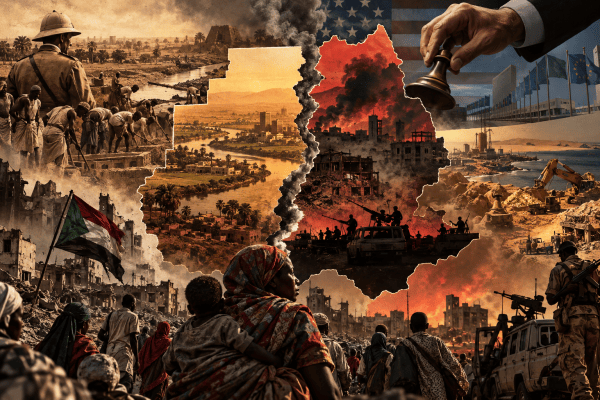
The War Built the Border: Sudan’s Partition Before the Ceasefire This essay argues that Sudan’s threatened partition didn’t begin with Washington’s latest ceasefire proposal. It traces the crisis through British colonial extraction, unequal development, Western creditor power, military accumulation, and the unfinished struggle opened by the December Revolution. As SAF and RSF turned on each other, war hardened front lines into rival economies, institutions, and systems of rule. The ceasefire therefore confronts a division already being built rather than creating it from nothing. Beneath the armies and foreign diplomacy, Sudanese civilian networks continue defending another basis for sovereignty rooted in the people who keep the country alive.
The War Built the Border: Sudan’s Partition Before the Ceasefire