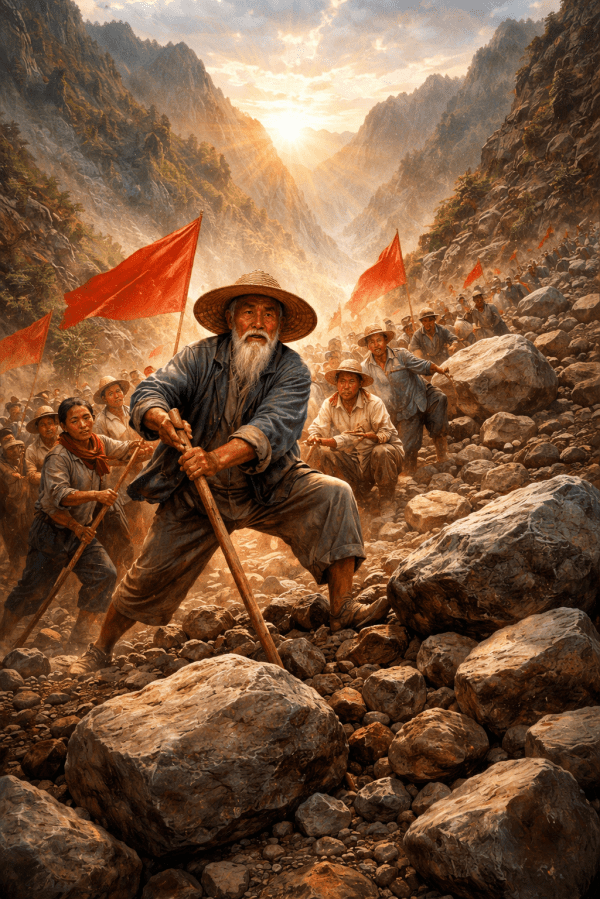
Marx’s Grundrisse: Capital’s Global Empire, Labor’s Stolen Time, and the Crisis It Cannot Escape

Marx dismantles liberal political economy and rebuilds the totality from production outward. Exchange and money reveal separation as the architecture of domination. Machinery and the general intellect expose capital’s war against its own measure of value. The world market universalizes crisis while pointing beyond labor time toward free development. By Prince Kapone | Weaponized Information... Continue Reading →

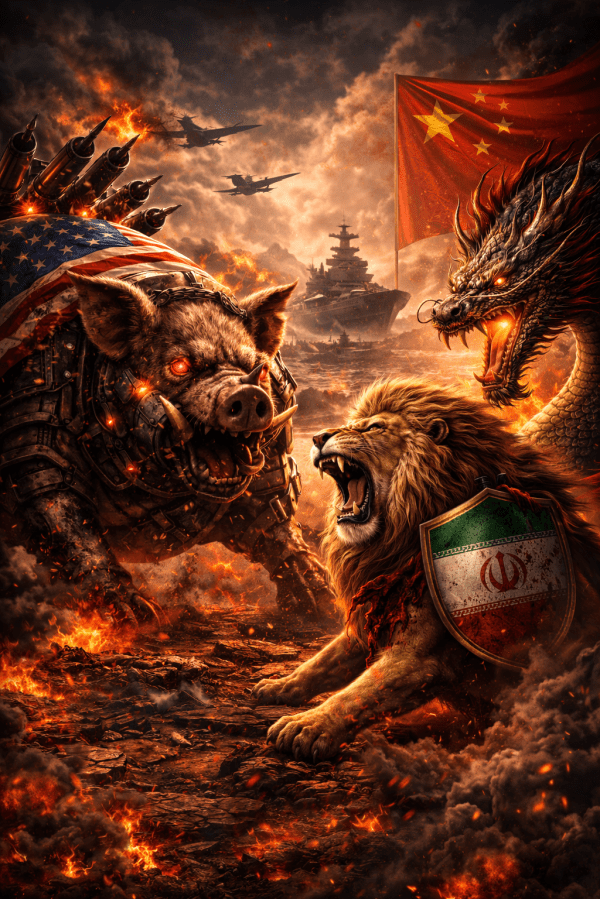
Berlin’s Boardrooms, NATO’s Generals, and Beijing’s Factories: Germany’s Trade Deficit and the Crisis of Imperial Supremacy

A romance metaphor conceals structural strain. The trade ledger exposes export contraction and rising militarization. Industrial rivalry is recoded as security doctrine. Workers and colonized nations confront the costs—and the opening.By Prince Kapone | Weaponized Information | February 19, 2026When the Empire Calls It Heartbreak Our excavation begins with a February 19, 2026 piece from... Continue Reading →

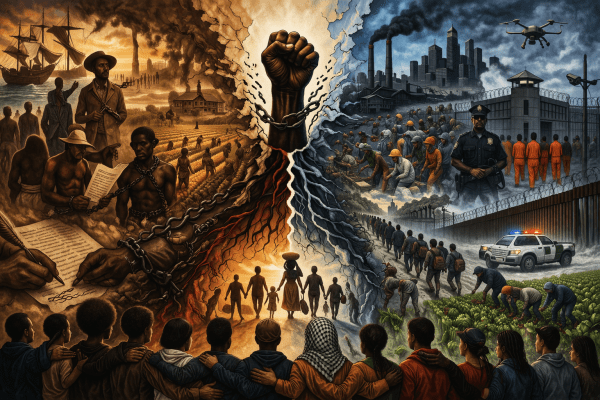
Empire vs. Sekou Odinga: Counterinsurgency, Community Power, and the War for Black Liberation (1944–2024)

Jamaica, Queens forged a revolutionary in the shadow of Malcolm X. The Black Panther Party built dual power — and the state answered with disruption. Underground struggle met federal conspiracy and thirty-three years of captivity. Elderhood returned him to a new generation still facing the same empire. By Prince Kapone | Weaponized Information | Black... Continue Reading →

Carney, NATO, and the War Contractors: How Canada’s “Sovereignty” Pivot Deepens the Military Bloc

The New York Times sells a procurement shift as national independence. The numbers reveal a structural escalation anchored in NATO and continental integration. The pivot redistributes contracts while entrenching a war-oriented political economy. Workers and movements face a choice: defend the arms budget or reorganize production itself.By Prince Kapone | Weaponized Information | February 16,... Continue Reading →

Cathedrals and Carriers: Marco Rubio’s Civilizational Manifesto for a New Western Century

In Munich, the language of heritage, sovereignty, and renewal cloaks a program of bloc consolidation, industrial recalibration, hardened borders, and unilateral force. Beneath the hymn to Western civilization lies a disciplined strategy to reassert Atlantic primacy in a multipolar world. The question is not whether the West will act — but who benefits from how... Continue Reading →

Claudia Jones vs. Empire: Black Communism, White Supremacy, and the War on the Most Exploited

The daughter of Caribbean labor radicalism enters the furnace of U.S. racial capitalism. The Communist Party becomes a battlefield over race, class, and the super-exploitation of Black women. McCarthyism criminalizes Black internationalism and deports a revolutionary. Exile in Britain transforms repression into new insurgent possibility. By Prince Kapone | Weaponized Information | Black History Matters... Continue Reading →

The K They Drew, The System They Hid: Confidence, Concentration, and the Architecture of a Split Economy

Wall Street calls it sentiment. Corporate media calls it divergence. But beneath the alphabet metaphors lies a decades-long transfer of wealth, power, and sovereignty from labor to capital. The numbers do not describe a mood swing. They describe a system working exactly as designed. By Prince Kapone | Weaponized Information | February 11, 2026 When... Continue Reading →

Washington Calls It “Partnership” While Vietnam Calls It Survival: How Empire Pathologizes the Memory of War

Corporate media reframes a nation’s hard-earned vigilance as psychological insecurity, quietly teaching readers to distrust the survival instincts of a people who have already endured invasion and annihilation. The buried history of bombardment, chemical warfare, and economic leverage resurfaces to show that Hanoi’s caution grows from lived material reality, not ideological stubbornness. Behind the language... Continue Reading →

How to Kill a Nation: Michael Parenti and the Imperial Instruction Manual — Humanitarian War, Economic Siege, and the Machinery of Regime Destruction

This review reads Michael Parenti’s To Kill a Nation as a field manual for modern empire, tracing how Yugoslavia was destroyed not by accident or ancient hatred but through a disciplined sequence of epistemological warfare, economic siege, political fragmentation, demonization, humanitarian pretext, and infrastructural annihilation, culminating in privatization, permanent dependency, and historical amnesia. By following... Continue Reading →

Website Powered by WordPress.com.

Up ↑