Factories for the Fortress, Austerity for the People: America’s Imperial Reconstruction

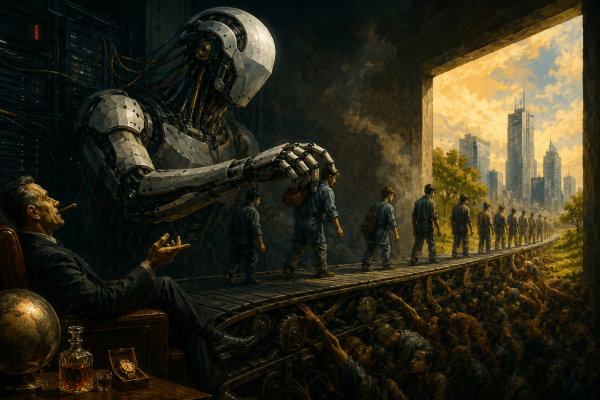
The so-called manufacturing rebound lauded by CNBC is a deceptive mirage masking an imperial crisis. Beneath flashy growth numbers lie the ruins of a deindustrialized America, where financial extraction and reliance on foreign inputs have left vital sectors like semiconductors and military production at risk. Tariffs inflate costs, wars disrupt essential supply chains, and the resulting economic strain is shifted onto workers and marginalized communities. Capital demands industry without meaningful investment in labor or infrastructure, turning factories into fortresses of control rather than engines of prosperity. This isn't a renaissance; it's an imperial scramble desperately attempting to reclaim dominance amid its own financial decay.

The Crime of Making Too Much: China and the Empire’s Monopoly on Abundance

The Economist's recent critique of China's industrial prowess reveals a deeper hypocrisy within Western narratives. While it acknowledges China's efficiency, it vilifies state-driven competition when it disrupts Western hegemony. The real issue is not overproduction but an imbalance of purchasing power, presenting an ugly tableau of warehouses filled with goods while people lack access. As China strives for self-reliance, the West's response is to impose tariffs and sanctions, prioritizing monopoly over equitable distribution. This conflict isn’t a mere economic dispute; it’s a struggle for who controls productive capacity. The question is whether to align production with human need or maintain the status quo of inequality.

Crouching Tiger, Hidden Shareholder: The Empire Goes on the Auction Block

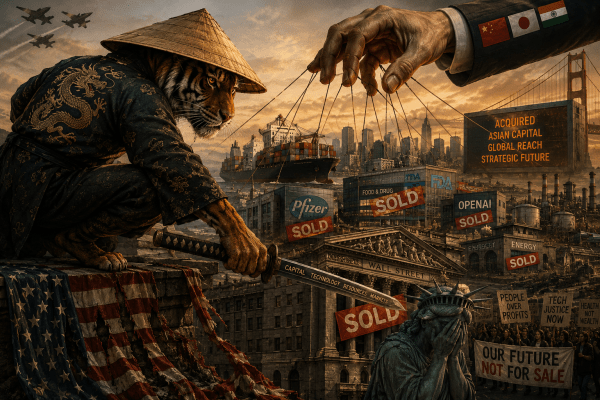
What if the façade of Asian firms acquiring American assets is merely a veneer masking a broader crisis of imperial power? The Asia Times' portrayal presents a triumphant narrative of capital flows, yet ignores the brutal realities behind ownership transitions. As firms like Sun Pharma and Mitsubishi grasp at American infrastructure, the underlying forces of deindustrialization, labor exploitation, and geopolitical tensions are left unexamined. This isn't progress—it's a manipulation of perception. The real question remains: who controls these vital resources? Without a radical reimagining of ownership, the future remains shackled to elite interests, while workers are forced to celebrate their own dispossession.

Software, Sanctions, and the Empire in Decline

How U.S. Economic Warfare Against China Exposes the Crisis of Hyper-Imperialism By Prince Kapone | Weaponized Information | October 22, 2025 The Empire’s Invisible Hand on the Newswire On October 22, 2025, Reuters published a story announcing that the United States is “considering” sweeping new export restrictions on any product “containing or made with U.S.... Continue Reading →

Website Powered by WordPress.com.

Up ↑