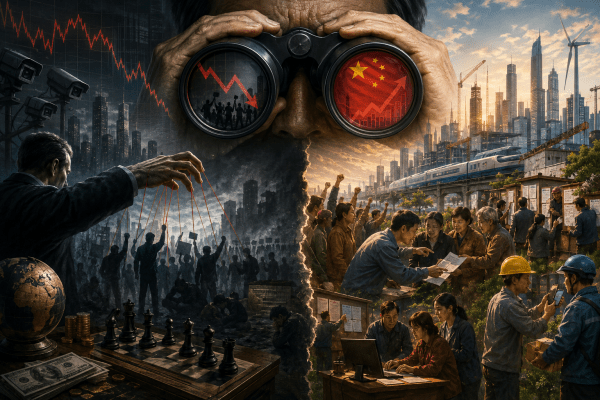
Bloomberg turns a decline in documented protests into evidence of a hidden political crisis, relying on a US-backed monitoring project whose methods cannot support such sweeping conclusions. By collapsing wage disputes, housing conflicts, petitions, and local administrative complaints into the single category of “dissent,” the article strips Chinese grievances of their concrete class content. It also ignores the institutions through which millions of people pursue redress and reduces China’s political system to a Cold War caricature. The result is not a serious account of Chinese society, but investor intelligence: workers appear only as risks to accumulation, while the real struggle over socialism’s direction disappears.
China’s Missing Protests: How Bloomberg Turns Workers’ Grievances into Investor Intelligence