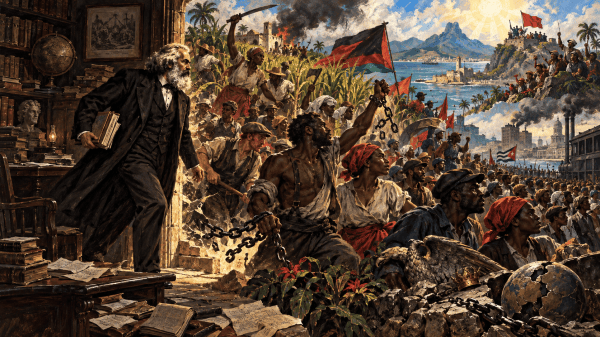
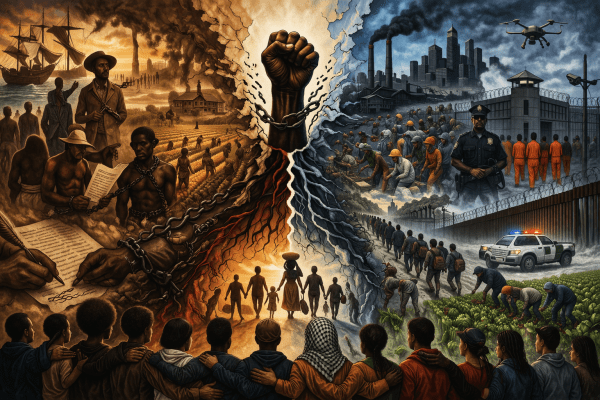
August Nimtz’s "Black Marxism: A Marxist Critique" challenges Cedric Robinson's assertion that Marxism and Black radicalism are distinct, arguing instead that Marx's historical materialism evolved through encounters with colonialism and Black liberation struggles. Nimtz argues that genuine internationalism requires oppressed groups to first forge autonomous political identities before uniting. Using Cuba as a case study, he shows how socialist transformation can materially alter racial dynamics yet acknowledges persistent inequalities. Ultimately, he posits that revolutionary potential arises not just from class position but from active struggle and organization, emphasizing that no class is born universally revolutionary and that political agency must be cultivated through history and struggle.
History Against the Formula: August Nimtz, Cedric Robinson, and the Making of Revolutionary Universality