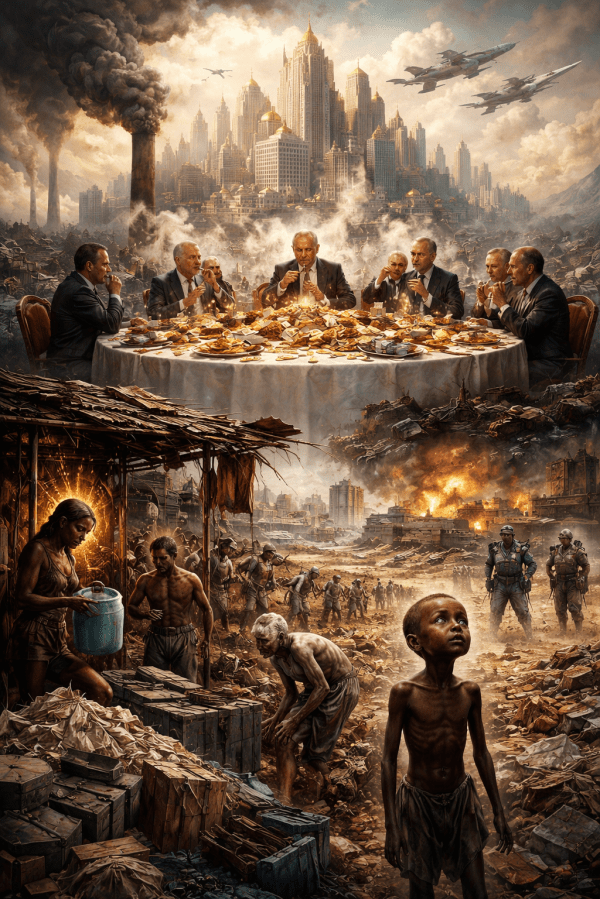
Trump, ABC, and the Monopoly Class: Tariffs, Tax Cuts, and the Crisis of Imperial Political Economy

Corporate media frames tariffs as a consumer morality tale while shielding monopoly power. The data reveals regressive burdens, profit expansion, and geopolitical escalation beneath the headline numbers. Trade warfare emerges as imperial recalibration in a fading unipolar order. Labor, colonized nations, and multipolar movements must organize where the contradictions already burn.By Prince Kapone | Weaponized... Continue Reading →

Growth Without Development: How Capitalism Produces Abundance, Manufactures Poverty, and Calls It Progress

In The Political Economy of Growth, Paul A. Baran dismantles the myth that growth is neutral or benevolent, exposing it as a class project rooted in surplus extraction and imperial power. He shows how monopoly capitalism turns productivity into waste and development into stagnation, both at home and across the colonized world. Against liberal economics... Continue Reading →

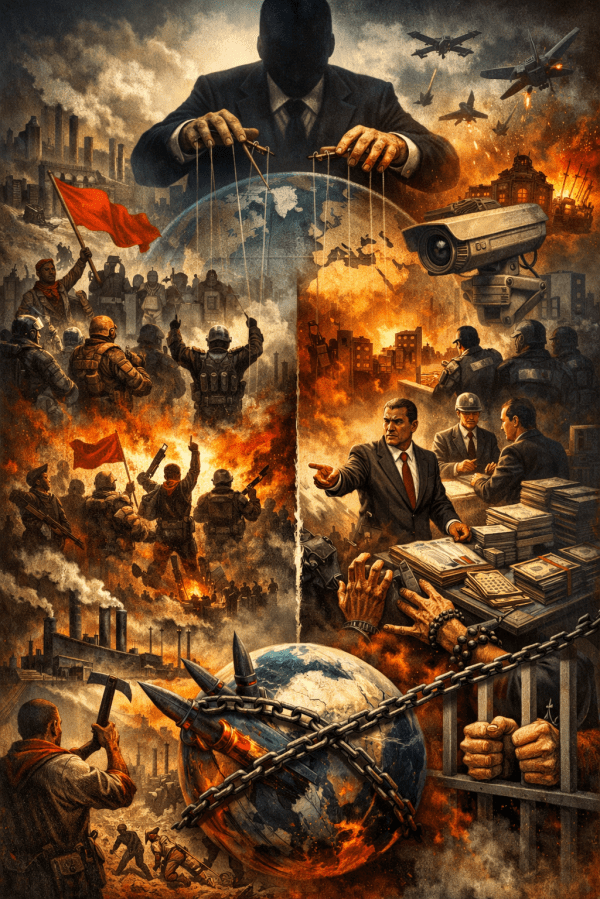
The Pole and the Cage: Fortress America, Technofascism, and the Labor Regime of Imperial Decline

The U.S. economy is generating profits without integrating people into stable life. Domestic labor is being recalibrated through precarity, surveillance, and managed migration. Fortress America turns the hemisphere into a disciplined rear-base of corridors, minerals, and compliant labor. The American Pole and technofascism are one system—an empire tightening the enclosure at home and abroad.By: Prince... Continue Reading →

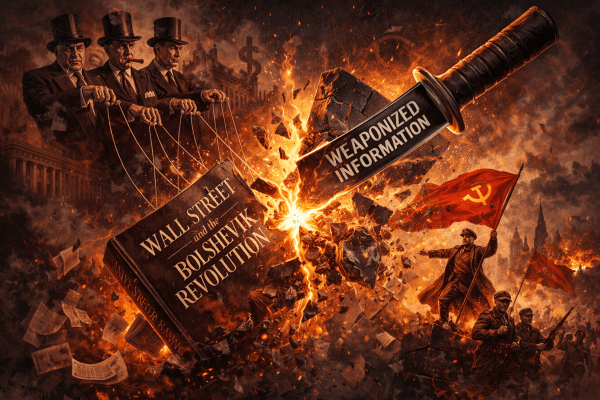
Wall Street vs. the Soviets: Sutton’s Banker Puppet-Show and the Class War He Tries to Hide

Sutton replaces workers, soldiers, and soviets with bankers and boardrooms, turning revolution into elite theater. Trotsky’s travel becomes “proof” of sponsorship, as bureaucracy and wartime chaos are rebranded as capitalist command. Forged documents linger as atmosphere while the real record—bank nationalization, debt repudiation, and trade monopoly—buries the thesis. The book ends where history begins: capital... Continue Reading →

Author, Authority, and Empire: How “Authoritarian” Became Political Science’s Favorite Weapon Against Mass Power

This essay is part of Weaponized Information’s larger project to forge a new discipline of political science—one that treats politics as the scientific study of power: how it is accumulated, organized, enforced, and resisted. In “Towards a New Political Science: Politics as the Science of Power”, we broke with procedural political science and its canon... Continue Reading →

Walter Rodney’s Guyanese Working People: How Colonial Capital Made the Class It Had to Control

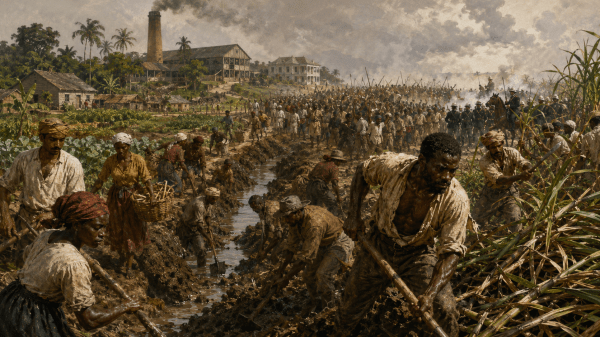
Walter Rodney begins with a colonial society physically reproduced by working people yet organized to deny those same people control over the labor, land, and material conditions that kept it alive. Emancipation shattered slavery’s legal form without resolving capital’s labor problem, forcing the struggle onto new terrain as workers used land, villages, mobility, and subsistence... Continue Reading →

Website Powered by WordPress.com.

Up ↑