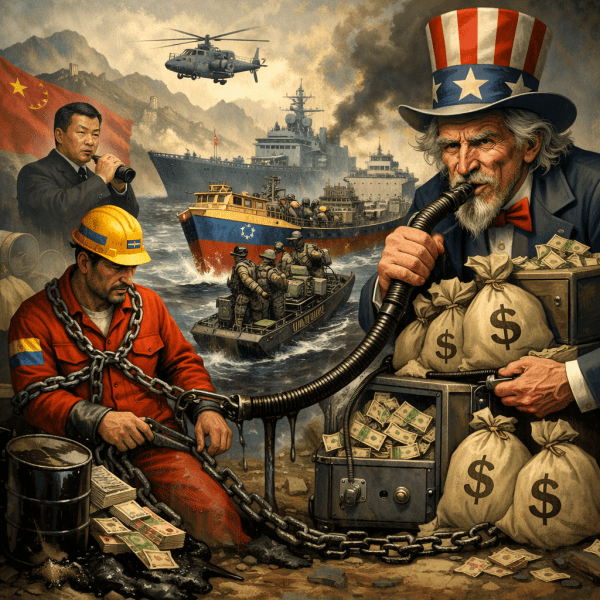
Reuters sells custodial plunder as a pricing issue, turning blockade into “market caution.” We restore the missing record: seizures, supervision, and the re-routing of Venezuelan oil revenue through imperial hands. We reframe the contradiction as doctrine—Fortress America tightening hemispheric command as multipolar escape routes multiply. We close with a call to organize: break the information... Continue Reading →
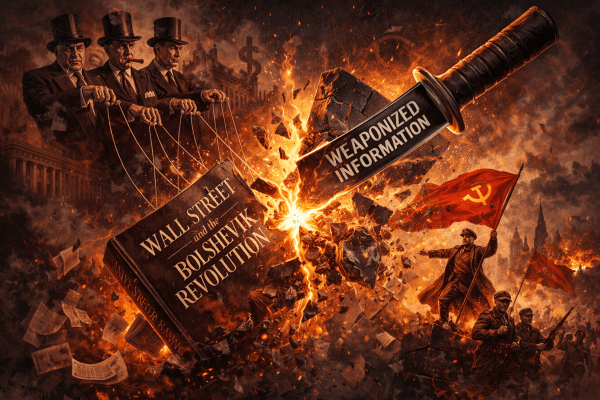
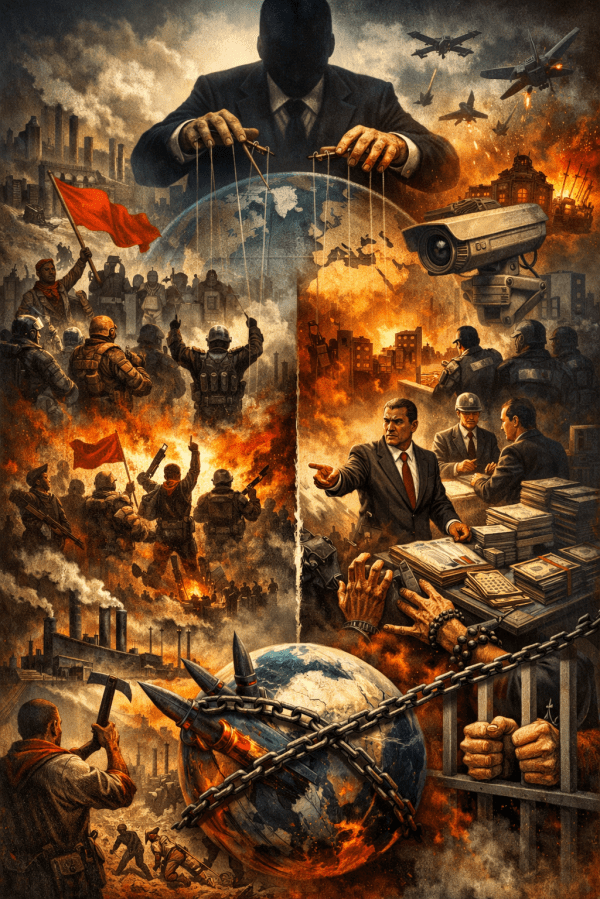
Wall Street vs. the Soviets: Sutton’s Banker Puppet-Show and the Class War He Tries to Hide
Sutton replaces workers, soldiers, and soviets with bankers and boardrooms, turning revolution into elite theater. Trotsky’s travel becomes “proof” of sponsorship, as bureaucracy and wartime chaos are rebranded as capitalist command. Forged documents linger as atmosphere while the real record—bank nationalization, debt repudiation, and trade monopoly—buries the thesis. The book ends where history begins: capital... Continue Reading →
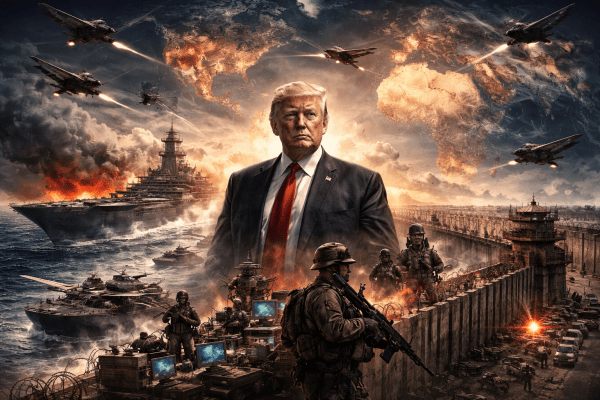
Denial by Design: Trump 2.0, the Pentagon, and the 2026 National Defense Strategy
The 2026 NDS turns imperial storytelling into imperial workflow. The Western Hemisphere is redesigned as warfighting rear-base and corridor system. Denial becomes the empire’s default form of power under constraint. Simultaneity panic fuses alliances, industry, and border militarization into one war-state machine.By:Prince Kapone | Weaponized Information | January 27, 2026When Doctrine Stops Explaining and Starts... Continue Reading →
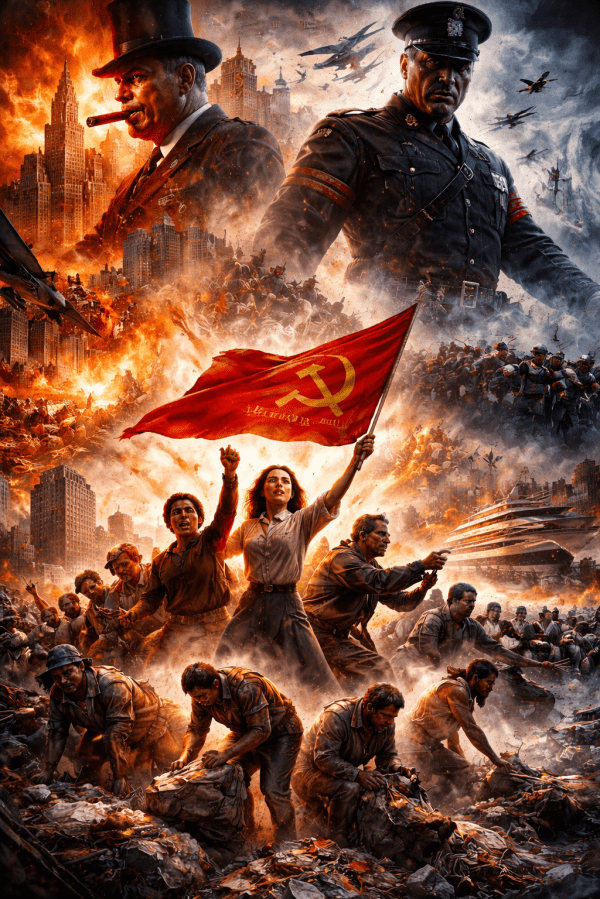
Capital’s Emergency Exit: Michael Parenti, Fascism, and the War on Class Memory
Fascism is not an aberration but a rational instrument deployed when capital loses democratic control. Socialist revolutions expanded freedom for the many and were met with siege, sabotage, and counterrevolution. The restoration of capitalism in the East revealed the market as a system of plunder, repression, and social decay. Anti-communism and class denial function as... Continue Reading →
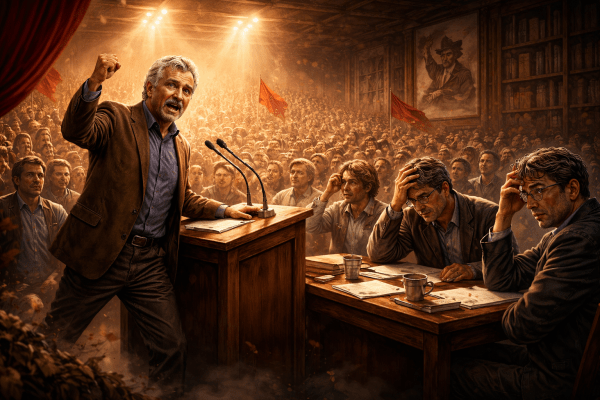
The Great Lecture Hall and the Small Seminar Room: Michael Parenti Vs. Western Marxism
A tribute to Michael Parenti that situates his life’s work as a living challenge to the academic drift and political retreat of Western Marxism. This essay traces Parenti’s unified analysis of class power, empire, media, ideology, and anti-communism, arguing that his legacy is not a memory to be curated but a method to be used... Continue Reading →
Taking the Sign Out of the Window: Mark Carney, Middle Powers, and the Managed Truth of a Fortifying World
At Davos 2026, Canada’s prime minister declares the rules-based order dead and urges “honesty” about power. But beneath the rhetoric of truth lies a disciplined strategy for stabilizing imperial hierarchy, fortifying the middle powers, and managing decline without rupture. By Prince Kapone | Weaponized Information | January 24, 2026When the Lie Stops Paying the Rent... Continue Reading →
Author, Authority, and Empire: How “Authoritarian” Became Political Science’s Favorite Weapon Against Mass Power
This essay is part of Weaponized Information’s larger project to forge a new discipline of political science—one that treats politics as the scientific study of power: how it is accumulated, organized, enforced, and resisted. In “Towards a New Political Science: Politics as the Science of Power”, we broke with procedural political science and its canon... Continue Reading →
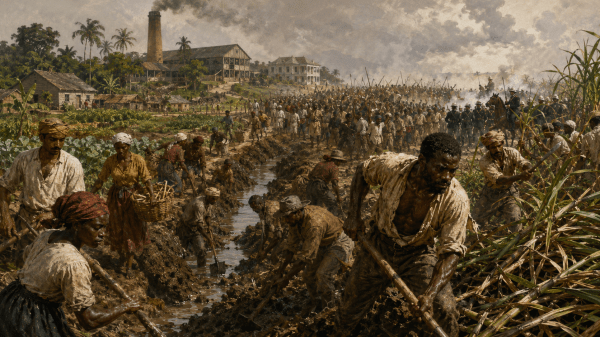
Walter Rodney’s Guyanese Working People: How Colonial Capital Made the Class It Had to Control
Walter Rodney begins with a colonial society physically reproduced by working people yet organized to deny those same people control over the labor, land, and material conditions that kept it alive. Emancipation shattered slavery’s legal form without resolving capital’s labor problem, forcing the struggle onto new terrain as workers used land, villages, mobility, and subsistence... Continue Reading →
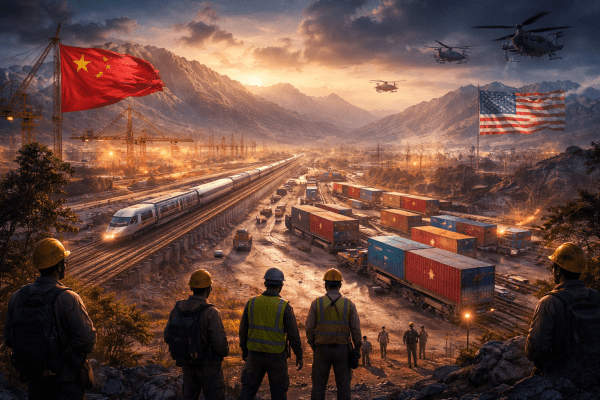
Influence Without Empire: How China’s Infrastructure Exposes the Crisis of Imperial Narratives in Central Asia
A wire story turns development into suspicion by replacing politics with the language of “influence.”The facts reveal a region actively recalibrating after decades of imposed dependency and underdevelopment.Beneath the headlines lies a global shift where infrastructure collides with imperial decline and class struggle.The task ahead is to organize solidarity so this opening leads to sovereignty,... Continue Reading →
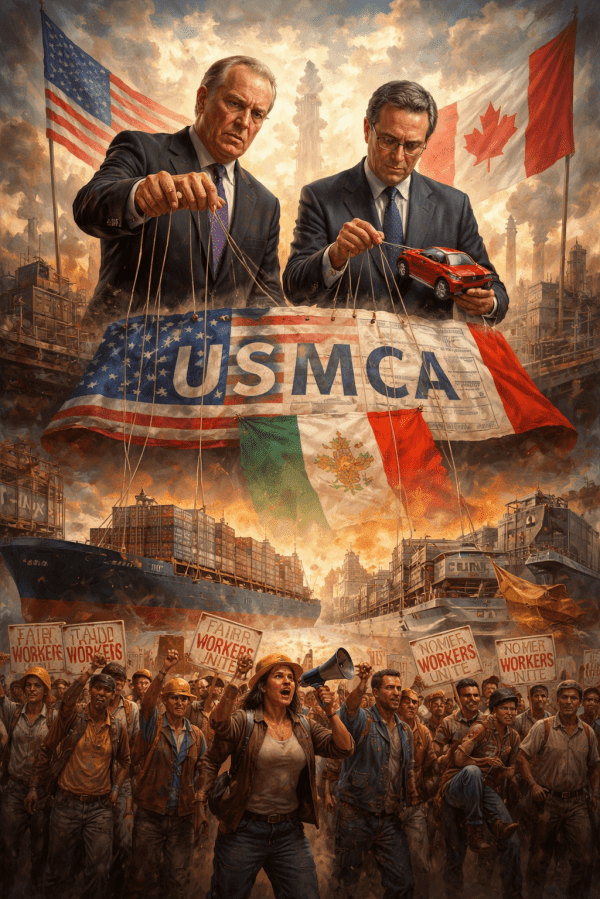
Lutnick, Carney, and the Politics of Permission: How USMCA Discipline Turns Trade Into Obedience
A U.S. trade official scolds Canada for stepping outside its assigned lane, revealing how power speaks through “commentary.” The facts show a bounded policy shift unfolding inside an unstable trade and industrial landscape the story refuses to name. Placed in historical and imperial context, the outrage reads less as economics than as enforcement of hierarchy... Continue Reading →