✝️ From the Cross to the Throne: A Weaponized Information Series
How empire hijacked a gospel of the poor—and how the oppressed kept it alive. Explore the full series below:
The Church Before Christianity – The Revolutionary Commune of the First Followers
By Weaponized Information
Before Christianity Became Christian
Before it became a religion of bishops and basilicas, of creeds and empires, Christianity was a movement. And before it was called Christianity at all, it was something else entirely: a grassroots insurgency of the poor, the sick, the indebted, and the outcast—led by a colonized healer from the ghetto hills of Galilee.
This essay examines that original church—not the one enshrined in doctrine, but the one born in struggle. From Jesus’ political ministry to the first post-crucifixion community led by his family and disciples, this is the story of a revolutionary gospel practiced in the streets before it was preached in sanctuaries.
I. Historical Context: Roman Palestine and the Colonized Christ
First-century Palestine was not a spiritual metaphor. It was a brutal Roman province under military occupation and economic extraction. Land theft, crushing taxation, generational debt, and state violence were daily realities.
Jesus of Nazareth was not a metaphysical savior. He was a poor Jew in an occupied land—one of many crushed under Roman imperialism. His ministry was not a call to apolitical piety, but a material confrontation with empire.
“The Spirit of the Lord is upon me… he has anointed me to proclaim good news to the poor… to set the oppressed free.”
—Luke 4:18
That was not a sermon. It was a revolutionary program.
II. Doctrines and Teachings: The Gospel as Liberation
Jesus’ teachings were not theological abstractions but revolutionary declarations. His gospel centered the poor, lifted the downtrodden, and exposed the rich and powerful as enemies of God’s justice.
“Blessed are you who are poor, for yours is the kingdom of God… But woe to you who are rich.”
—Luke 6:20, 24
Jesus demanded the redistribution of wealth (Mark 10:21), the cancellation of debts (Luke 7:42), and direct material provision for the hungry (Mark 6). Even the Lord’s Prayer invokes this ethic: “Give us this day our daily bread” (Matthew 6:11).
This was a material gospel. A revolutionary theology. A threat to every imperial structure that stood on the backs of the working class and colonized poor.
III. Practices and Rituals: Breaking Bread as Political Memory
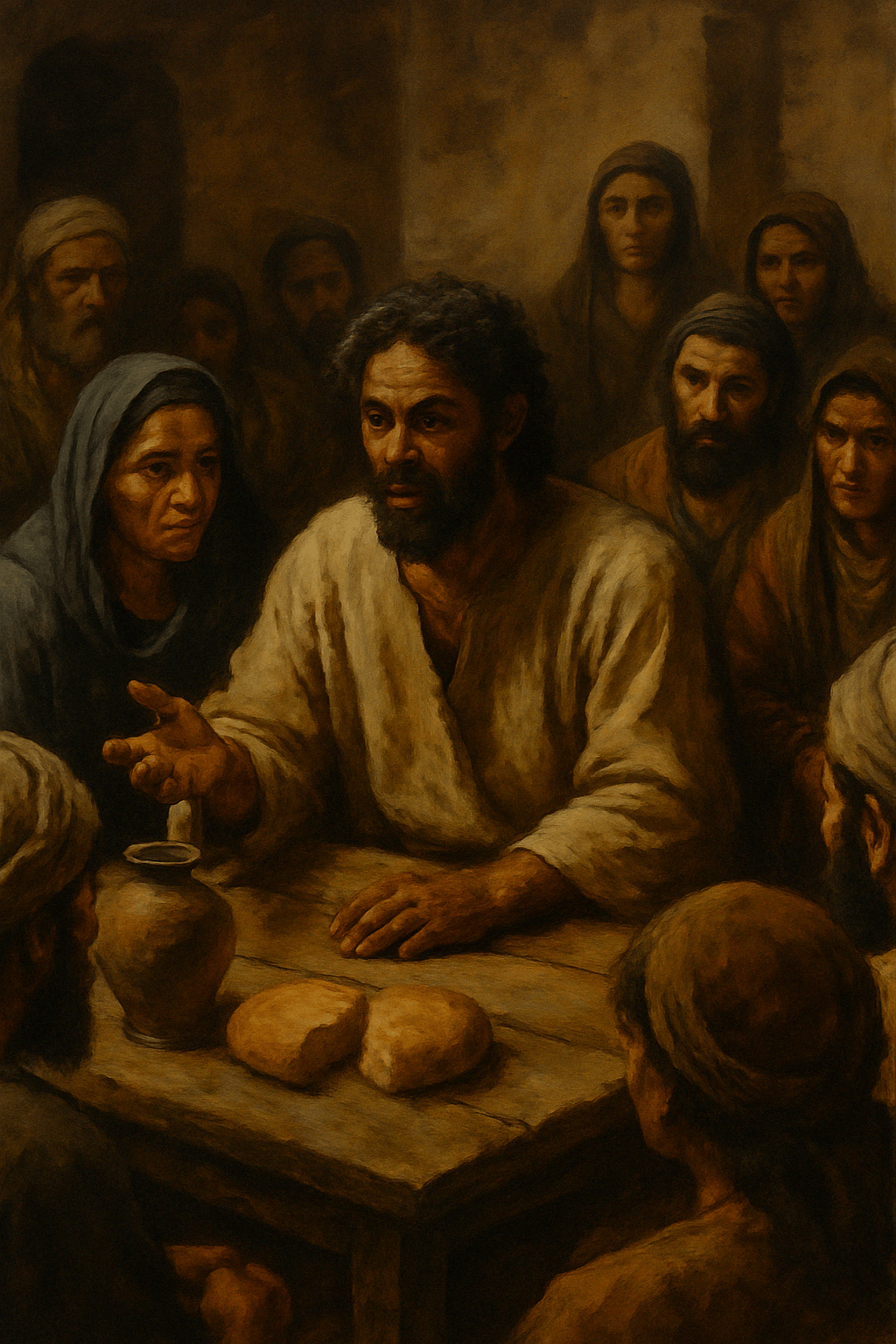
Jesus’ rituals were acts of resistance. His final meal was not a mystical rite—it was a political moment. At the Last Supper, Jesus broke bread and said:
“This is my body, broken for you.”
—Luke 22:19
It was a prophetic indictment. A reminder of what the state does to rebels. The early community continued this practice, not as liturgy but as revolutionary memory. In Acts 2:42–46, they gathered to “break bread” in homes—sharing meals, resources, and commitment to the movement Jesus died for.
IV. Organizational Structure: Horizontal and Communal
The earliest church was decentralized, egalitarian, and grounded in relational leadership. Authority rested with those closest to Jesus—James (his brother), Peter, and the women who stood with him in death and resurrection.
There were no bishops. No creeds. No gatekeepers of the sacred. Leadership emerged from experience and service, not titles.
“All the believers were together and had everything in common… they sold property and possessions to give to anyone who had need.”
—Acts 2:44–45
This was not organizational hierarchy. It was communal power. A people’s church.
V. Social Relations and Material Life: The Politics of Shared Bread
The social foundation of the early church was material solidarity. They didn’t spiritualize hunger. They fed each other. They didn’t theorize equality. They practiced it.
“No one claimed that any of their possessions was their own… and there were no needy persons among them.”
—Acts 4:32–34
It wasn’t charity—it was revolutionary redistribution. A concrete rejection of Roman and temple economics in favor of a new social order built from below.
VI. Theological Orientation: Embodied Faith, Earthly Hope
The theology of the early church was not obsessed with metaphysics. Jesus wasn’t yet a cosmic deity—he was the executed prophet whose life demanded imitation.
Their hope wasn’t in escaping to heaven. It was in bringing heaven to earth. The “Kingdom of God” was not a future realm but an insurgent reordering of the present.
Jesus didn’t preach submission to empire—he preached its collapse. And the early church believed in a resurrection that wasn’t just personal but political: the raising of a new world from the ruins of the old.
A Church the Empire Could Not Tolerate
The church before Christianity was not a religion. It was a revolutionary community of the poor, organized around the memory of a martyred teacher and the promise of collective survival.
Before Paul universalized the message, before bishops erected cathedrals, before Constantine baptized empire, there was this: a broken loaf, a shared home, a cry for justice echoing from the alleys of Galilee to the streets of Jerusalem.
This was the church that lived before doctrine. And it still lives today—wherever the poor are fed without asking permission, wherever the oppressed organize to break their chains, and wherever the memory of Jesus is reclaimed from the thrones and returned to the people he loved.
 Weaponized Information
Leave a comment