The Political Economy of Fiber Optics Under Technofascism
By Weaponized Information
At the dawn of the 21st century, fiber optic infrastructure emerged as the central nervous system of the global digital economy. Today, under the regime of technofascism—our term for the fusion of monopoly finance capital, Big Tech, fossil fuel empires, and the repressive surveillance state—fiber optics is no longer just a technical medium. It is an imperial instrument.
Far from neutral wires in the ground, fiber optic cables are geopolitical weapons, financial assets, and instruments of class warfare. They are the veins through which flows not only data, but capital, coercion, and control. And in the era of technofascism, their political economy must be understood not as a byproduct of innovation but as a deliberate architecture of global domination.
Fiber Optics as Imperial Infrastructure
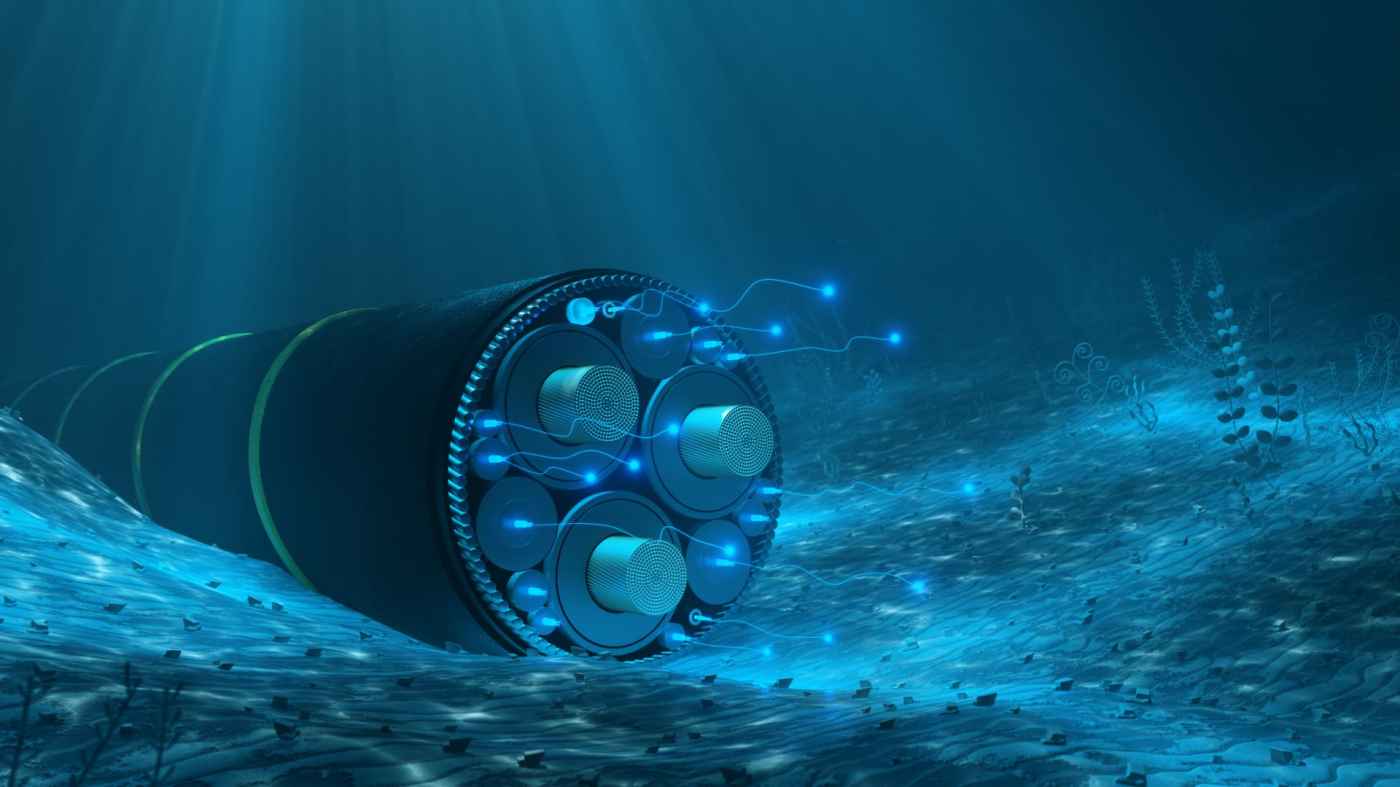
From the moment DARPA-funded engineers laid the groundwork for high-speed optical transmission, the state-capital nexus was hardwired into the development of the internet’s infrastructure. Like railroads during the settler-colonial expansion of the 19th century, fiber optics now serve as the infrastructural backbone of 21st century empire. Undersea fiber cables connect financial capitals and military command centers from Wall Street to Okinawa, from Silicon Valley to Diego Garcia.
Ownership and control over these cables are heavily consolidated in the hands of a few tech-finance giants—Google, Facebook, Amazon, Microsoft, and their Wall Street investors. The same BlackRock-Vanguard axis that holds the largest stakes in fossil fuel companies and weapons manufacturers is also investing heavily in digital infrastructure, with fiber optics at the center.
This is not accidental. Fiber optic control enables the real-time circulation of capital and data across borders, the extraction of global surplus value, and the enforcement of imperial discipline on both state and individual actors. The so-called “cloud” is not floating in the ether; it is grounded in concrete, energy-intensive data centers connected by physical cables under the seabed and through the heartlands of empire. Whoever owns the cables controls the cloud—and by extension, the command centers of contemporary capitalism.
Fiber and the Class Composition of Technofascism
In the domestic core of the U.S. empire, fiber optic expansion is presented as a project of innovation, inclusion, and connectivity. In reality, it is a digital enclosure of the commons. Urban neighborhoods are wired according to profitability, not need. Rural and poor communities—particularly Black, Indigenous, and migrant populations—remain disconnected or underserved, reproducing digital apartheid within the empire’s own borders.
The production and maintenance of fiber infrastructure relies on a fragmented global labor regime. Low-paid, precarious workers mine the rare earth elements needed for optical amplifiers in the Democratic Republic of Congo, fabricate semiconductors in Taiwan and Malaysia, and lay cables on the ocean floor under grueling conditions—all while U.S.-based monopolies capture the majority of the profits.
Technofascism requires this spatial division of labor: intellectual property and profit are centralized, while risk and exploitation are outsourced. The worker who installs a fiber connection in Baltimore or Bangalore does not own the bandwidth they create; they are alienated from the infrastructure in both material and political terms. Meanwhile, the real beneficiaries—tech executives, hedge fund managers, and military planners—use the network to automate, surveil, and control.
Militarization, Surveillance, and the Weaponization of Fiber
Fiber optics under technofascism is not just about commerce—it’s about command. The same network that delivers your Netflix stream also transmits military orders, harvests biometric data, and facilitates predictive policing. Surveillance capitalism depends on high-speed fiber connections to operate in real time: scraping data, training algorithms, and feeding AI systems used for border control, drone warfare, and domestic counterinsurgency.
The militarization of fiber networks is clearest in the realm of submarine cables. U.S. intelligence agencies, in partnership with tech corporations, have systematically tapped undersea cables to monitor global internet traffic. The Snowden revelations barely scratched the surface. Today, AI-assisted packet inspection and quantum key distribution experiments suggest that the next generation of fiber-based surveillance will be even more totalizing.
Just as oil pipelines were protected by coups, drones, and private mercenaries, the fiber optic routes of technofascism are protected by secrecy, militarization, and privatized force. Any nation that attempts to nationalize or regulate fiber infrastructure—whether China’s Huawei or Venezuela’s CANTV—becomes a target of economic warfare, sanctions, or regime change. Fiber is empire, and empire defends its assets with blood.
A New Stage of Digital Primitive Accumulation
What we are witnessing is not merely a digital revolution—it is a process of digital primitive accumulation. Fiber networks are the scaffolding for expropriating labor, privatizing knowledge, enclosing digital territories, and reorganizing human life for capital’s benefit. The illusion of access masks a deep asymmetry in power: the oppressed are connected not to liberate, but to be monitored, manipulated, and monetized.
Technofascism depends on the appearance of high-tech progress while deepening the crisis of global inequality. Fiber optics are central to this illusion. Their political economy is not one of liberation, but of domination—designed not to elevate the masses, but to discipline them, digitally.
Toward a Counter-Infrastructure
Revolutionaries must understand the digital terrain not as neutral, but as a battlefield. The question is not whether we should use fiber optics, but how to contest their control. Can we imagine insurgent uses of this infrastructure? Community-controlled networks? Decentralized, encrypted communication systems? Publicly owned data cooperatives?
Fiber optics will not emancipate us. But they can be repurposed, like every weapon of empire. Our task is to strip away the mythologies of tech progress, expose the material relations beneath the cables, and organize for a world where infrastructure serves liberation, not surveillance.
Under technofascism, the digital is political—and the political must be revolutionary.
 Weaponized Information
Leave a comment