The End of Liberal Multiculturalism and the Turn to Open Counterinsurgency
For decades, the U.S. ruling class played a clever game. It used identity politics, DEI initiatives, and diversity-based reforms not as tools of liberation, but as mechanisms of counterinsurgency—ways to co-opt, pacify, and neutralize radical movements while leaving the empire intact. The goal was never to dismantle racial capitalism or imperialism but to stabilize them, granting just enough representation to buy off the professional-managerial class of the oppressed while the masses remained dispossessed.
But that era is coming to an end. The ruling class no longer finds these tactics necessary. The collapse of affirmative action, the gutting of DEI, and the quiet abandonment of multiculturalist rhetoric by major corporations and state institutions mark a shift in how power is exercised. The velvet glove is being removed. The iron fist is being prepared.
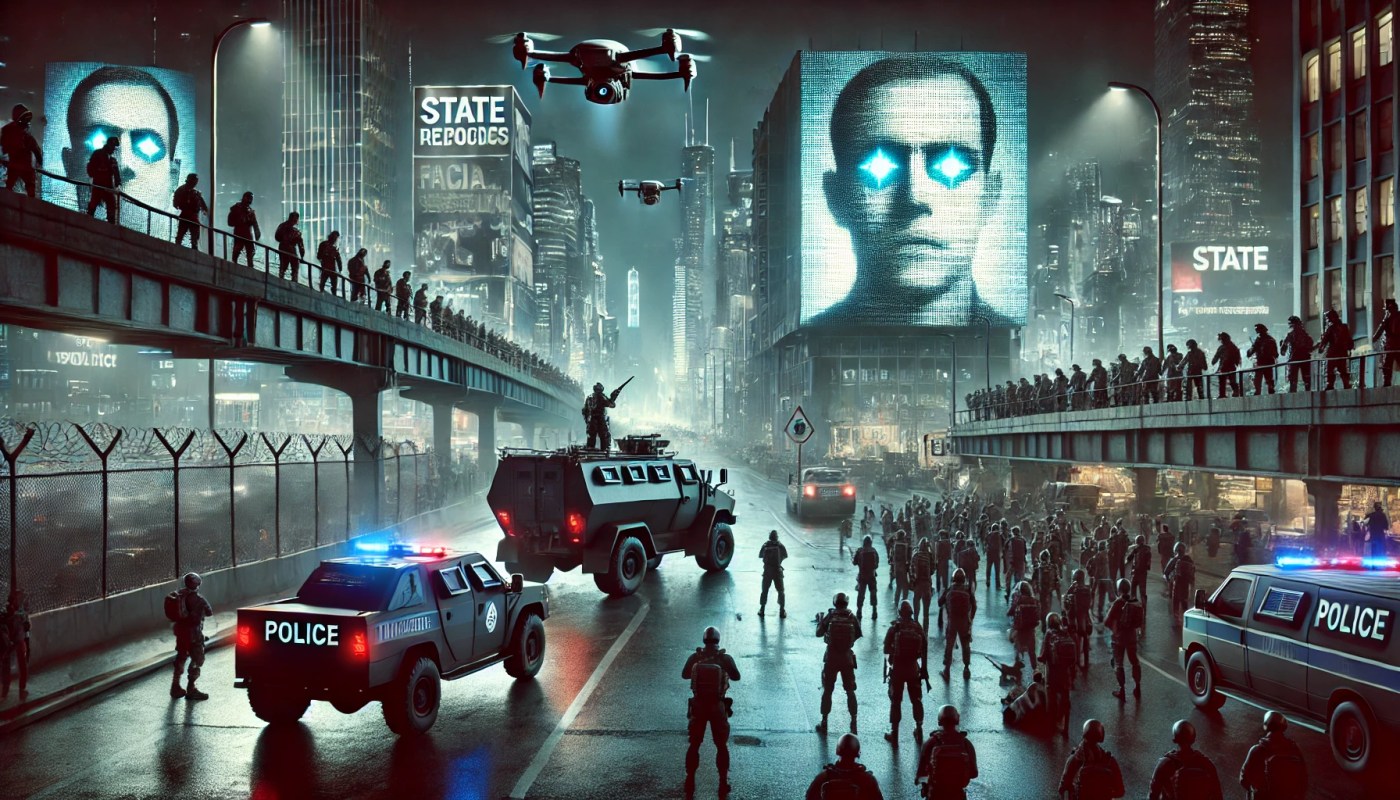
What does this mean? It means the U.S. ruling class, facing intensifying class contradictions, imperial decline, and domestic instability, is transitioning from soft counterinsurgency (co-optation, reform, and pacification) to hard counterinsurgency (mass surveillance, militarized policing, and direct state violence). This is not just a shift in tactics—it is the logical next step in the evolution of technofascism, the ruling-class strategy for managing crisis through a fusion of state repression, digital surveillance, and corporate authoritarianism.
To understand this transition, we will draw on Asad Haider’s Mistaken Identity, Orisanmi Burton’s Tip of the Spear, and counterinsurgency doctrine from U.S. military and police training manuals. These sources reveal that the U.S. ruling class has long anticipated mass rebellion from the colonized and working-class masses and has been developing the infrastructure to wage a full-scale domestic counterinsurgency war. The shift away from DEI is not a mere culture war victory for the right—it is a signal that the ruling class no longer sees a need to pacify the masses through representation. It is preparing to rule through force.
I. How Liberal Multiculturalism Functioned as Counterinsurgency
Haider: Identity Politics as a Containment Strategy
Haider’s Mistaken Identity makes it clear: identity politics did not begin as a corporate branding exercise. It was forged in the fire of anti-colonial and revolutionary struggle. The early Black liberation movements, the radical labor struggles of the 20th century, and the internationalist demands of the oppressed all understood race, class, and empire as interconnected forces.
But by the late 20th century, these radical politics had been repackaged into a system of elite incorporation. Instead of confronting capitalism and white supremacy at their roots, identity politics was hijacked by the neoliberal order and transformed into a means of managing the oppressed through representation rather than revolution.
Diversity became a tool for stabilizing empire. A handful of Black and Brown professionals were elevated into corporate boardrooms, academic institutions, and the political elite while the material conditions of the oppressed remained unchanged.
Class struggle was replaced with professional advancement. Movements for self-determination and liberation were turned into struggles for diversity quotas in elite institutions.
Multiculturalism became a PR strategy for imperialism. The presence of Black and Brown faces in high places gave legitimacy to a system that continued to wage war on the Global South and exploit the working class.
This was not progress—it was a sophisticated counterinsurgency operation, ensuring that opposition to empire was redirected into bureaucratic DEI initiatives, nonprofit-sector grift, and electoral tokenism.
Burton: Counterinsurgency as a Dual Strategy
Burton’s Tip of the Spear provides a critical framework for understanding counterinsurgency as a two-pronged strategy:
1. Repression: Crushing revolutionary threats through policing, surveillance, incarceration, and targeted state violence.
2. Reform: Offering controlled concessions to pacify potential movements and redirect them into state-approved institutions.
Burton traces how this played out in the U.S. prison system, where radical movements were met with both brutal repression (COINTELPRO, solitary confinement, political assassinations) and strategic reform (minor prison improvements, selective releases, rehabilitative programs). This is precisely how liberal multiculturalism functioned—it was the domestic counterinsurgency program of the neoliberal era, designed to neutralize mass insurgency by giving just enough reform to contain potential revolutionaries.
But now, the game has changed. The ruling class no longer feels the need to play soft counterinsurgency. It is shifting from the DEI hustle to the direct repression of technofascism.
II. The New Phase of Counterinsurgency: From Co-optation to Open War
The U.S. Government’s Counterinsurgency Plans for Domestic Unrest
For decades, the U.S. military and police forces have been preparing for mass domestic insurgency. The shift away from liberal multiculturalism is happening because the state is ready to use force instead.
Consider these facts:
U.S. military counterinsurgency doctrine (outlined in FM 3-24, the Army/Marine Corps Counterinsurgency Manual) emphasizes controlling populations through surveillance, psychological operations, and targeted state violence. These tactics, once used overseas, have been imported for domestic use.
Programs like 1033 transfer military equipment (armored vehicles, drones, and surveillance technology) to local police, ensuring that urban uprisings can be crushed with military force.
Fusion centers and mass surveillance allow the state to monitor dissidents, activists, and organizers in real time, tracking potential insurrections before they begin.
The U.S. ruling class has been preparing for this for decades. The abandonment of DEI and multiculturalism is happening because they no longer see a need to pacify the masses. They are ready to rule through force.
III. The Technofascist Era: Mass Surveillance, Militarized Policing, and the Death of Liberalism
The Rise of the Police-Military State
The new phase of counterinsurgency will not be disguised as reform. It will be openly authoritarian. We are already seeing its key components:
Militarized policing as the default. SWAT teams and counterterrorism tactics will be used against protest movements and working-class uprisings.
Surveillance and preemptive arrests. Predictive policing algorithms, mass facial recognition, and AI-driven tracking systems will allow the state to crush resistance before it materializes.
Legal repression through terrorism laws. Protesters will increasingly be labeled as “domestic terrorists” to justify mass arrests and indefinite detention.
The Ruling Class No Longer Needs a Diverse Elite
As the U.S. transitions into full-scale technofascism, the project of elite incorporation is no longer necessary. The state does not need a Black misleadership class to pacify the masses anymore—it is preparing to crush them instead. The collapse of DEI and the rollback of affirmative action are not mere conservative victories. They are part of the broader ruling-class transition to an authoritarian model of governance.
IV. The Path Forward: Preparing for Revolutionary Struggle in the Technofascist Era
This shift signals a historic turning point. The ruling class is no longer trying to convince the oppressed that the system can work for them. It has abandoned even the pretense of inclusion. This means:
1. There is no reformist solution. The state has no interest in pacification through representation—it is preparing for war.
2. Liberals and NGOs will not save us. The structures that managed dissent in the past are being discarded.
3. The fight against technofascism must be fought outside of the system. There is no electoral or bureaucratic solution to an empire that has embraced mass repression.
The liberal counterinsurgency era is over. The war against the people has begun. The question is not whether we are ready. It is whether we are willing to fight.
 Weaponized Information
Leave a comment