When Trump’s Secretary of State Marco Rubio landed in Panama this month, it took less than 24 hours for the Panamanian government to fall in line. After a friendly “chat,” they promptly announced their withdrawal from China’s Belt and Road Initiative (BRI) and Maritime Silk Road project. If you blinked, you might have mistaken it for diplomacy. It wasn’t. It was an old-fashioned shakedown—the kind the U.S. has perfected over the past two centuries in Latin America. The gunboats might be digital now, and the Marines replaced with corporate lawyers and tech consultants, but the message was the same: the canal is ours. You deal with China, you deal with us.
It’s tempting to dismiss this as just another example of Trump’s bullying approach to the world. But that would be a mistake. What we are witnessing is a recalibration of U.S. imperialism—a strategy to reassert control over vital chokepoints of the global system, with the Panama Canal as a centerpiece. This is the Trump Doctrine in action, wrapped in the old cloth of the Monroe Doctrine, but weaponized with 21st-century surveillance, tariffs, and Big Tech infrastructure.
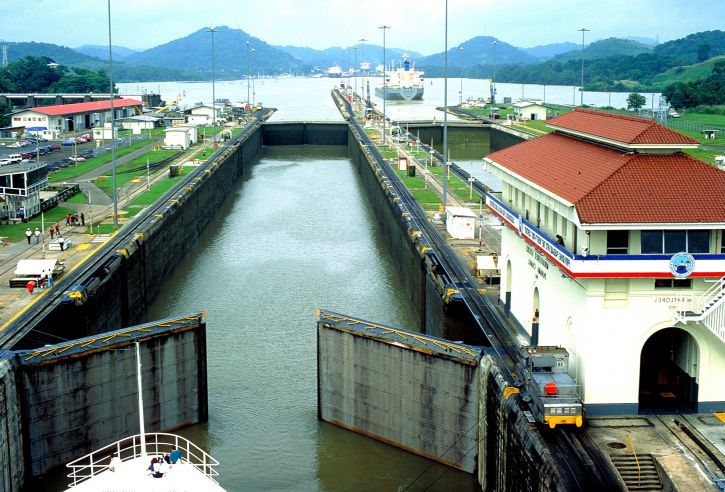
Gunboats, Tariffs, and Painted Carrots
To understand what’s unfolding, we should listen closely to Mauricio Claver-Carone, Trump’s Latin America enforcer and a man who seems to believe it’s still 1898. In a recent interview, Claver-Carone laid it out with remarkable candor. When asked if the U.S. risks pushing countries toward China by wielding sticks while Beijing offers carrots, he scoffed:
“The Chinese don’t go around offering carrots. They paint carrots. At the beginning, it was all sovereign lending; 15 years ago, they were lending $20, $25 billion per year, and starting these debt traps. We saw Ecuador fall into it, Argentina to a degree, Brazil to a degree, the biggest being Venezuela. No country wants to fall into China’s debt trap anymore.”
You almost have to admire the performance. Projection at its finest. The U.S., the global master of debt peonage through the IMF and World Bank, accusing China of ensnaring countries in “debt traps.” That’s like the arsonist complaining the neighbor’s sprinkler system is ruining his fun.
But Claver-Carone’s rhetoric is revealing. He represents a nostalgia for the “good old days” of tariff protectionism, gunboat diplomacy, and imperial diktats. He’s channeling William McKinley, who hoisted the U.S. flag over Puerto Rico and the Philippines under the doctrine of Open Markets for Us, Tariffs for You. He’s evoking Theodore Roosevelt, who declared the U.S. the hemisphere’s policeman, while sending warships to remind Panama why the canal belonged to Washington. Trump’s team is tapping into that imperial legacy, but with a technofascist twist.
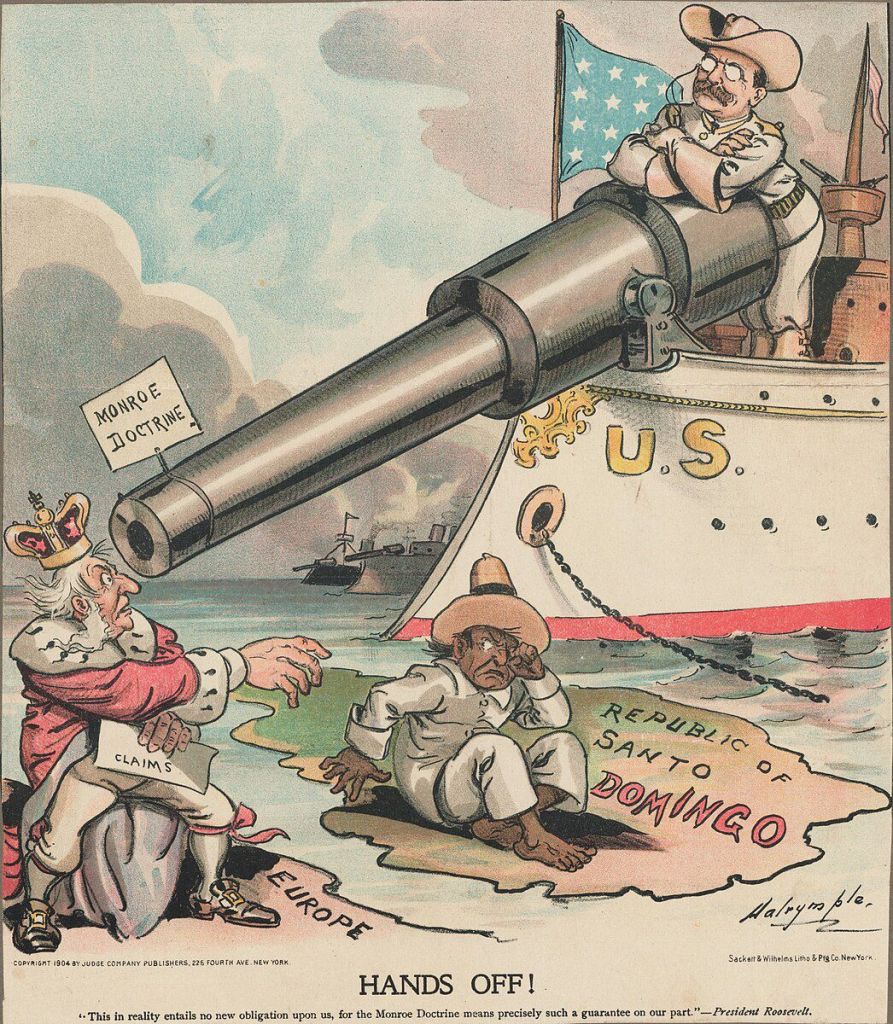
The Technofascist Mutation of the Monroe Doctrine
What we’re seeing is not simply a revival of McKinley and Roosevelt’s policies—it’s their mutation into something more insidious. This is the Monroe Doctrine, but wired into the digital age, fused with mass surveillance, corporate monopolies, and militarized infrastructure. This is the infrastructure of technofascism—ports, canals, railways, and data cables, all secured by the Pentagon, funded by Wall Street, and wired into Big Tech’s surveillance systems.
Trump’s imperial recalibration strategy is rooted in securing the vital chokepoints of global capitalism. Panama is one. The South China Sea is another. The Arctic, the Strait of Hormuz, the Suez Canal—these are the arteries of the world economy. Control them, and you control the flow of goods, energy, and data. Lose them, and the empire bleeds out.
This is why China’s BRI is seen as an existential threat. It’s not just about loans or ports—it’s about an alternative architecture of global trade, one that bypasses U.S. control. China’s investments in Panama, Ecuador, and throughout the Caribbean are part of a vision for a multipolar world where Washington doesn’t hold all the keys. That’s why Trump’s team is hellbent on shutting it down.
Cowboys, Yankees, and Digerati: An Imperial Unity
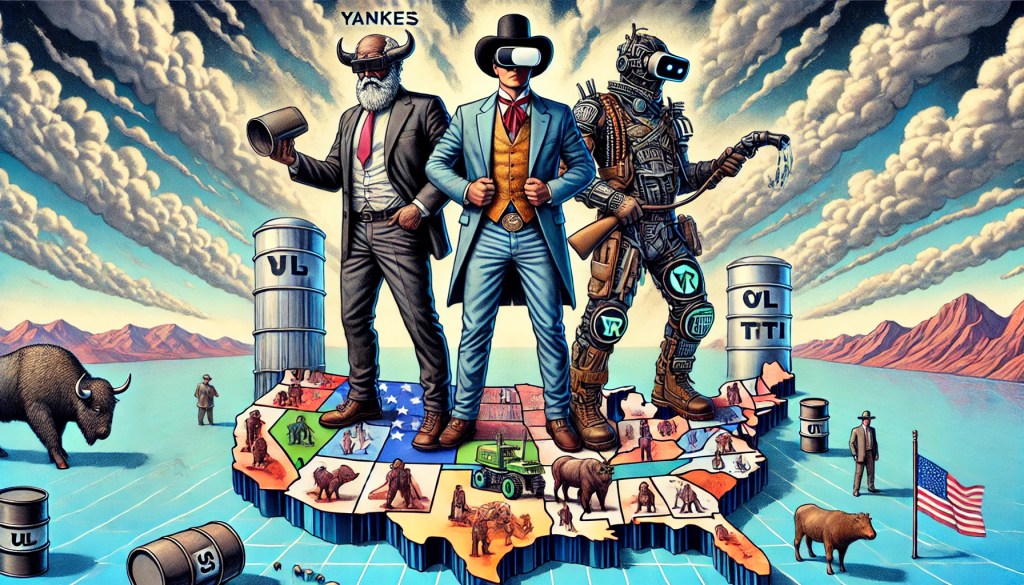
Some observers have mistakenly viewed this Panama push as merely a Cowboy-Digerati alliance—the extractive oil men and tech barons teaming up to muscle China out. But that’s too narrow. The Yankee financiers—Blackstone, Vanguard, and the rest of Wall Street—are fully on board. Infrastructure imperialism is good business, after all.
Here’s how the trifecta works:
– Cowboys (military-industrial and resource capital) secure the territory and chokepoints.
– Digerati (Big Tech) wire the ports and logistics systems with surveillance and data extraction tools.
– Yankees (finance capital) underwrite the projects, locking countries into debt servitude.
Panama is not just a canal—it’s a data corridor, a military asset, and a financial instrument, all rolled into one.
This is why Panama’s retreat from China’s BRI was non-negotiable. The U.S. isn’t just reclaiming a waterway; it’s reasserting control over the infrastructure of the future—the arteries through which goods, information, and capital will flow.
“Chinese Control” Is Code for Sovereign Development
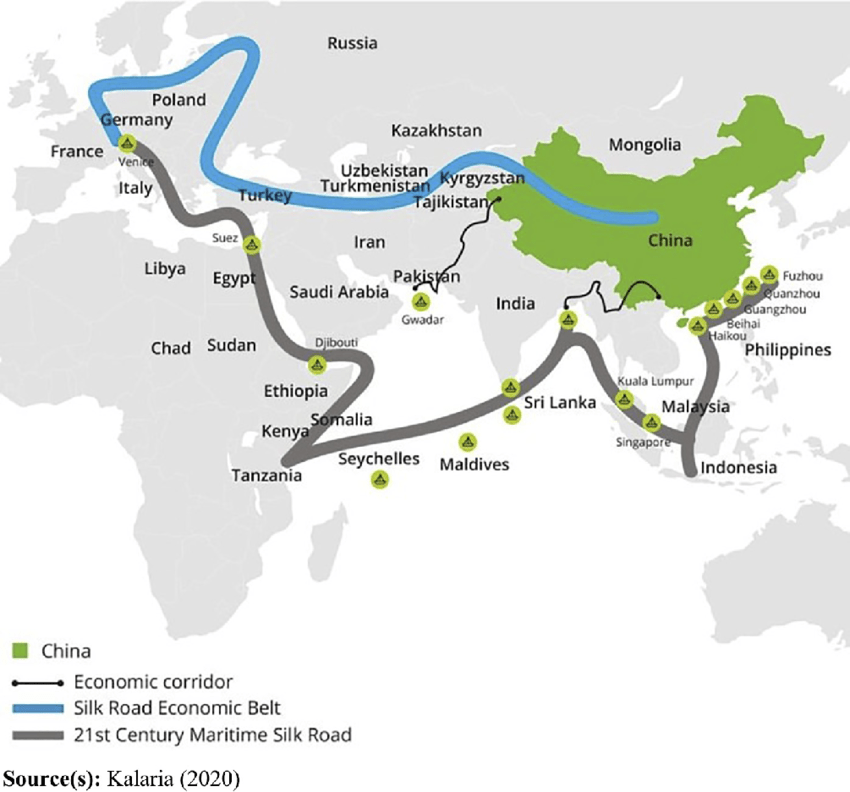
When Trump officials talk about “Chinese control” of the canal, what they really mean is Panama’s attempt to exercise any degree of economic sovereignty. China’s investments in ports, logistics hubs, and canal technology upgrades offered Panama an alternative—the ability to modernize without submitting to Wall Street or the Pentagon.
That, for Trump’s team, is the real threat. Not Chinese troops, but Chinese cranes, fiber optic cables, and software platforms—anything that allows Latin American nations to build infrastructure outside the U.S. orbit.
What’s the alternative offered by the U.S.? The same as always:
Infrastructure built by U.S. firms, funded by Yankee banks, secured by Cowboy muscle, and monitored by Digerati spyware.
A canal modernized, yes—but modernized in a way that guarantees Panama remains a subsidiary of U.S. empire.
The Future: Ports, Cables, and Handcuffs
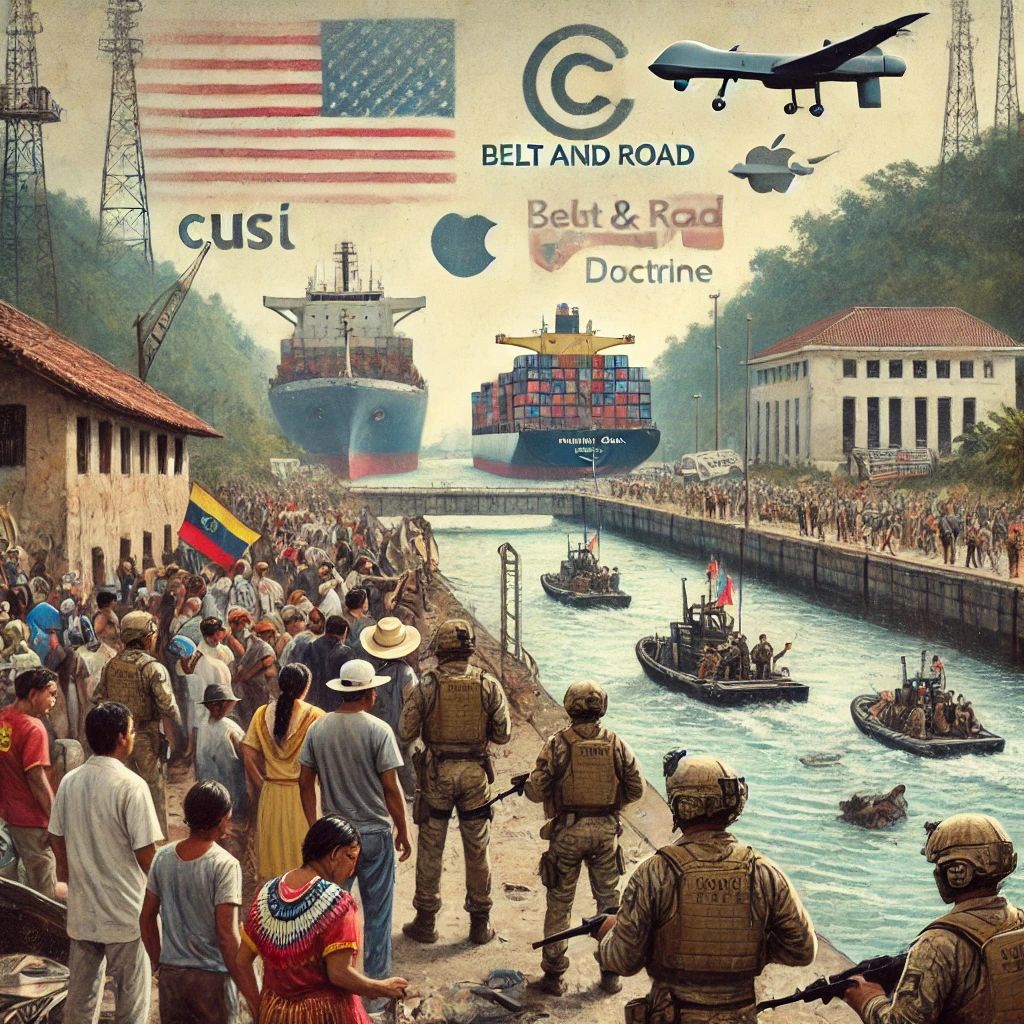
This is the future Trump envisions for Latin America:
1. Reject Chinese partnerships.
2. Accept U.S. infrastructure investments—ports, highways, 5G—but built with strings attached.
3. Your sovereignty is now hardware. Your ports are U.S. military assets. Your data runs through U.S. servers. Your debts are held by U.S. banks.
This is technofascist imperialism:
– A canal equipped with AI-driven surveillance.
– Customs systems feeding data to Homeland Security.
– Financial contracts ensuring Wall Street’s cut.
– Military agreements turning every port into a Pentagon-friendly logistics hub.
The gunboat has been upgraded—it’s now a drone linked to Amazon Web Services.
The Painted Carrots and the Real Chains
Trump’s men will keep telling you that China paints carrots while the U.S. offers “real investment.” The reality is simpler:
China offers loans for ports; the U.S. offers debt peonage.
China builds infrastructure; the U.S. builds surveillance systems.
China offers a choice; the U.S. offers handcuffs.
What’s happening in Panama is the blueprint for the entire hemisphere. The Trump Doctrine is clear: control the chokepoints, lock out China, and hardwire U.S. dominance into the infrastructure of the future.
It’s the Monroe Doctrine rebooted for the age of technofascism. The gunboats are gone, but the chains remain—and now they come with Wi-Fi.
– Weaponized Information, 2025©
 Weaponized Information
Leave a comment