
When Barack Obama landed in Beijing for his first official visit to China in November 2009, it wasn’t just another stop on the world tour of a freshly minted president eager to repair the damaged image of the U.S. in the aftermath of George W. Bush’s disastrous tenure. No, this visit had far bigger implications than the typical diplomatic pleasantries of a photo op. The world was teetering on the edge of what would soon be known as the Global Financial Crisis, a cataclysmic event that exposed the utter rot at the heart of the U.S.-led neoliberal order, a system that had been proudly espoused by the West for decades. If anything, Obama was hoping to grab China by the shoulders and whisper—perhaps with some gentle desperation—“Join us, let’s keep this thing afloat together.” What Obama really wanted to offer was the “G2” framework. A joint U.S.-China stewardship of the world, where both nations would work hand-in-hand to maintain “global stability”—or, if you squint hard enough, the status quo of Western imperialism.
You can almost picture Obama pulling out the old, dusty blueprint of the American empire, thinking, “Well, China’s rising, the old global system is wobbling, so why not make it official?” The concept, championed by former National Security Advisor Zbigniew Brzezinski, was simple: China and the U.S. could jointly run the world. But there was one problem: China was having none of it. The Chinese, much like a disgruntled tenant who’s been asked to pay more rent while dealing with a leaking roof, flatly rejected the proposal. This wasn’t just a diplomatic maneuver, my friends. This was a clear-cut message: China wasn’t interested in being co-opted into Washington’s doomed imperial project.
China Says “Thanks, But No Thanks” to the U.S. Empire
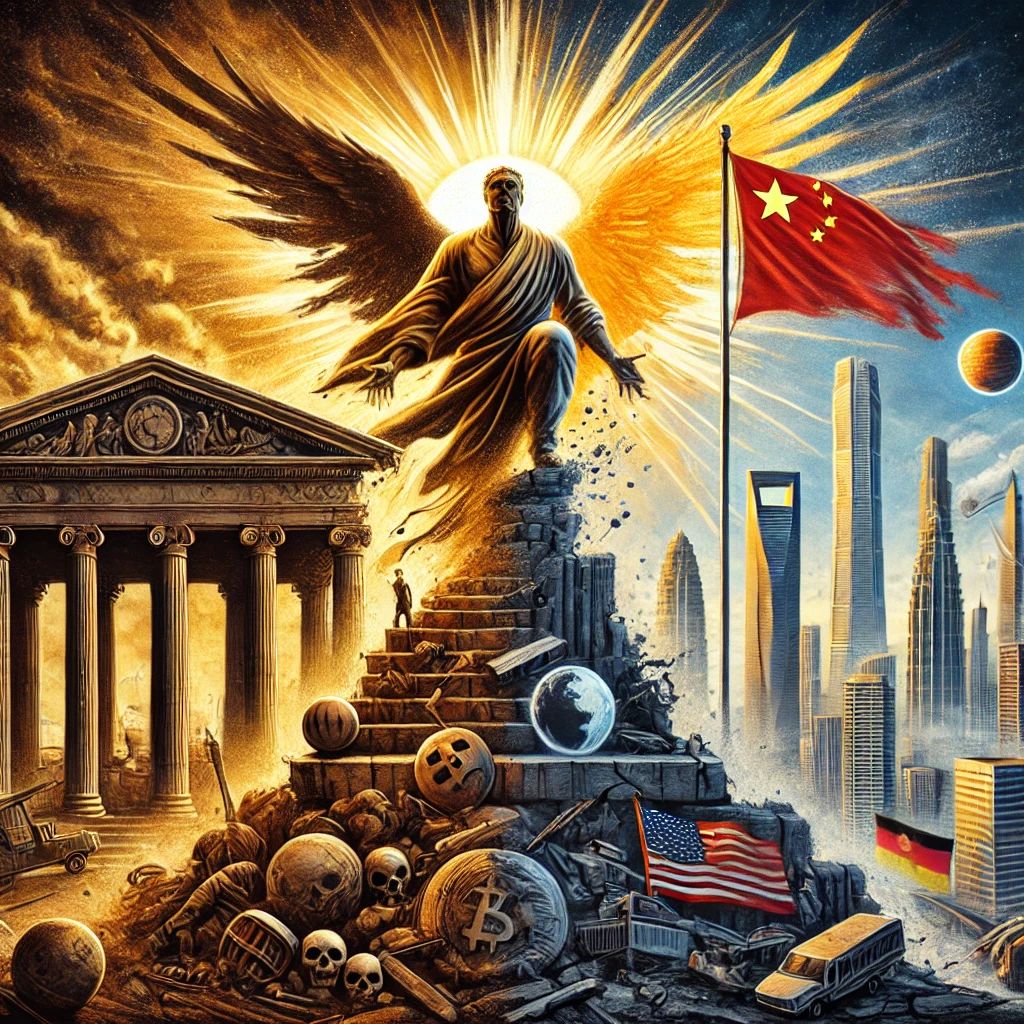
Let’s pause here and take a moment to digest just how bold this rejection was. China wasn’t rejecting a vague proposal for greater U.S.-China cooperation—oh no, it was rejecting the entire framework of U.S. hegemony in world affairs. By spurning the G2, China made it abundantly clear that it wasn’t interested in supporting the neoliberal world order that had been designed to benefit the West and keep the rest of the world in its subordinate place. Instead, China began a shift, a recalibration toward the Global South, toward those regions that have spent centuries under the boot of colonialism and imperialism.
This was no spur-of-the-moment decision. It was the logical extension of China’s historical trajectory, dating back to the Bandung Conference of 1955, where the seeds of the Non-Aligned Movement were sown. It was rooted in the Tricontinental of 1966, where the Global South united in its opposition to colonial powers. Since those heady days, China had made its intentions clear: It wasn’t just another cog in the Western economic machine. It had a revolutionary mission to fulfill—one that didn’t just promise modernization in the image of Western capitalism, but one that sought a completely different world order.
This rejection of the G2 was the moment that China announced, “We’re not going to help you hold up your crumbling empire. You fix your own damn roof.” The U.S., in its infinite wisdom, thought that the economic rise of China would lead it to accept the role of sub-imperialist partner in the West’s dying order. But China had other plans, much like a rebellious teenager realizing their parents’ house is sinking into the swamp and deciding it’s time to build their own raft.
The End of Western Universalism and the Rise of a New World Order
For the U.S., it was a gut punch. Washington had been clinging to the idea that China would eventually “assimilate” into the Western-led neoliberal system, joining the club of free-market imperialism where the rich stay rich and the poor stay poor. The economic rise of China, so many in the West had argued, would inevitably lead to China’s political subordination. A compliant China, they thought, would toe the line and help maintain the stability of a world that was rigged in favor of the West.
But China’s refusal of the G2 was a stark challenge to this worldview. This wasn’t simply about refusing a seat at the table in the “great game” of global governance. It was a rejection of the idea that the West’s version of modernization—the one with free-market fundamentalism, privatization, austerity, and the IMF’s iron grip on developing countries—was the only path forward. Instead, China articulated a vision of its own, a model rooted in state-led development, technological sovereignty, and multilateral cooperation among the Global South.
In essence, China signaled that it was not rising to become another cog in the Western capitalist machine. It was rising to challenge it outright. And the West? Well, the West began to sweat. China’s Belt and Road Initiative, for example, is not just a set of infrastructure projects; it’s a political statement. It says to the Global South: “There is an alternative. You don’t need the IMF, you don’t need the World Bank, and you certainly don’t need Washington’s strings attached.”
The Decline of U.S. Imperialism: A Technofascist Response
So, what does this all mean for the current moment? We’re living through the slow, painful unraveling of the U.S. empire, a process that’s playing out in real-time as the world moves toward a multipolar order. But if you think the U.S. is just going to go quietly into the night, think again. The response to this emerging multipolarity has been a surge of right-wing nationalism, corporate consolidation, and authoritarian impulses. Enter the era of Trump’s technofascism, where the rise of Big Tech, Big Oil, and Big Banks is matched only by the aggressive consolidation of state power to suppress dissent, control the flow of information, and maintain a crumbling empire’s hold on the rest of the world.
As I’ve argued in a previous piece (Big Tech, Big Oil, Big Banks, and Big Brother: The Rise of Technofascism), the U.S. response to its declining power isn’t one of diplomacy or constructive engagement. No, it’s a concerted effort to militarize and digitize the empire’s control over global affairs. The “technofascist” regime, with its cozy relationship with Silicon Valley, the military-industrial complex, and the fossil fuel giants, is a desperate attempt to retain control over an increasingly multipolar world. This is where the U.S. has chosen to focus its energy: in keeping the people in check, using technology, surveillance, and state violence to fend off the inevitable rise of alternatives to U.S. imperial dominance.
But as history has shown us, the U.S. might be able to coerce, bribe, and threaten, but it cannot stop the inexorable march of change. The global order is shifting, and China’s refusal to be part of the G2 was the spark that started this fire. The world is no longer content to let the U.S. call the shots. Nations across the Global South—many of them the same countries that China’s Belt and Road projects are helping to modernize—are looking toward Beijing, not Washington, for leadership in the future.
The Bandung Moment, Reborn
The U.S. may want to clutch to its waning power, but China’s rejection of the G2 is a declaration: the future will not be dictated by a few imperial powers. Just as Bandung and the Tricontinental offered the possibility of a world beyond imperialism, China’s role in the emerging multipolar world is beginning to reimagine that dream. The empire may be crumbling, but the majority of humanity is finally organizing to build something better.
The rejection of the G2 wasn’t just a diplomatic moment; it was a revolutionary one. China’s refusal to help prop up the U.S.-led world order was a clear statement of intent: it would not be complicit in the perpetuation of imperialist rule. And in this choice, China has shown the Global South that the future is theirs to shape—not as pawns in someone else’s game, but as active players in the creation of a new world. A world in which empire’s days are numbered, and the voice of the people—not the corporations or the imperial powers—will shape the future.
 Weaponized Information
Leave a comment