
In February 2007, at the Munich Security Conference, Vladimir Putin’s speech shook the foundations of the global order. It wasn’t just a critique of U.S. policy; it was a declaration that the days of American dominance were numbered. With cutting clarity, Putin tore into the U.S. for its “unilateral actions” and its relentless drive for global supremacy. The global landscape, Putin proclaimed, was changing, and so was Russia. The time for a multipolar world had arrived.
Putin’s speech wasn’t a lone act of bravado; it was a clarion call for sovereignty, for nations to free themselves from the suffocating embrace of U.S. imperialism. He warned against the dangerous obsession of U.S. exceptionalism and military adventurism, which had already plunged the world into endless conflicts. “Unilateralism,” Putin argued, was destabilizing the world, with Washington’s endless wars and financial manipulation steering the globe toward catastrophe. The speech was a damning indictment of a broken system that believed it could manipulate and control global affairs through sheer force of will.
Fast forward to 2009, and the world was handed another jolt: President Obama’s “G2” proposal. The idea was simple—America and China, two giants of the 21st century, would work together to manage the world’s economic and geopolitical problems. But in a moment of unprecedented clarity, China rejected the proposal outright. The message was clear: China was not interested in becoming America’s partner in maintaining its broken empire. China, like Putin before it, had come to recognize the fallacy of a world order centered around the U.S. empire. It wasn’t just rejecting a diplomatic proposal; it was asserting its own sovereignty, its own vision of the world. This was no less than a declaration of independence from a system that had long sought to control the Global South through economic coercion and military dominance.
The Munich speech and the rejection of the G2 proposal were, in essence, the beginning of a new phase in global politics—one in which the United States was no longer the undisputed arbiter of global affairs. What Putin recognized in 2008 and China grasped in 2009 was the need for a multipolar world, where global power was distributed, not concentrated in Washington. This shift wasn’t just political—it was ideological. It represented a rejection of the imperial mindset, a refusal to continue living under the shadow of American dominance.
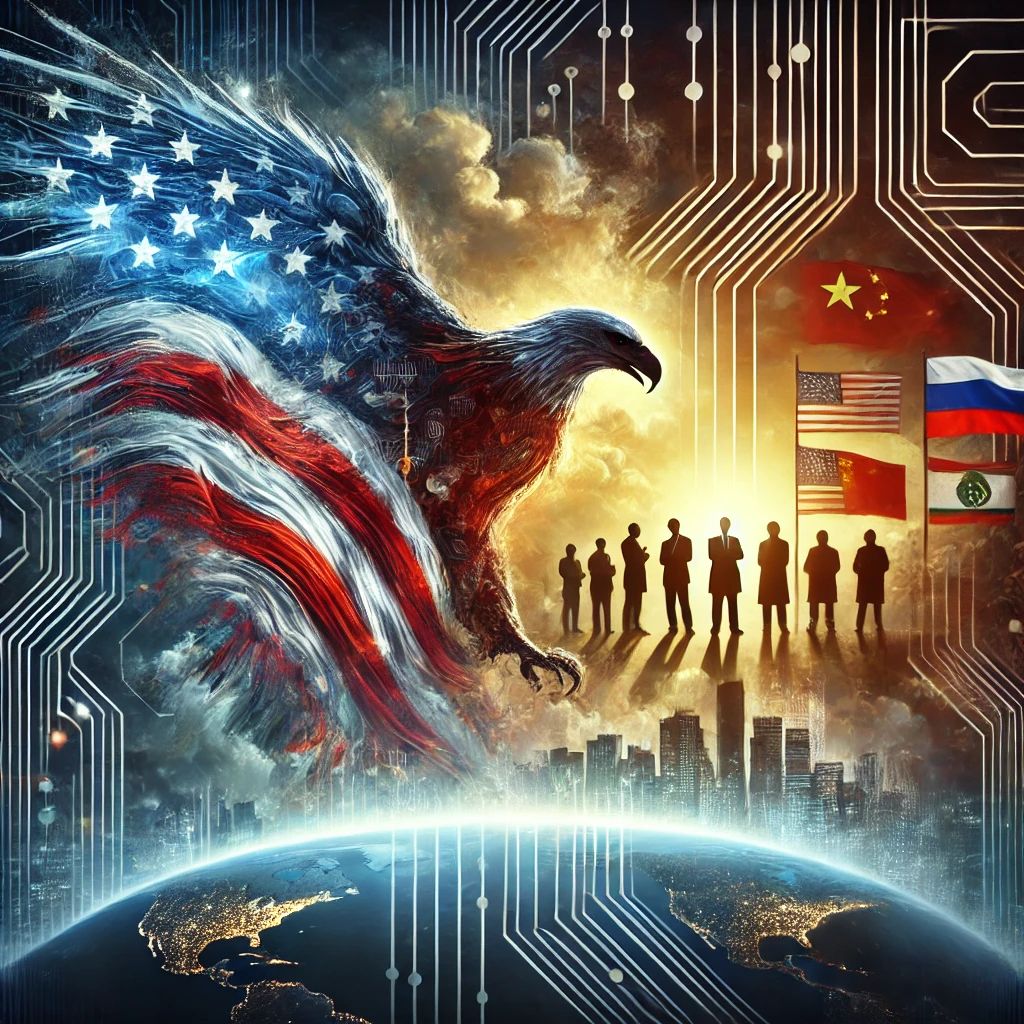
But while these global shifts were happening, the U.S. wasn’t quietly slipping into irrelevance. No, the empire, in its usual fashion, resorted to more insidious means to preserve itself. This is where the technofascist project enters the picture. As I’ve argued in previous essays, the U.S. has increasingly turned to technological control, surveillance, and militarized financial institutions to maintain its grip on global power. It’s not enough for the U.S. to control the barrel of a gun; now, it wants to control the entire digital world. Through Big Tech, Big Oil, and Big Banks, Washington has built a new system of domination, one that blends corporate power with state control. This is the new face of empire: surveillance, economic coercion, and digital authoritarianism.
But this desperate bid for control is a sign of the empire’s crumbling foundation. Just as Putin saw in 2008 that the U.S. was at the end of its imperial rope, the increasing reliance on technofascism reveals the empire’s inability to maintain its dominance through traditional means. The rise of China, the resurgence of Russia, and the growing unity of the Global South are all signs that the unipolar world Washington once dominated is slipping through its fingers. The U.S. may have the largest military, the most advanced surveillance technology, and the most powerful corporations at its disposal, but the global order is no longer solely determined by its whims.
Instead, the new world order is being shaped by alternative forces, and the U.S. is fast becoming a bystander, grasping at the remnants of its once-unquestioned power. Putin’s call for a multipolar world is increasingly being realized through the rise of new alliances, new economic powerhouses, and a shifting geopolitical landscape. China’s Belt and Road Initiative is a prime example of this new world order—one based on cooperation, respect for sovereignty, and a rejection of the Western-dominated financial system. While the U.S. continues to bolster its technofascist empire, these new power structures are quietly, but resolutely, laying the groundwork for a future beyond Washington’s reach.
In the end, Putin’s speech and China’s rejection of the G2 proposal were not isolated incidents—they were part of a broader process of global reorganization, a process that the U.S. is struggling to halt. The technofascist project, while dangerous, is little more than a desperate attempt to cling to a decaying empire. It’s not a rebirth of U.S. power; it’s a sign of its decline. As I’ve said before, the world is changing. And the U.S., despite all its technological power and military might, is no longer the center of that change. The era of American hegemony is over, and the new world is already being built. It’s time to embrace that reality.
 Weaponized Information
Leave a comment