By Prince Kapone
The rise of China over the last two decades has compelled some economists to consider it a model of development that other industrializing nations should follow. Those lacking a basic understanding of political economy often refer to China as a “socialist” or “communist” country, and therefore mistakenly associate China’s economic system with “socialism.” However, socialism died in China with Chairman Mao, the “great helmsman” of the Chinese Revolution and late founder of the People’s Republic of China.
In reality, the current development model adopted by China is more accurately labeled “state capitalism,” where private property is allowed, but limited, and the state is the main vehicle of capital accumulation. The well being of the citizenry, measured in terms of education, healthcare, poverty rates, and other social indicators, is not a high priority to this development model. China became state capitalist after of the death of Chairman Mao in 1976, with education and healthcare suffering especially severe set-backs ever since.
Before the death of Chairman Mao, and under his leadership, China experimented in constructing a socialist model of development radically different from the current state capitalist model. Under socialism, the basic needs of the Chinese people were placed above the prerogatives of private profit, and economic development was meant to bring prosperity to society as a whole, rather than a privileged minority from the elite classes. Education and healthcare, as well as the fulfillment of other basic human needs, were central to the Maoist model, and this model holds more promise for the development of third world nations.
The Maoist era is often depicted as a monolithic period completely subject to the personal whims of Mao Zedong. According to this narrative, between 1949 and 1976, Chairman Mao imposed his idealistic vision of communism on a gullible and terrorized Chinese people. In reality, the so-called “Mao era” was one of constant contradiction and class struggle, full of advances and setbacks, as two competing factions of the Chinese Communist Party (CCP) fought over which road of development China would travel; the socialist path advocated by Chairman Mao or the state capitalist path championed by Liu Shaoqi and his faction.
The socialist model favored by Mao Zedong first came into being during the Great Leap Forward (1957-1959) and ended in failure. Mao proposed this model in response to certain tendencies that became apparent in the Soviet Union after the death of Stalin, which up until that point was the only successful socialist model known to history. Until 1957, the Chinese Communist Party (CCP) had more or less copied this model and uncritically applied it to China. However, Mao had noticed that certain contradictions engendered by the Soviet system had led to the consolidation of a new bourgeoisie within the communist party itself. If China did not resolve these contradictions in a new and creative way, the restoration of capitalism, and with it the resurrection of exploitation, would be assured in China. It wasn’t until the Great Proletarian Cultural Revolution (GPCR), launched by Mao in 1966, that Mao’s socialist model of development was successfully implemented, having learned from the mistakes of the GLF.
The socialist model of development adopted in China during the GPCR was characterized by social ownership of the means of production, the collectivization of agriculture, decentralization of political power to relatively autonomous socio-economic units, local industrial self-sufficiency, socialist relations of production, and most importantly, the socialist consciousness of the masses. Production was geared towards satisfying local needs and development was meant to ensure the material and spiritual welfare of all members of society. As we shall see, education and healthcare were both central components of this model.
Traditionally in China, education had been the privileged vocation of the elite classes, while peasants remained stuck in a dark age of illiteracy, primitive agriculture, and impoverishment. This changed very little after the communist revolution of 1949, although the CCP had done much to improve the living conditions of the peasantry through its radical agrarian reform. On the eve of the GPCR, however, rural education was still severely inadequate, as “educational resources were concentrated in the urban areas, not only in universities and middle schools but in the quantity and quality of primary schools as well. Entrance exams and a conventional grading system, the enforcement of rigid age limits for attendance, and the imposition of tuition fees severely limited educational opportunities for the urban poor and even more so for rural youth. In large measure, the system and the content of education were oriented to train students for professional careers in the cities and served to perpetuate the privileges of urban youth” (Meisner, 361). In short, the education system did more to perpetuate the urban-rural gap than to alleviate it.
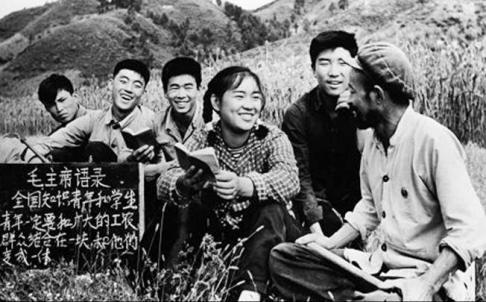
With these realities in mind, Chairman Mao declared in 1966 that “the task of the Cultural Revolution is to reform the old educational system and educational philosophy and methodology” (Han, 89). One of the first educational reforms was to drastically increase the number of primary, middle, and high schools throughout the countryside. At the beginning of the GPCR in 1966 there were 116 million children enrolled in primary school and just 15 million students enrolled in secondary school (Meisner, 362). By the end of the Cultural Revolution, ten years later, there were 150 million primary school enrollments and 58 million secondary school enrollments. The numbers become even more impressive when analyzed on a micro level. In Jimo County for example the number of middle schools increased from a mere 7 in 1966 to 269 by 1976, while high schools increased from a pitiful 2 to 84 during the same period (Han, 96-97). The expansion of rural education was seen as a way to reduce the gap between urban and rural areas, bringing literacy and a degree of technical knowledge to the peasantry for the first time in Chinese history.
The measure to expand rural education was accompanied by decrees to decentralize the school system and breakup the state educational bureaucracy. To this end, rural schools were removed from the administration of county governments and placed under community control. Generally, primary schools were to be administered by production brigades and secondary schools by communes, giving ordinary peasants “a voice in selecting teachers and teaching materials, in recommending students for admission to middle schools and universities, and in refashioning the curriculum to meet particular local needs” (Meisner, 362). This fell in line with Mao’s dictum that “the masses must educate themselves and liberate themselves.” (Mao, 1967). Education, in the Maoist model, is regarded as an instrument of liberation, through which the masses become more conscious.
Once under community control, school curriculums were completely revamped and reconstructed to meet the particular needs of each rural community. The old curricula and textbooks, so divorced from the real lives of rural students, were replaced with a new curriculum that combined education with productive labor. In this way, education became practical and students were “able to apply academic learning to solve problems encountered while working” (Han, 106). The knowledge and skills students learned were readily applicable to agriculture, industry, and administration, and thus promoted rural development.
The final, and perhaps most revolutionary, educational reform implemented during the GPCR was the “into the countryside” movement, whereby millions of urban youths were sent to the countryside “to be reeducated by the poor and middle peasants” (Meisner, 369). This reform is especially detested by China’s elites of today, many of whom were forced by the momentum of events to abandon their privileged life in the cities and live in rural villages among the peasants. Their uncalloused were not accustomed to performing productive labor, so it is easy to understand why many resented being sent to the countryside. However, this reform measure, “not unlike a blood transfusion for a sick patient, brought knowledge and skills that revived rural areas” (Han, 113).
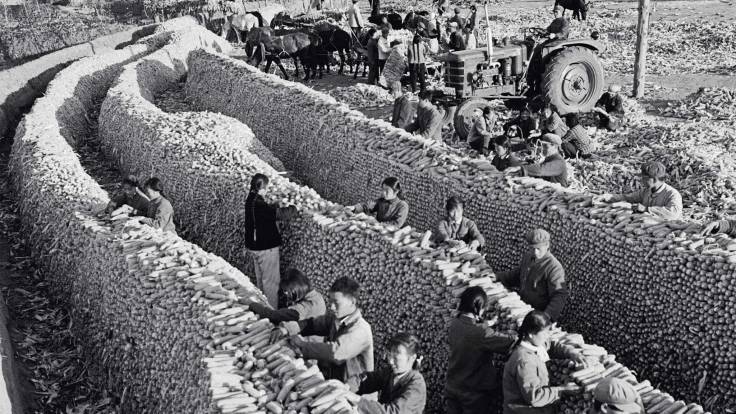
Urban students helped the peasants farm, develop agricultural technology, set up rural enterprises, and other important tasks. For their part, the peasants “welcomed the educated urban youth. They regarded them as Chairman Mao’s guests” (Han, 114). Many urban youths felt inspired by their experiences in the countryside and came to view the peasants with appreciation.
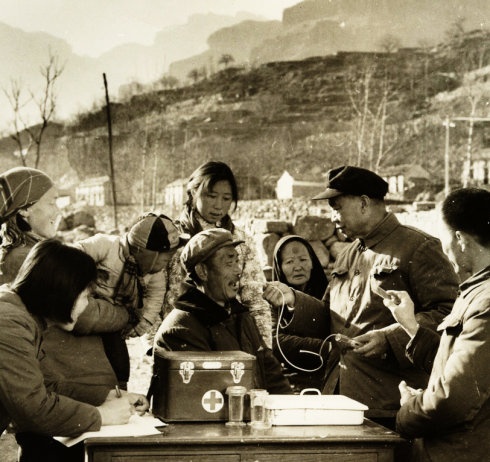
Another crucial component of the Maoist model was healthcare. A cursory glance of health indicators in the third world today shows the importance of health to development, and the Maoist model proves that socialist development can bring health to an industrializing nation. Prior to the GPCR, medical services in China were much like schools, concentrated in urban areas and serving mostly city-dwellers. In 1966, China had about 80,000 rural health clinics, compared to 160,000 health clinics in urban areas. This meant there were still tens of millions of peasants who lacked access to even basic health care.
One of the first healthcare reforms of the GPCR was to decentralize the medical system and shift its emphasis to community-level preventative healthcare, focusing on illnesses and infections common to the countryside. Village clinics were established all over China to provide basic medical services to every villager, often free of charge. For example, “in 1967, 105 villages in Jimo County set up village clinics. By 1969, 525 villages had their own clinics… By 1970, 910 villages – 93 percent of all villages – had set up their own village clinics and all had rudimentary free medical insurance policies for villagers” (Han, 144). Although these clinics only tended to basic medical needs, they could send patients to commune hospitals for serious inflictions.
The Chinese countryside suffered from a severe shortage of doctors and medical professionals as well, who were also concentrated in urban areas. The socialist model dealt with this problem in a creative way: by sending “barefoot doctors,” most of whom were peasants, to staff these village clinics. Most of these “barefoot doctors” had rudimentary medical knowledge and training, not to mention that they lacked medical equipment, supplies, and medicines, but “their medical training was adequate to treat common problems… (for which they) had a standard treatment” (Han, 145). In addition to this, medical training institutes and hospitals were established on the rural communes, staffed by urban medical professionals and doctors who trained “barefoot doctors” and treated serious illnesses (Meisner, 360). These measures had a positive effect on rural development and helped distribute the benefits of modern medicine to those most in need.
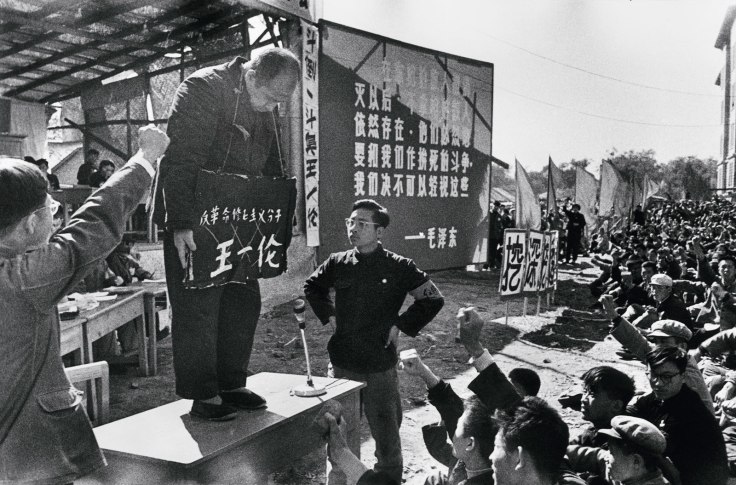
Before the GPCR, a faction of the CCP, led by Liu Shaoqi and Deng Xiaoping, constantly sought to reject, undermine, and discredit the socialist model of development advocated by Mao. Only during the Cultural Revolution was Mao’s model implemented, and in the midst of great social chaos at that. After the Chairman passed in 1976, the Maoist model was gradually dismantled and replaced with the model of state capitalism still in place today. This model is based upon household agriculture, state ownership of key industries, joint-capital ventures, an emphasis on heavy industry, and production for export. The state is the key driver of capital accumulation, while individual capitalists are held within certain limits. This model of development places the prerogatives of private profits above the needs of human beings. As we shall see, education and healthcare, in this model, are only a priority insofar as they are lead to the growth of capital.
The basis of China’s rural medical system during the GPCR was collectivization, so when Deng Xiaoping began contracting out collective lands to individual households in 1978, the foundation of the rural school system was broken. As soon as the household responsibility system was implemented by Deng, “the old communes and brigades atrophied in a new market-driven society, collective funds were depleted, resulting in a contraction of welfare services for the elderly, the handicapped, and the indigent; the closing of medical clinics in some areas; and a decline in the number and quality of local schools. School enrollments fell, due to the need of peasant families to keep young people at home to assist with farm work, now carried on as a family enterprise” (Meisner, 466). Under the state capitalist model, village clinics and a communal medical system are simply not possible.
During the GPCR, the university entrance examinations were abolished and replaced by a “system of recommendation from local productive units and selection on the basis of political criteria as well as academic ability” (Meisner, 362). This made enrollment in the university for peasants and workers much easier, while it made it more difficult for intellectuals and students from non-laboring classes. One of Deng’s first reforms after Mao’s death was to reinstitute The National College Entrance Examination for Adults, which had the effect of discriminating against peasants and rural people, who tended to have less formal education (Fengzhen, 136). This was a reform that benefited urban elites and drained the countryside of its brightest minds. In general, all of the educational reforms implemented during the GPCR were reversed, restoring the urban elitist function of education. Today there is even a plethora of private schools cropping up all around China. Most peasants cannot afford to send their children to these prestigious institutes of learning, let alone the few village schools that remain.
In regards to healthcare under the state capitalist model, it has also suffered serious setbacks. First among these is the cutting of total health care expenditures by 22% over the last two decades (Tang, Meng, Chen, et al, 1497). Most of these cuts have been in rural areas, but also in urban areas as well. Village clinics quickly “became private medical practices” or were closed down altogether (Han, 164). In these budget cuts we can see that the health and well being of the masses is not a major concern for the state capitalist model of development.
Whereas over 90% of the rural population was medically insured during the GPCR, today only 10% have medical coverage (ibid). This is a direct result of the decollectivization of agriculture, which allowed for doctors and other medical expenses to be paid by the commune, with individuals paying very little, if any, out of pocket expenses. The cost of basic medical services and medicines has skyrocketed over the course of the “reform era,” depriving millions of peasants the possibility of treatment for illness or infection. Millions of people are expected to suffer in their sickness for the sake of market efficiency and developing the productive forces.
This analysis has shown that under the socialist model of development, the needs and wellbeing of human beings are placed at the forefront of policy. Socialism brought meaningful education and basic healthcare to all of the Chinese people. Investment in rural education was significantly increased during the GPCR as is reflected by the blossoming of tens of thousands of primary and secondary rural schools. Resources that had previously been diverted to the cities were rechanneled into the countryside in order to bring practical knowledge and skills to the peasantry, which made up the overwhelming majority of the population. Education was combined with productive labor in order to bridge the gap between city and country as well as the gap between mental and physical labor. In healthcare, basic medical services were extended to almost every Chinese village, benefiting tens of millions of peasants. The socialist model enabled China to solve some of the most pressing problems of development and ensure that the benefits of development were evenly distributed among all members of society.
The state capitalist model of development, on the other hand, has slowly eroded the original gains made by the Chinese revolution in education and healthcare. These are two major quality of life indicators and insofar as they have declined over the decades it can be concluded that the quality of life for the average Chinese peasant has also deteriorated. Despite rising peasant incomes, the additional costs of living added by the commodification of education and healthcare have essentially negated these income gains. The model of state capitalism, although impressive in terms of economic growth, has catastrophic social consequences that far outweigh the benefits of this model.
Bibliography
- Fengzhen, Yang, “Education in China,” Educational Philosophy and Theory, Volume 34, No. 2, 2002.
- Han, Dongping. The Unknown Cultural Revolution: Life and Change in a Chinese Village (Monthly Review Press: New York, 2008)
- Mao Zedong, “Speech to the Albanian Delegation,” May 1st, 1967 (Retrieved online: http://www.marxists.org/reference/archive/mao/selected-works/date-index.htm)
- Meisner, Maurice. Mao’s China and After: A History of the People’s Republic (The Free Press: New York, 1999).
- Tang, Shenglan, Meng, Qingyue, Chen, Lincoln, Bekedam, Henk, Evans, Tim and Margaret Whitehead, “Tackling the challenges of health equity in China,” Health System Reform in China 1, October 25, 2008.
 Weaponized Information
Leave a comment