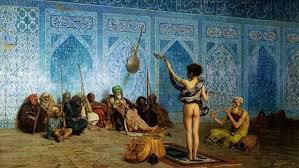
By Prince Kapone
Western Europe became rich and powerful, in large part, by colonizing, exploiting, and otherwise subjugating the people and lands of the so-called “Orient.” Prior to the 1500’s, every region of the world was at a relatively equal level of development, with the West even being backwards in relation to the East. However, with the emergence of capitalism in Western Europe beginning in the 16th century, the West began to develop very rapidly, becoming more wealthy and powerful than the greatest powers of the Orient. By the 20th century, all of the Orient, with the exception of Japan, would be colonized by one or another Western European power. It is imperative to understand this historical context of empire when considering Orientalism.
Long ago, Karl Marx noted that in the final analysis, ideas reflect material reality (in all its contradiction), and that “the ideas of the ruling class are in every epoch the ruling ideas.”1 This means that the dominant ideas in a given society will tend to reflect the ideas of the dominant class. The ruling class propagates its ideas to society via its monopolization and control of the schools, the media, and other such social institutions. Thus, the ruling class exercises hegemony over civil society, not so much by force, but through consent, by conditioning the people to internalize the ideas of the ruling class. This concept of hegemony, created by Italian Marxist Antonio Gramsci, is crucial to understanding what Orientalism is and how it functions.
It was the contradictions inherent to colonialism and empire that necessitated the development of Orientalism, both as an academic discipline and as an ideological framework. In the final analysis, Orientalism is nothing more than an ideological rationalization for Western imperialism. That is, aside from being an academic discipline, it is a set of assumptions, images, symbols, representations, beliefs, and judgments about the Orient, which serve to justify and perpetuate the West’s domination of the East.
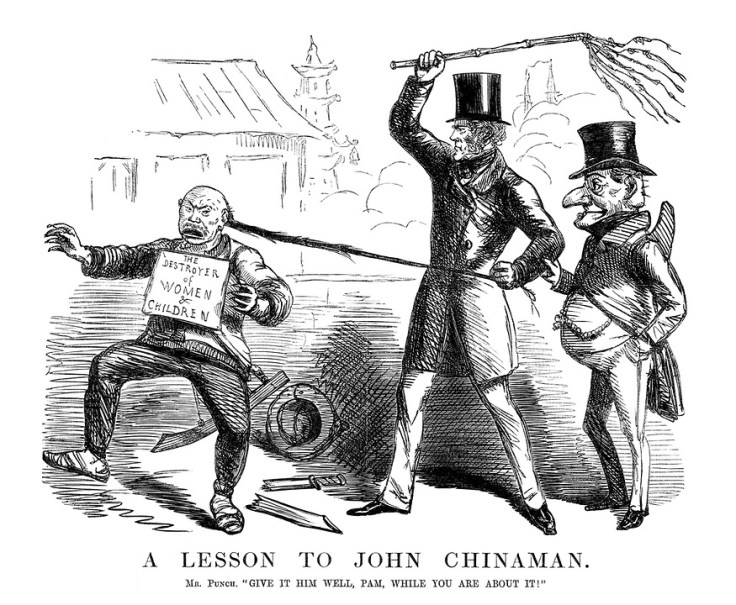
Over time, these notions of the Orient have been codified and institutionalized, consolidated as a popular discourse taken for granted by society. As Said observed, Orientalism is the “corporate institution for dealing with the Orient – dealing with it by making statements about it, authorizing views of it, describing it, by teaching it, settling it, ruling over it: in short, Orientalism as a Western style for dominating, restructuring, and having authority over the Orient” (Said, 3). In the West, our ideas of the East are shaped and conditioned by the ruling class, who take an interest in the Orient only to dominate and exploit it, rendering our view of the East distorted and incomplete.
Orientalism, then, functions as a sort of Western ethnocentrism, a hierarchy of knowledge that relegates the East eternally beneath the West. By posing the Orient as the polar opposite of the Occident, Orientalism gives rise to a very Manichean view of the world, where the West is deemed to be all things good and the East is associated with all things bad (Said, 40). The East is assumed to be the opposite, in all respects, of the West: If the West if Christian, than the Orient is heathen; If the West is the bastion of liberty and democracy, the East is the sanctuary of oppression and despotism; If the West is progressive, than the Orient is static and backwards. By posing the relationship between the East and West in terms of binary opposition, the West is able to exalt itself as the beacon of civilization while simultaneously reducing the East to an inferior Other in need of rescue from itself. This is in fact how colonialism was rationalized by the Western powers during the colonial era and how neo-colonialism is rationalized by imperialism today.
The discourse of Orientalism has been constructed over many centuries and is deeply embedded in the popular culture of the U.S. Although we live in a so-called post-racial society, where racial and cultural differences have been replaced by a reverence for diversity and multi-culturalism , Orientalism is alive and well, both on the academic terrain and in the popular culture at large. I will give two examples of how Orientalism functions in each sphere.
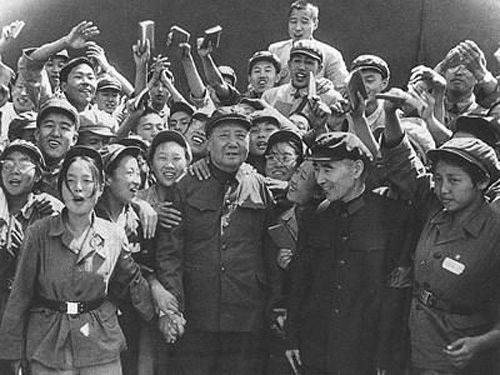
In academia, Orientalism is deeply entrenched as I learned in my class on Governance and Politics of China. The entire strategic formulation of the curriculum is based on the binary opposition model that is the foundation of Orientalism. China is depicted as the opposite of the West in virtually every area: in its politics, its culture, its economic model, and in its ideology. The readings for the class come primarily from authors whose strategic location of course is Western hegemony. That is, they adopt the narrative of Western imperialism, and utilize the images, themes and motifs of Orientalist discourse in their texts. In this way, the extraordinary achievements attained by China under Mao Zedong are depicted as disastrous failures and utopian catastrophes. Orientalism does not permit the views of scholars with contrary views to even be discussed in the class. As Said noted, “Orientalism is better grasped as a set of constraints upon and limitations of thought than it is as a positive doctrine” (Said, 42). In academia, this is especially apparent as alternative narratives are filtered out of the curriculum in favor of a narrow discourse of Orientalism that is distorted and incomplete.
In the larger culture, it is easy to see how Orientalism shapes our understanding (or misunderstanding, if you will) of terrorism, specifically in relation to Islam. The Middle East is posed as the opposite of the West in all respects: The West is Christian, the Middle East is Muslim; Christianity is peaceful, Islam is inherently violent; the West has civilization, the Middle East is a barren desert (albeit, endowed with an abundance of oil); the West is tolerant, the Middle East is intolerant – the list can continue ad infinitum. Terrorism, then, is said to be the desperate attempt of Muslim fanatics to undue the great “progress” brought to the world by the West and replace it with a backwards theocracy that is inherently intolerant, violent and patriarchal. Any violence perpetrated by Muslims against the West (whether civilians or military), is deemed to be unjustified and thus terroristic. Just as in academia, any contrary views are filtered out of the discourse leaving us with a very narrow understanding of terrorism.
Since Orientalism operates mainly on the level of ideology, it is the product of material reality, that is, the product of unequal economic (power) relations between the East and West. So long as these relations remain unequal, with the West dominant, Orientalism will continue to shape our understanding of the East. Only when these power relations are changed, will Orientalism cease to be necessary.
 Weaponized Information
Leave a comment