In The Political Economy of Growth, Paul A. Baran dismantles the myth that growth is neutral or benevolent, exposing it as a class project rooted in surplus extraction and imperial power. He shows how monopoly capitalism turns productivity into waste and development into stagnation, both at home and across the colonized world. Against liberal economics... Continue Reading →
History as Weapon: Walter Rodney and the Discipline of Revolutionary Marxism
A Weaponized Intellects reconstruction of A History of the Guyanese Working People, 1881–1905 that treats Rodney’s most mature historical materialist work not as scholarship for contemplation, but as theory forged for organization, struggle, and socialist revolution. By Prince Kapone | Weaponized Information | Weaponized Intellects Book Review | January 23, 2026A Book Written to Be... Continue Reading →
Reparations, Resistance, and the Ledger of Empire: Excavating the Guardian’s Colonial Amnesia
A Weaponized Propaganda Excavation of How Corporate Media Sanitizes Colonial Crimes, Buries Trillions in Stolen Wealth, and Obscures Africa’s Renewed Fight for Justice and Sovereignty By Prince Kapone | Weaponized Information | December 1, 2025 How the Guardian Turns Colonial Crimes into a “Debate” About Recognition The piece we’re excavating, “African leaders push for recognition... Continue Reading →
The Inequality Gospel of the G20: When Empire Pretends to Repent
How the Managers of Global Capitalism Diagnose the Crisis They Created—and Offer Solutions That Protect Their Power By Prince Kapone | Weaponized Information | November 25, 2025 When the Arsonists Write the Handbook on Fire Let’s start with the obvious, comrades: there is something darkly comic about the G20 commissioning a grand report on global... Continue Reading →
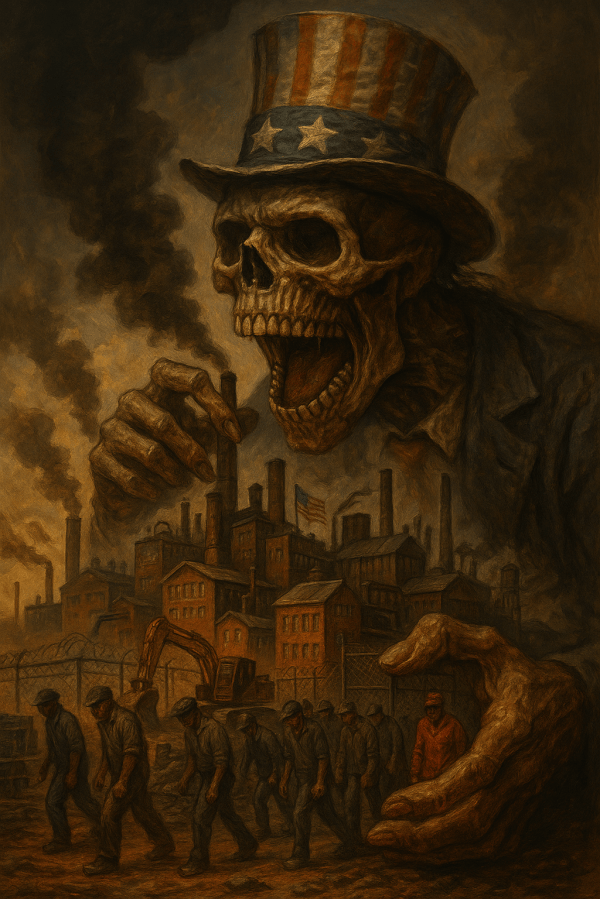
The Empire That Eats Itself: Trump 2.0, Labor Recalibration, and the Internalization of Imperial Parasitism
How the U.S. ruling class seeks to preserve global dominance by turning the colonial order inward — through tariffs, deportations, and the domestic replication of global-South conditions. By Prince Kapone | Weaponized Information | 2025 Consumption as the Mirror of Empire They say the American economy runs on the consumer—that the heartbeat of its strength... Continue Reading →
Reparations or Nothing: Penny Hess and the Death of Western Marxism
Weaponized Intellects Review of Overturning the Culture of ViolenceBy Prince Kapone | Weaponized Information | September 21, 2025Turning the World Right Side UpPenny Hess’s Overturning the Culture of Violence does not mince words—it announces from the opening lines that neutrality is treason. Hess follows the leadership of Omali Yeshitela and the African People’s Socialist Party,... Continue Reading →
Hold the Line: Listen Hard, Rectify Fast, Stay Red
Weaponized Statecraft Series | Mao at Lushan, 1959 In the storm of the Great Leap’s setbacks, Mao did not fold—he listened. At Lushan he turned mistakes into lessons, errors into curriculum, and criticism into a method of survival. He named two illnesses—touchiness and wavering—and prescribed two remedies: endurance and rectification. He defended the communes, corrected... Continue Reading →
Mao at Chengtu: Fighting Brain Rot, Forging Creative Revolution
In March 1958, weeks after issuing his Sixty Points on Working Methods in Nanning, Mao gathered Party leaders at Chengtu. If Nanning warned against bureaucratic drift in the wake of victory, Chengtu waged ideological war against dogmatism, empty boasting, and the paralysis of thought. Here Mao demanded investigation over imitation, mass critique over silence, and... Continue Reading →
When Gold Glitters Too Loud: The Propaganda War Against African Monetary Sovereignty
Kitco’s reporting cloaks imperial fear in financial jargon while casting African strategy as recklessness. Our excavation exposes the gold rush for what it really is: a sovereign response to centuries of extraction. Gold accumulation and mine nationalization are steps toward regional counterpower, not economic suicide. Revolutionaries in the imperial core must act—where the vaults are... Continue Reading →
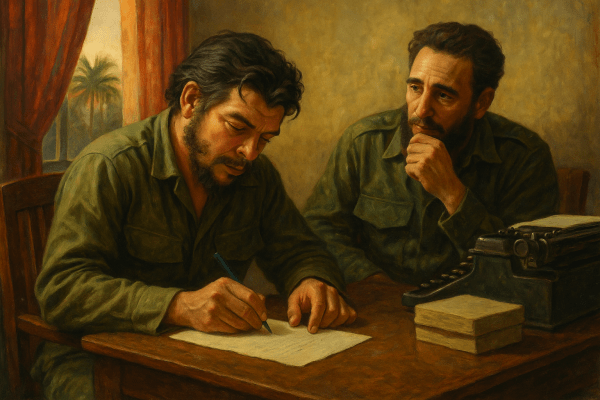
Che’s Other Farewell: Revolutionary Clarity in a Time of Transition
Weaponized Statesman Series | Che Guevara to Fidel Castro, Havana 1965Written in the crucible of revolutionary governance, Che Guevara’s March 1965 farewell letter to Fidel Castro is not a sentimental departure—it is a political intervention. In it, Che offers a piercing critique of Cuba’s early socialist development, grapples openly with the contradictions of economic planning... Continue Reading →