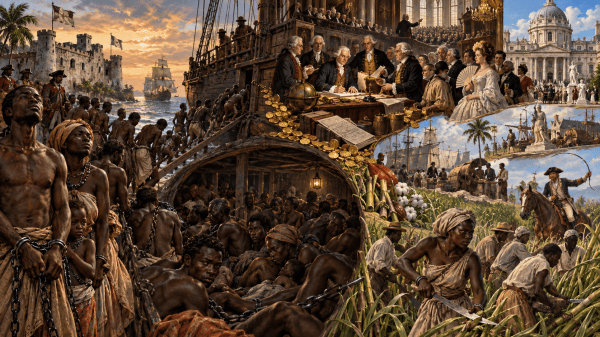
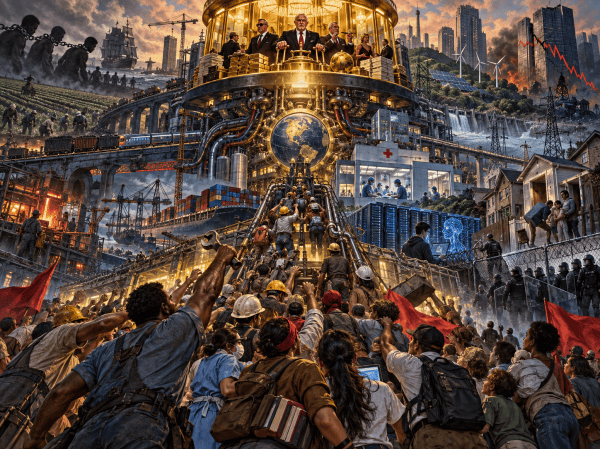
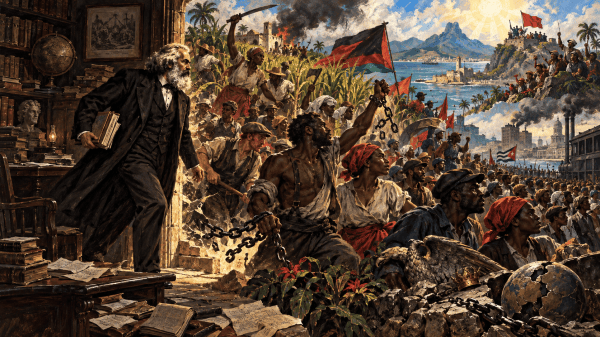
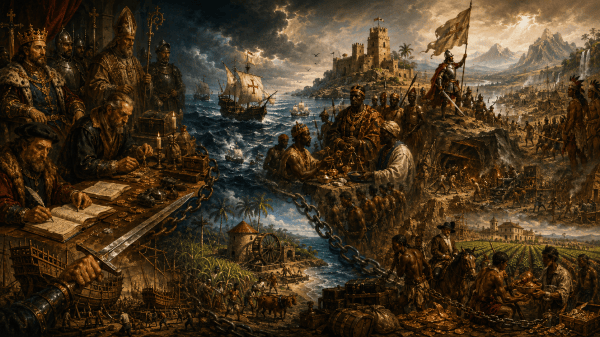
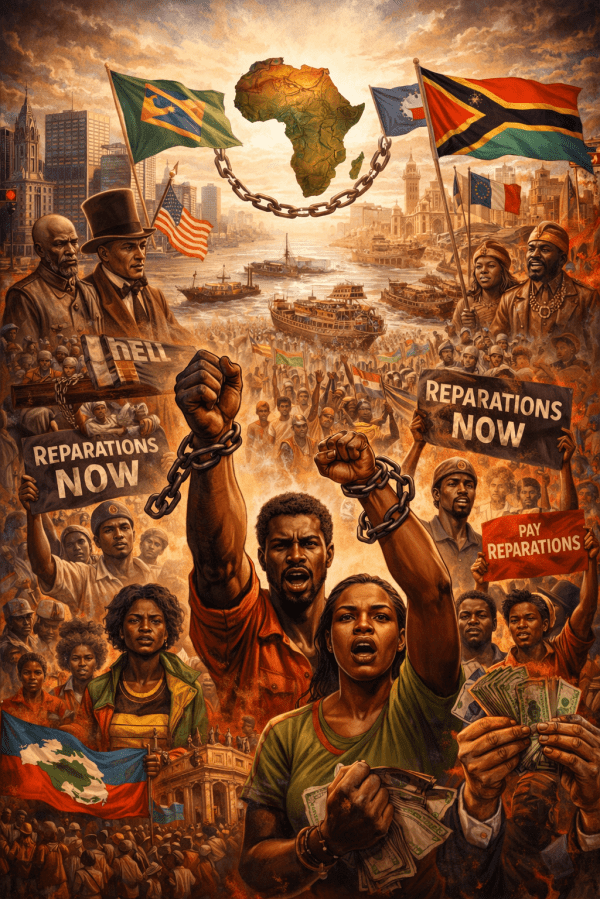
Britain’s slave trade wasn’t a barbaric side story to the rise of modern freedom. It was woven into the property system through which merchants, investors and institutions accumulated wealth while African captives were turned into human commodities. Parliament widened access to the trade, slave-linked fortunes entered industry, science and philanthropy, and abolition later compensated former owners while forcing the formerly enslaved through apprenticeship. The deeper contradiction wasn’t simply freedom versus slavery, but a society where the freedom of property holders could expand through the unfreedom of the owned. Today, reparations movements are reopening that buried ledger.
Peggy Noonan Calls Capitalism Organic: The Wall Street Journal Buries the Violence That Built It
Peggy Noonan's alarm over socialism's surge reveals her flawed analysis: she blames the consciousness of the wounded instead of capitalism, which thrives on historical injustices like dispossession and slavery. As the capitalist structure crumbles under its contradictions—where collective production is shackled by private ownership—Noonan dismisses the urgency of socialism, painting it as a radical force aimed at destruction. Yet, socialism is rising not from whimsical ideology but out of necessity, as younger generations face economic precarity and disillusionment. The question isn’t whether capitalism is natural or just; it’s who truly controls the wealth and future built by the collective.
History Against the Formula: August Nimtz, Cedric Robinson, and the Making of Revolutionary Universality
August Nimtz’s "Black Marxism: A Marxist Critique" challenges Cedric Robinson's assertion that Marxism and Black radicalism are distinct, arguing instead that Marx's historical materialism evolved through encounters with colonialism and Black liberation struggles. Nimtz argues that genuine internationalism requires oppressed groups to first forge autonomous political identities before uniting. Using Cuba as a case study, he shows how socialist transformation can materially alter racial dynamics yet acknowledges persistent inequalities. Ultimately, he posits that revolutionary potential arises not just from class position but from active struggle and organization, emphasizing that no class is born universally revolutionary and that political agency must be cultivated through history and struggle.
The Empire Before Capitalism: How Conquest Built the Atlantic System
The Atlantic conquest connected European powers with global markets, transforming capitalism by intertwining armed states, merchant capital, and coerced labor. Conquistadors sought wealth, while political structures evolved through dynamic relationships that fused established power with new economic systems, ultimately reshaping societies worldwide and paving the way for future capitalism.
We Built the Master: Marx and the World That Rules Its Makers
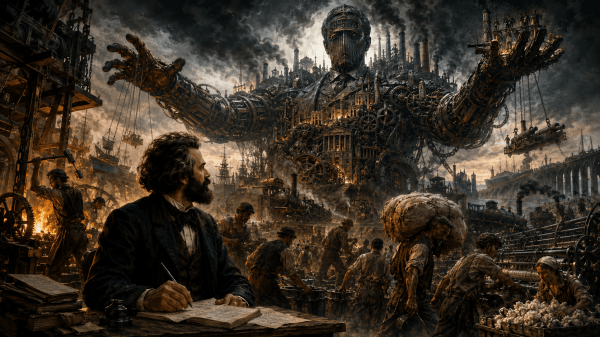
In the Economic and Philosophic Manuscripts of 1844, Marx discovers a contradiction that will haunt the whole development of his critique of capitalism: workers build an expanding world of wealth, machinery, knowledge and social power that returns to rule them as capital. This review follows that insight from wages and estranged labour through private property, colonial history, slavery, money, communism, Hegel and revolutionary humanism. It argues that the manuscripts are neither immature philosophy nor finished Marxism, but a breakthrough under pressure—one already forcing “Man” into history and asking the question that still matters: who controls humanity’s accumulated powers?
One Colony, Two Ships: How Liberal History Splits What Capitalism Built
James Traub's exploration of America's dual origins through the Mayflower and the White Lion is dangerously simplistic. He perpetuates a narrative of moral dichotomy, ignoring the harsh reality that both journeys fueled a settler-capitalist machine built on land theft and enslavement. The framing minimizes Indigenous dispossession and reduces oppressed voices to mere historical subjects. This liberal attempt at reconciliation fails to confront the brutal interdependence between North and South, leaving unchallenged the systemic inequities rooted in conquest and exploitation. Rather than embracing a flawed myth of unity, America must confront its history to dismantle the ongoing consequences of its oppressive foundations.
The Capitalized Womb: How Slavery Turned Black Women’s Reproduction into American Wealth
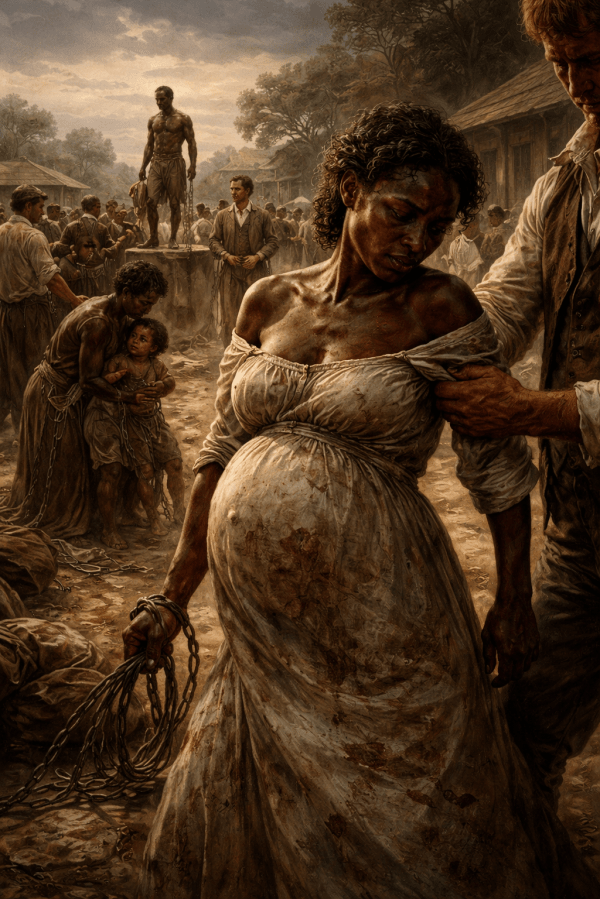
JSTOR’s tidy little history lesson reveals something real, but only after liberal scholarship scrubs the auction block clean enough for polite readers. Beneath the archive sits a system that turned rape, forced birth, and hereditary bondage into law, credit, and capital. The real story is not bad science gone astray, but a slave order using... Continue Reading →
The Colonial Architecture of Class: How Race Was Engineered to Divide Labor and Stabilize Empire
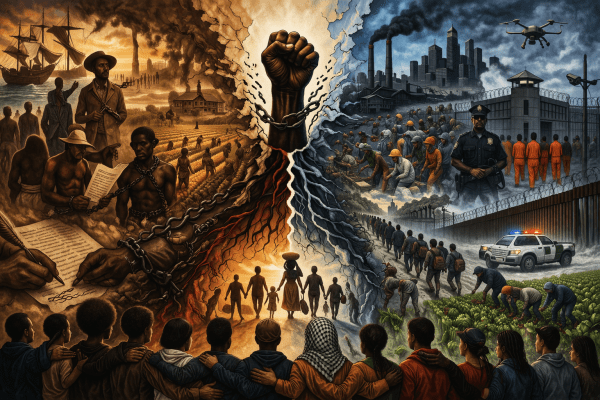
What masquerades as a race-class conflict in America is merely the internal workings of empire. By tracing the evolution of labor relations, it becomes clear that racial divisions are structural, not superficial nuisances. This overlapping oppression demands a unified, revolutionary response, dispelling false dichotomies to reveal a singular system demanding collective action.
Erase the Crime, Evade the Debt: Black History Under Siege as Reparations Rise
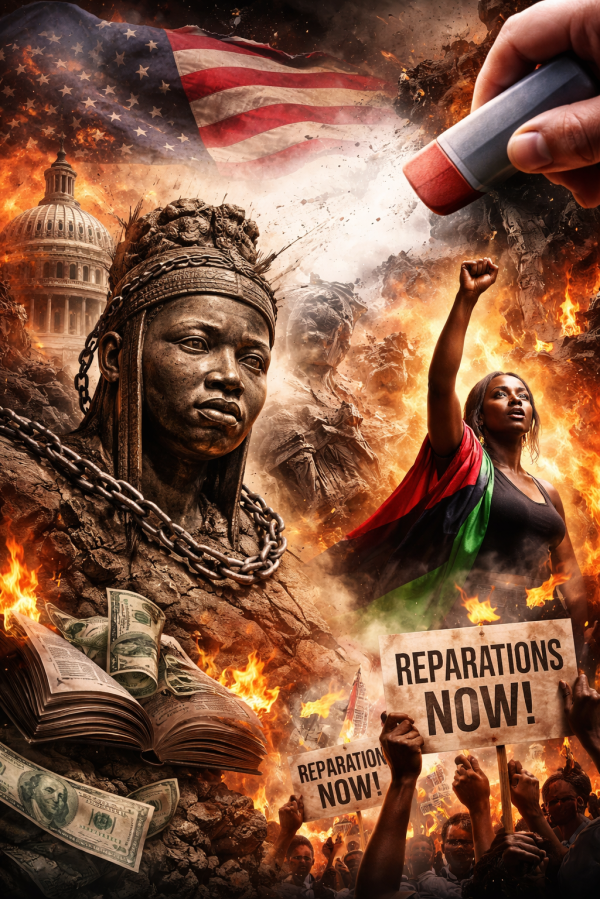
From Reuters’ managed neutrality to Washington’s cultural rollback and Ghana’s UN challenge, the struggle over memory reveals a deeper battle between imperial erasure and a growing global demand for reparatory justice. By Prince Kapone | Weaponized Information | March 27, 2026 The Cropped Memory of Empire “Ghana's president, in New York, says US is ‘normalizing’... Continue Reading →
AP Reports the Crime, Not the Consequence: How Empire Acknowledges Slavery While Defending Its Spoils
The Associated Press presents the UN resolution as a moment of moral recognition, but its reliance on official voices and diplomatic language reveals how power narrates history without disturbing itself. The material record shows that slavery’s wealth still structures the present, and that organized reparations movements—from Africa to the Caribbean to grassroots struggles—are confronting that... Continue Reading →