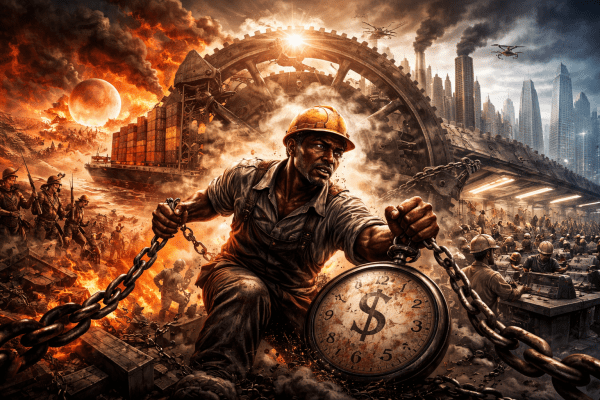
Marx dismantles liberal political economy and rebuilds the totality from production outward. Exchange and money reveal separation as the architecture of domination. Machinery and the general intellect expose capital’s war against its own measure of value. The world market universalizes crisis while pointing beyond labor time toward free development. By Prince Kapone | Weaponized Information... Continue Reading →
Author, Authority, and Empire: How “Authoritarian” Became Political Science’s Favorite Weapon Against Mass Power
This essay is part of Weaponized Information’s larger project to forge a new discipline of political science—one that treats politics as the scientific study of power: how it is accumulated, organized, enforced, and resisted. In “Towards a New Political Science: Politics as the Science of Power”, we broke with procedural political science and its canon... Continue Reading →
The Mandate of Heaven: Empire, Civilization, and the War Over History’s Future
The ancient Chinese concept of the Mandate of Heaven was never superstition — it was a theory of political legitimacy rooted in material life, popular welfare, and historical judgment. This essay revives that framework as a weapon of analysis, comparing a United States empire that rules through coercion, sanctions, and decline management with a Chinese... Continue Reading →
Capital Unmasked: How Exploitation Disappears While Domination Deepens
This Weaponized Intellects review of Capital, Volume III is the third strike in our front-to-back reconstruction of Marx’s trilogy. If you haven’t read the first two reviews, start there:Capital as Crime Scene: How Marx Dissects the Social Machinery of Exploitation — Volume ICapital Never Rests: Karl Marx’s Capital, Volume II and the Circulation of Exploitation... Continue Reading →
Towards a New Political Science: Politics as the Science of Power
A rupture with procedural political science and canonical abstraction, this essay reconstructs politics as the scientific study of power—how it is accumulated, organized, enforced, and resisted—drawing on revolutionary praxis, settler colonial history, and imperial crisis to redefine what political theory is, who produces it, and what it is for. By Prince Kapone | Weaponized Information... Continue Reading →
Gramsci Disarmed: How Empire Turned a Communist Strategist into a Cultural Mascot
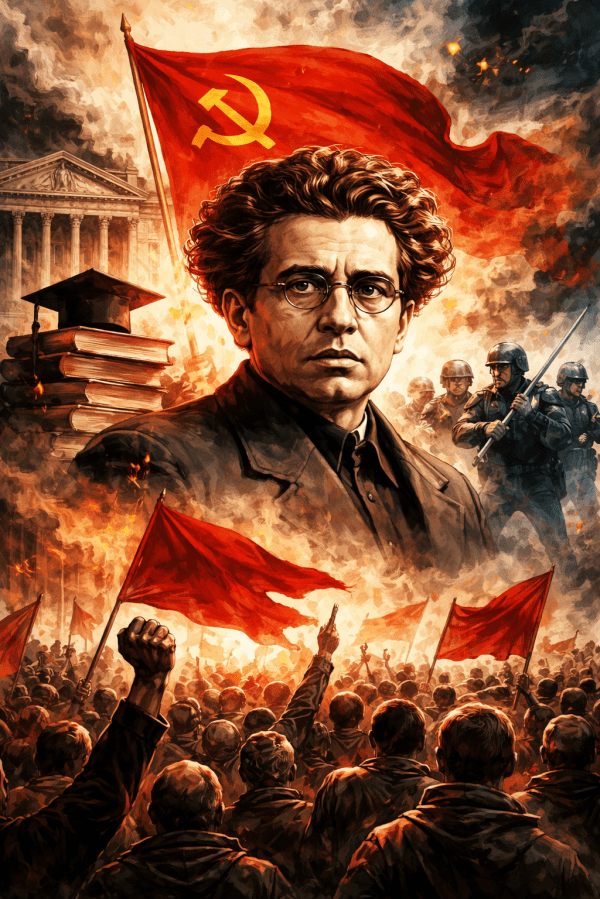
A polemical reconstruction of Antonio Gramsci as a Leninist revolutionary whose theory of hegemony was forged to solve the problem of power under advanced capitalism—and how imperial academia captured, fragmented, and neutralized that theory to manage dissent rather than overthrow domination.By Prince Kapone | Weaponized Information | December 22, 2025Gramsci in the Imperial Seminar RoomIn... Continue Reading →
The Monkey King and Chaos Under Heaven: Mao Zedong’s Letter to Jiang Qing (1966)
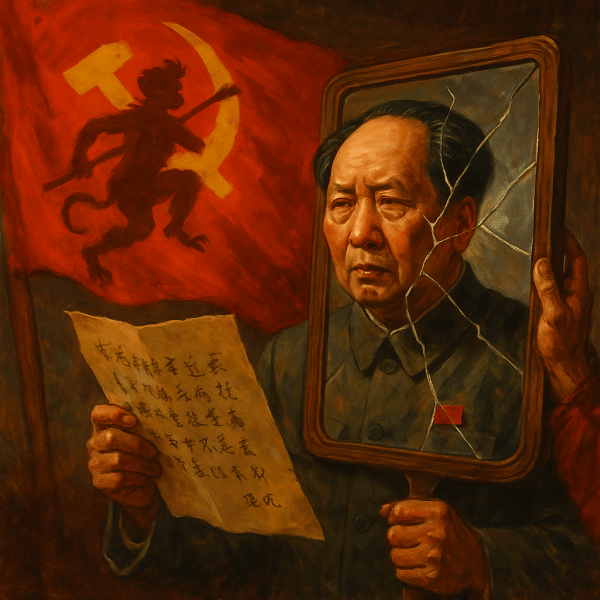
Weaponized Statecraft Series | Mao Zedong’s Letter to Jiang Qing, July 1966By Prince Kapone | Weaponized InformationSeptember 5, 2025Cave, Clouds, and the Coming Storm July 1966. Mao Zedong isn’t on some retreat to rest his bones; he’s holed up “in a cave in the West,” scribbling, reading, watching. From there he moves to the “land... Continue Reading →
Of Rope and Revolution: The Thug, the Lumpen, and the World That Made Them
When labor is outlawed and life is disposable, strangulation becomes political economy By Pablo Katari | Weaponized Information | August 1, 2025 I. Of Beggars and Bandits: The Specter Beneath Civilization History, when written by the victorious pickpockets of the world-market, is quick to condemn those who steal outside its formal registers. And so we... Continue Reading →
Che’s Other Farewell: Revolutionary Clarity in a Time of Transition
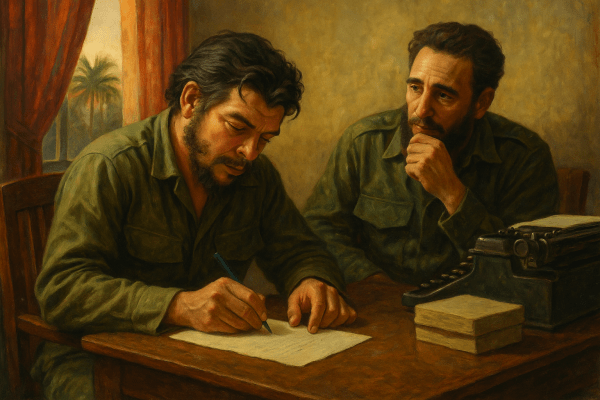
Weaponized Statesman Series | Che Guevara to Fidel Castro, Havana 1965Written in the crucible of revolutionary governance, Che Guevara’s March 1965 farewell letter to Fidel Castro is not a sentimental departure—it is a political intervention. In it, Che offers a piercing critique of Cuba’s early socialist development, grapples openly with the contradictions of economic planning... Continue Reading →
Storming Heaven: Karl Marx, the Paris Commune, and the Birth of Proletarian Statecraft
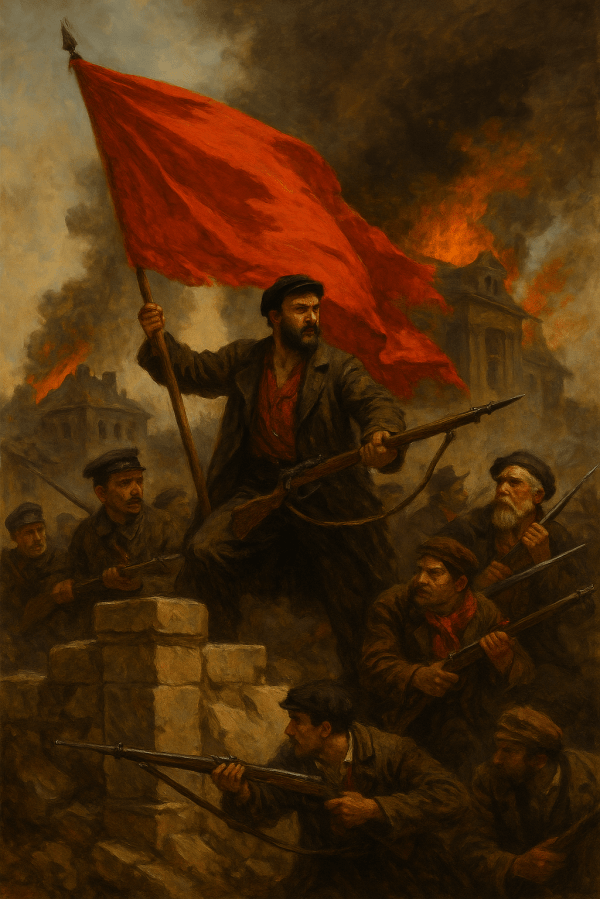
In The Civil War in France, Karl Marx did not romanticize revolution—he studied it, dissected it, and returned its lessons to the working class as weapons. From the smashing of the bourgeois state to the early contours of the dictatorship of the proletariat, the Paris Commune revealed the shape of worker power in embryo. This... Continue Reading →