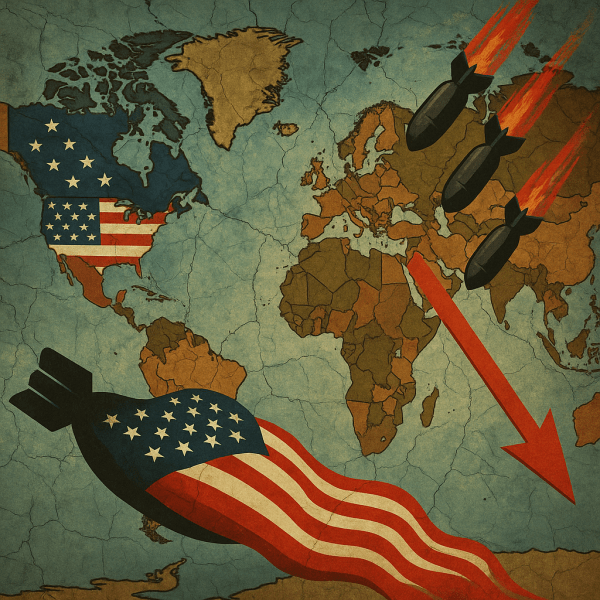
The ongoing crisis is no mere conflict but a hyper-imperialist war where the U.S. threatens annihilation to maintain control over global energy chokepoints. Beneath the surface of chaos, the narrative of mutual escalation obscures grim realities: state violence, war crimes, and an empire's desperate bid to stave off a multipolar future, demanding urgent resistance.
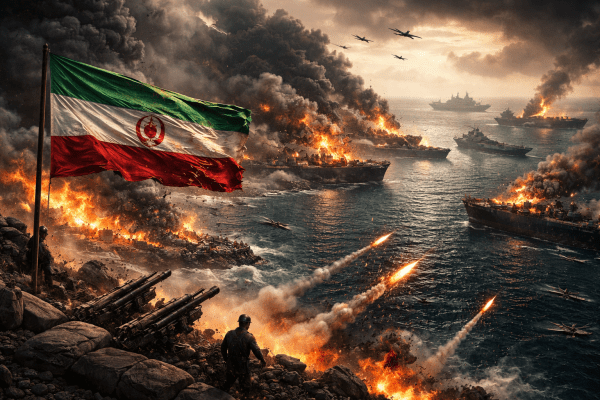
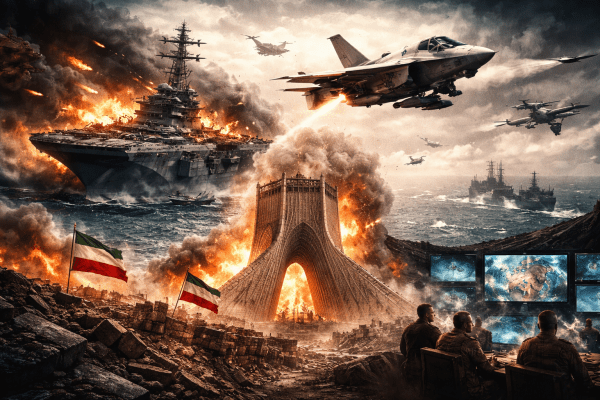
Iran Under Fire, Empire Exposed: The U.S., Israel, and the New York Times’ War Narrative
The New York Times frames imperial vulnerability as logistical inconvenience, masking the political meaning of exposure. The reconstructed facts reveal a war fought across an integrated system of bases, airspace, and energy choke points from Hormuz to Kharg. The deeper contradiction shows an empire that can still project force but can no longer prevent that... Continue Reading →
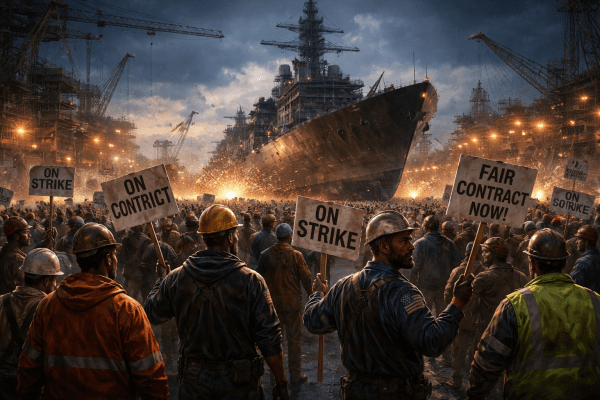
When Labor Strikes Inside the War Machine: AP News, General Dynamics, and Imperial Labor Struggle
A shipyard walkout in Maine exposes a deeper contradiction: workers fighting for survival while producing the instruments of empire—and the political line required to break that alignment. By Prince Kapone | Weaponized Information | March 23, 2026 When the War Yard Gets Reduced to a Payroll Dispute There is a very particular kind of reporting... Continue Reading →
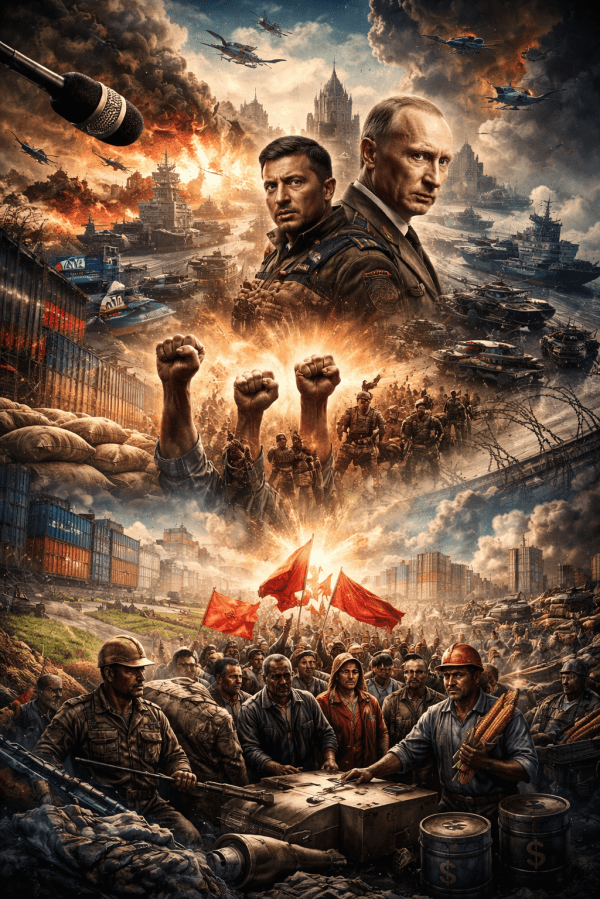
The BBC, Zelensky and the Price of Primacy: When Hegemony Calls Itself Defense
This essay excavates the BBC’s framing of the Ukraine war to reveal how catastrophe rhetoric and moral personalization manufacture consent. It reconstructs the documented record—NATO expansion, U.S. strategic doctrine, Minsk diplomacy, sanctions, and militarization—to widen the frame beyond headline urgency. It then situates the conflict within the deeper contradiction between imperial hegemony and national sovereignty,... Continue Reading →
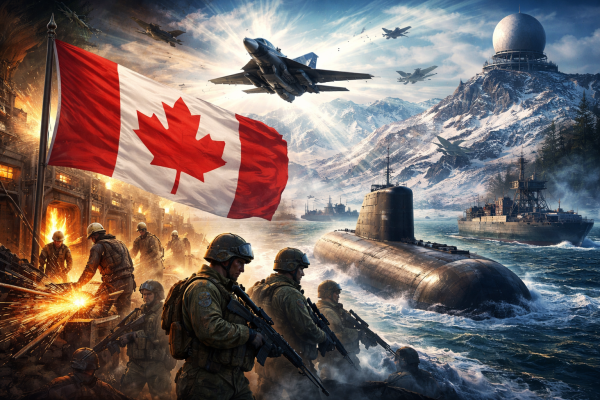
Carney, NATO, and the War Contractors: How Canada’s “Sovereignty” Pivot Deepens the Military Bloc
The New York Times sells a procurement shift as national independence. The numbers reveal a structural escalation anchored in NATO and continental integration. The pivot redistributes contracts while entrenching a war-oriented political economy. Workers and movements face a choice: defend the arms budget or reorganize production itself.By Prince Kapone | Weaponized Information | February 16,... Continue Reading →
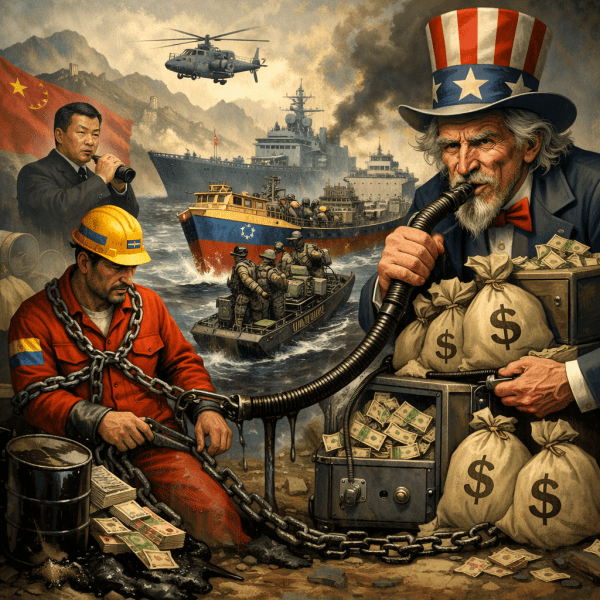
Reuters’ “Market Story” and the American Pole: PetroChina, Venezuelan Oil, and the Siege That Calls Itself Trade
Reuters sells custodial plunder as a pricing issue, turning blockade into “market caution.” We restore the missing record: seizures, supervision, and the re-routing of Venezuelan oil revenue through imperial hands. We reframe the contradiction as doctrine—Fortress America tightening hemispheric command as multipolar escape routes multiply. We close with a call to organize: break the information... Continue Reading →
From Sanctions to Shackles: The Kidnapping of President Maduro and the Consolidation of the American Pole
How the American Pole escalated from sanctions to abduction—and why sovereignty survived the attempt at decapitation By Prince Kapone | Weaponized Information | January 3, 2026The Day the Monroe Doctrine Spoke in Plain EnglishThere are moments when empire stops dressing itself up. The usual costumes—“democracy promotion,” “human rights,” “counter-narcotics,” “regional stability”—fall off, and what remains... Continue Reading →
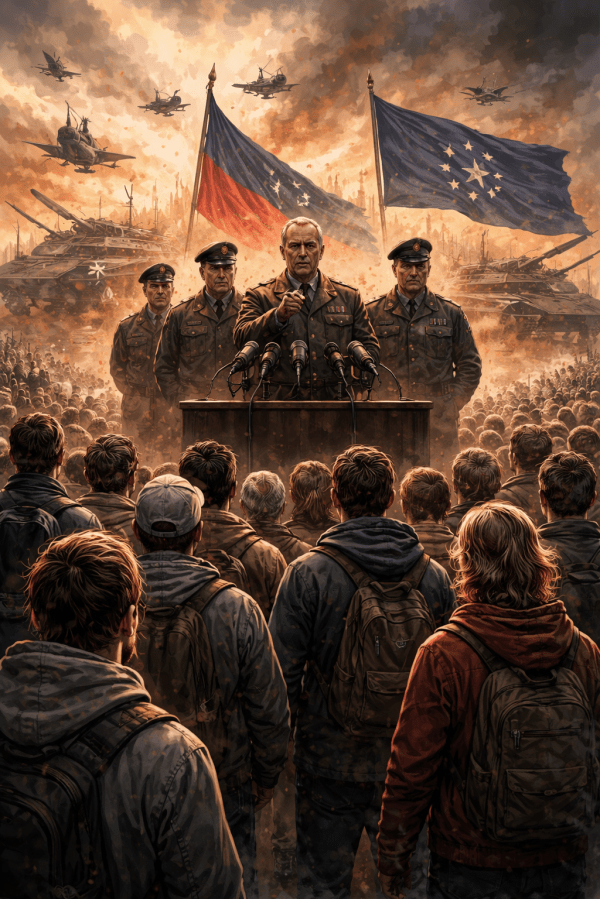
Europe’s Generals and Europe’s People: War Readiness as a Ruling-Class Project
Military elites recast war as an unavoidable condition rather than a political choice. Selective facts and strategic silences transform militarization into common sense. “Preparedness” emerges as a method of social discipline under imperial strain. Working people confront a system demanding sacrifice while offering no future. By Prince Kapone | Weaponized Information | January 1, 2026... Continue Reading →
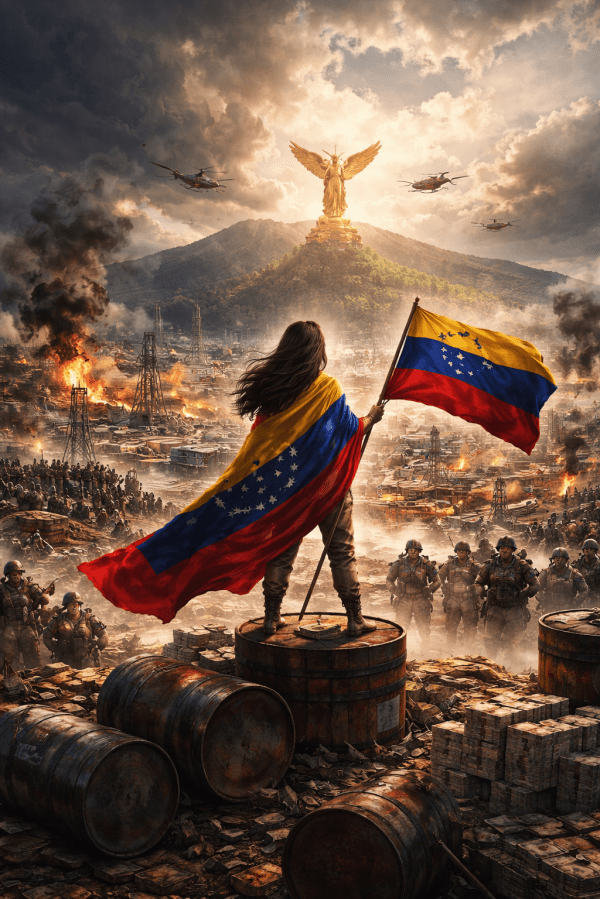
Who Owns Venezuela?
Trump’s claim that Venezuela “stole” U.S. oil is not a gaffe or exaggeration—it is an imperial verdict. This essay dismantles that claim by tracing the conflict over Venezuela’s resources through international law, the neoliberal wreckage of the pre-Chávez era, the Bolivarian rupture, Maduro’s Plan de la Patria, and María Corina Machado’s restoration blueprint. What emerges... Continue Reading →
Ranking the Empire: What Peace Metrics Reveal—and What They Bury
America Falls in the Global Peace Index, But the Story Behind the Numbers Remains UntoldBy Prince Kapone | Weaponized Information | October 26, 2025Rankings Without Responsibility: How a Peace Index Becomes a Weather Report KTLA’s “U.S. ranks among the least peaceful nations in 2025” reads like a calm forecast for storm season: numbers, arrows, and... Continue Reading →