“White guilt” shrinks a global system of power into a private mood. Liberal confession mourns history while preserving the machinery of dominance. Reactionary pride weaponizes heritage to harden bloc discipline under multipolar pressure. Beyond shame and nostalgia lies defection from empire and alignment with global liberation.By Prince Kapone | Weaponized Information | February 20, 2026History... Continue Reading →
Hold the Line: Listen Hard, Rectify Fast, Stay Red
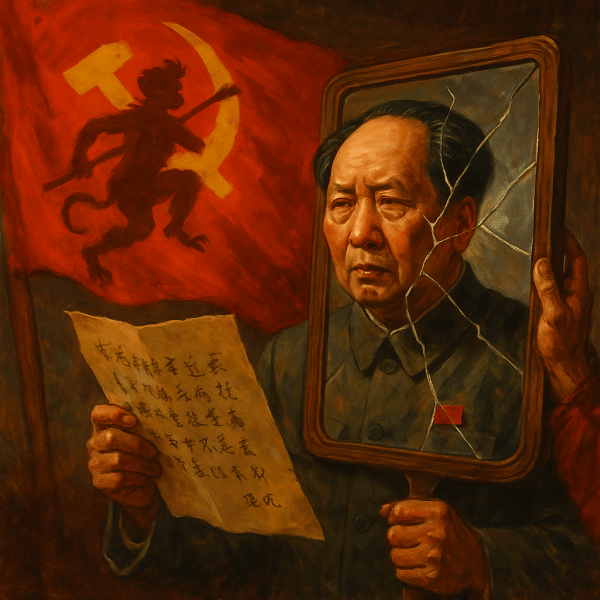
Weaponized Statecraft Series | Mao at Lushan, 1959 In the storm of the Great Leap’s setbacks, Mao did not fold—he listened. At Lushan he turned mistakes into lessons, errors into curriculum, and criticism into a method of survival. He named two illnesses—touchiness and wavering—and prescribed two remedies: endurance and rectification. He defended the communes, corrected... Continue Reading →
Hankow 1958: Mao’s Checklist Against Bureaucratic Decay
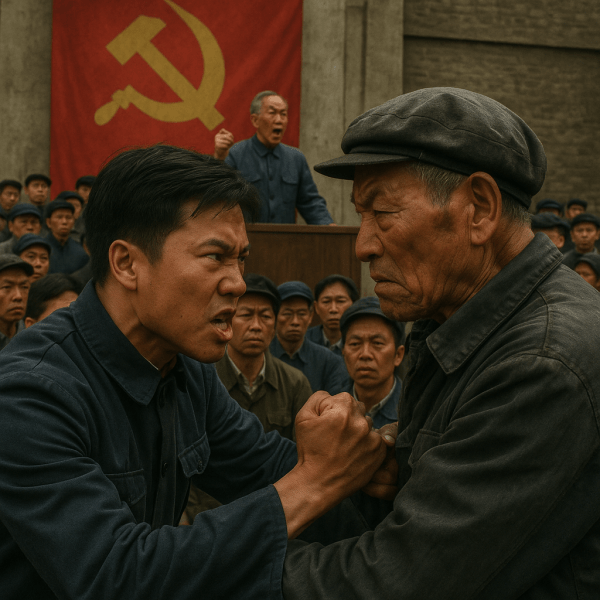
From Chengtu’s questions to Hankow’s battlefield, Mao sharpened the class line, armed the masses with democracy, and struck at the overlord style that threatened to hollow out the revolution.Weaponized Statecraft Series | Mao in Hankow, 1958By Prince Kapone | Weaponized Information | September 14, 2025From Chengtu’s Questions to Hankow’s BattlefieldApril 1958, Hankow. Weeks after forcing... Continue Reading →
Mao at Chengtu: Fighting Brain Rot, Forging Creative Revolution
In March 1958, weeks after issuing his Sixty Points on Working Methods in Nanning, Mao gathered Party leaders at Chengtu. If Nanning warned against bureaucratic drift in the wake of victory, Chengtu waged ideological war against dogmatism, empty boasting, and the paralysis of thought. Here Mao demanded investigation over imitation, mass critique over silence, and... Continue Reading →
The Discipline of Liberation: Mass Power vs. the Mirage of Assassination
Assassination is a spectacle that feeds repression, not revolution. Terrorism creates martyrs for the ruling class and pretexts for the state. History proves only the organized masses can topple empires. Communists reject illusions to build the discipline of real liberation. By Prince Kapone | Weaponized Information | September 11, 2025 The Mirage of the Gunshot... Continue Reading →
The Monkey King and Chaos Under Heaven: Mao Zedong’s Letter to Jiang Qing (1966)
Weaponized Statecraft Series | Mao Zedong’s Letter to Jiang Qing, July 1966By Prince Kapone | Weaponized InformationSeptember 5, 2025Cave, Clouds, and the Coming Storm July 1966. Mao Zedong isn’t on some retreat to rest his bones; he’s holed up “in a cave in the West,” scribbling, reading, watching. From there he moves to the “land... Continue Reading →
Revolution After Victory: Mao’s Sixty Points and the Struggle to Stay Red
In the wake of socialist victory, Mao sounded the alarm: triumph breeds complacency, and revolution demands method. His 1958 “Sixty Points” was not a plan—it was a weapon. A lesson in how to keep the revolution alive by transforming leadership, confronting contradiction, and placing politics in command. Weaponized Statesman Series | Mao in Nanning, 1958... Continue Reading →