A rupture with procedural political science and canonical abstraction, this essay reconstructs politics as the scientific study of power—how it is accumulated, organized, enforced, and resisted—drawing on revolutionary praxis, settler colonial history, and imperial crisis to redefine what political theory is, who produces it, and what it is for. By Prince Kapone | Weaponized Information... Continue Reading →
Hold the Line: Listen Hard, Rectify Fast, Stay Red
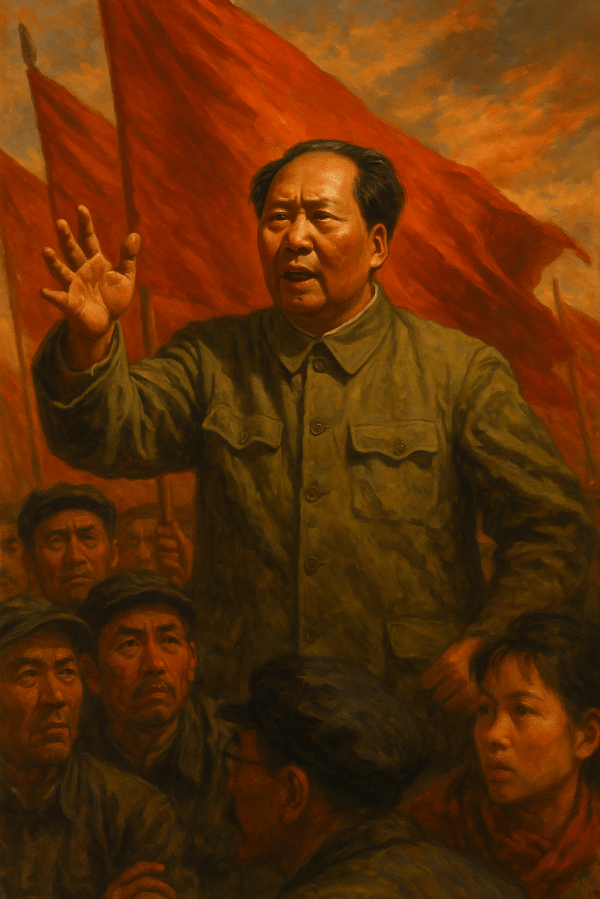
Weaponized Statecraft Series | Mao at Lushan, 1959 In the storm of the Great Leap’s setbacks, Mao did not fold—he listened. At Lushan he turned mistakes into lessons, errors into curriculum, and criticism into a method of survival. He named two illnesses—touchiness and wavering—and prescribed two remedies: endurance and rectification. He defended the communes, corrected... Continue Reading →
Hankow 1958: Mao’s Checklist Against Bureaucratic Decay
From Chengtu’s questions to Hankow’s battlefield, Mao sharpened the class line, armed the masses with democracy, and struck at the overlord style that threatened to hollow out the revolution.Weaponized Statecraft Series | Mao in Hankow, 1958By Prince Kapone | Weaponized Information | September 14, 2025From Chengtu’s Questions to Hankow’s BattlefieldApril 1958, Hankow. Weeks after forcing... Continue Reading →
Mao at Chengtu: Fighting Brain Rot, Forging Creative Revolution
In March 1958, weeks after issuing his Sixty Points on Working Methods in Nanning, Mao gathered Party leaders at Chengtu. If Nanning warned against bureaucratic drift in the wake of victory, Chengtu waged ideological war against dogmatism, empty boasting, and the paralysis of thought. Here Mao demanded investigation over imitation, mass critique over silence, and... Continue Reading →
The Monkey King and Chaos Under Heaven: Mao Zedong’s Letter to Jiang Qing (1966)
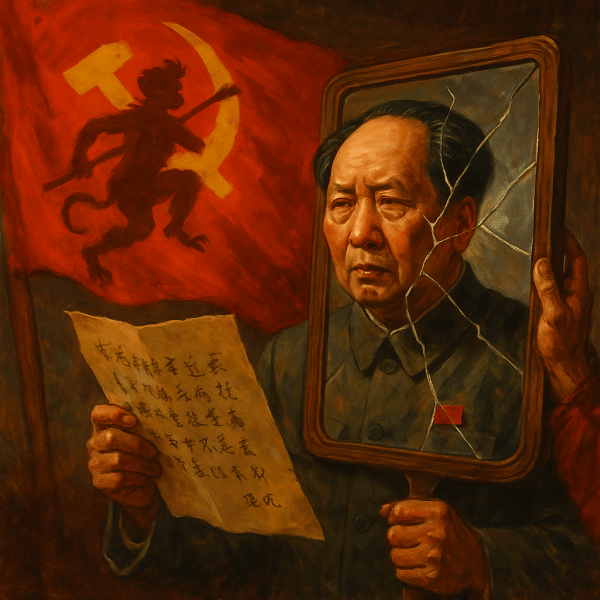
Weaponized Statecraft Series | Mao Zedong’s Letter to Jiang Qing, July 1966By Prince Kapone | Weaponized InformationSeptember 5, 2025Cave, Clouds, and the Coming Storm July 1966. Mao Zedong isn’t on some retreat to rest his bones; he’s holed up “in a cave in the West,” scribbling, reading, watching. From there he moves to the “land... Continue Reading →
Class Struggle or Class Surrender? Domenico Losurdo and the Demolition of Western Marxism
A revolutionary review of Class Struggle: A Political and Philosophical History by Domenico Losurdo—exposing how Western Marxism buried the revolution, betrayed the colonized, and became the ideological arm of empire.By Prince Kapone | Weaponized Information | August 26, 2025They Waged Class War FirstLong before Marx put pen to paper, long before any revolutionary waved a... Continue Reading →
Food for Profit: The Ruling Class Capture of the Global Food System
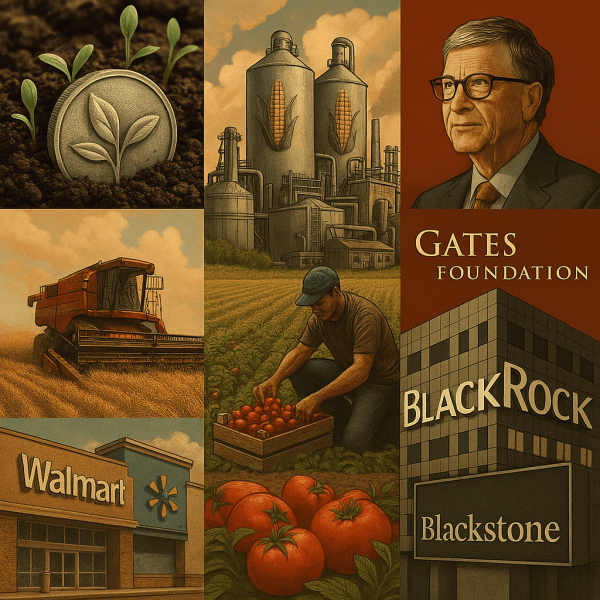
Part VII – Food for Profit: The Ruling Class Capture of the Global Food SystemBy Weaponized Information Editorial CommitteeIntroduction: Not Broken, But OwnedThere is a popular belief that the global food system is broken. That hunger persists because of inefficiencies, misaligned incentives, or unfortunate market externalities. But the truth is sharper and more violent: the... Continue Reading →
Revolution Is Not an Import: Kim Il Sung and the Struggle to Establish Juche
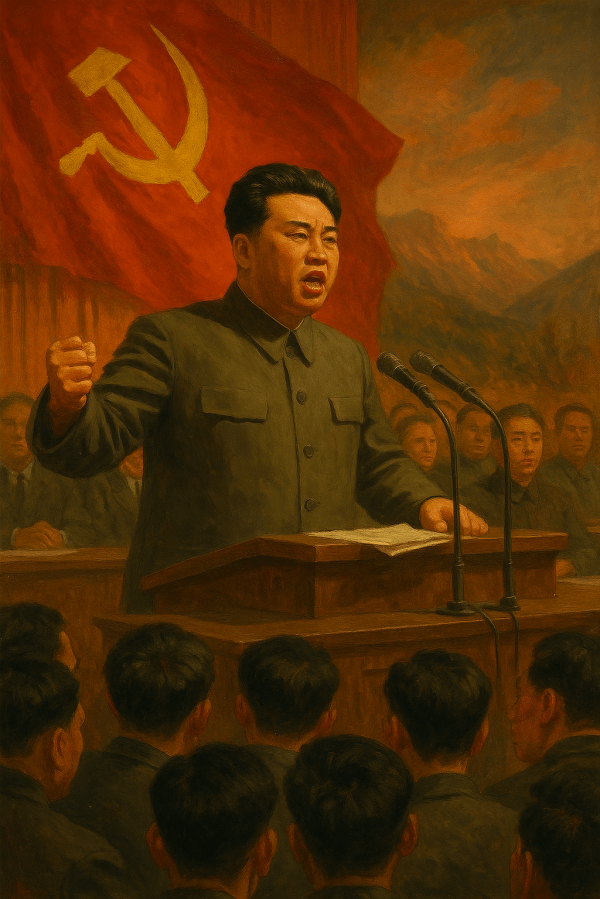
Weaponized Statesman Series | Kim Il Sung at Pyongyang, December 1955 In 1955, Kim Il Sung confronted a Party adrift in imitation. This was not a call for isolation, but a demand to root revolution in the lived experience of the Korean people. Juche, he argued, was not a slogan—it was a method of survival.... Continue Reading →
Revolution After Victory: Mao’s Sixty Points and the Struggle to Stay Red
In the wake of socialist victory, Mao sounded the alarm: triumph breeds complacency, and revolution demands method. His 1958 “Sixty Points” was not a plan—it was a weapon. A lesson in how to keep the revolution alive by transforming leadership, confronting contradiction, and placing politics in command. Weaponized Statesman Series | Mao in Nanning, 1958... Continue Reading →
Building the Agroecological Commons: Strategies for Global Solidarity and Resistance
By Prince Kapone, Weaponized InformationFrom Land Grabs to Land LiberationAs climate chaos intensifies, imperial powers and monopoly capital are scrambling to secure control over what remains of the Earth’s arable land, fresh water, and genetic diversity. This is the new frontier of accumulation: green colonialism through carbon offsets, digital agriculture, and technocratic land titling schemes.... Continue Reading →