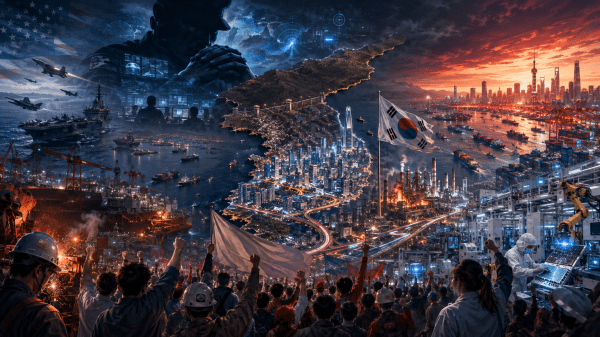
South Korea’s “miracle” didn’t fall from the fucking sky. It was built through war, U.S. occupation, anti-communist repression, Japanese capital, state-directed development, disciplined labor and a regional imperial order designed to make capitalism look victorious against socialism. But the contradiction is vicious: the same system built Korean industry strong enough to become indispensable, produced workers powerful enough to break dictatorship, and tied Korean accumulation into an Asian economy increasingly centered on China. Now Washington wants the miracle to keep taking orders—more weapons, more shipyards, more investment, more war preparation. The problem is South Korea ain’t the weak frontier state it used to be.
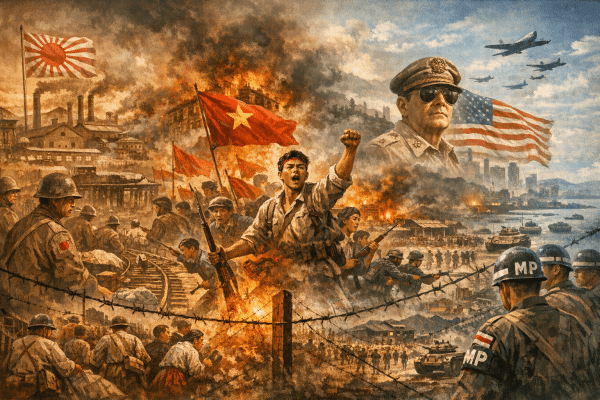
The Origins of the Korean War: From Colonial Rupture to Contained Revolution
This review reconstructs the Korean War not as a sudden conflict in 1950, but as the culmination of colonial transformation, revolutionary struggle, and imperial intervention between 1945 and 1947. Drawing on Bruce Cumings, it reveals how liberation opened a radical possibility that was contained, divided, and ultimately reshaped into two opposing systems—making war not accidental,... Continue Reading →
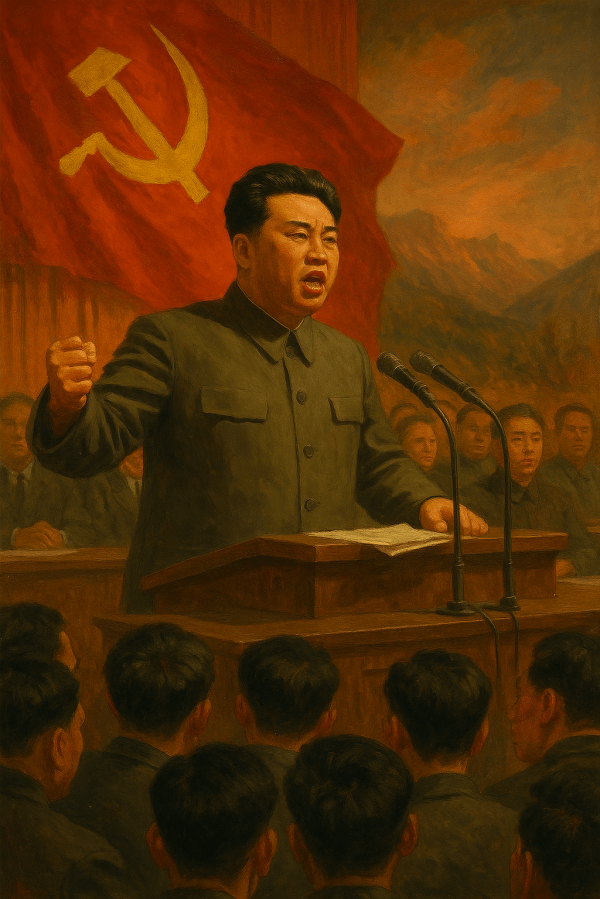
Revolution Is Not an Import: Kim Il Sung and the Struggle to Establish Juche
Weaponized Statesman Series | Kim Il Sung at Pyongyang, December 1955 In 1955, Kim Il Sung confronted a Party adrift in imitation. This was not a call for isolation, but a demand to root revolution in the lived experience of the Korean people. Juche, he argued, was not a slogan—it was a method of survival.... Continue Reading →
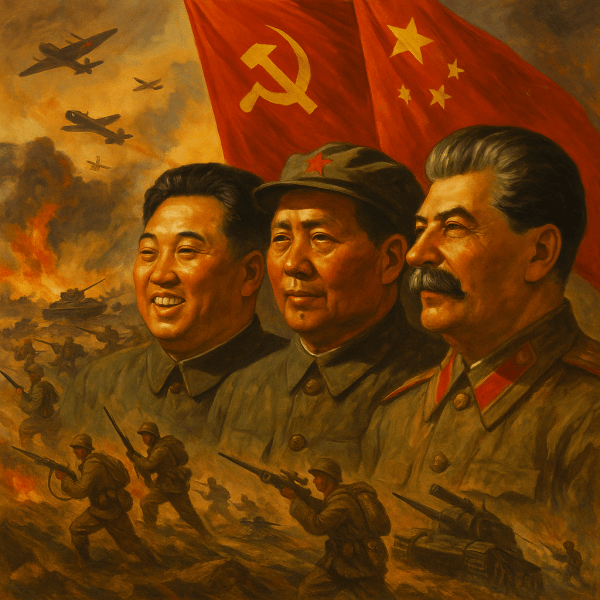
Red Autumn: The Korean War and the Highest Form of Proletarian Internationalism
This is not the story of a Cold War chess match or a border conflict spun out of control. This is the story of a revolutionary people defending their land and their future against the most brutal empire in human history—and winning. Korea did not collapse. It stood, with the full force of China and... Continue Reading →