Weaponized Statecraft Series | Mao at Lushan, 1959 In the storm of the Great Leap’s setbacks, Mao did not fold—he listened. At Lushan he turned mistakes into lessons, errors into curriculum, and criticism into a method of survival. He named two illnesses—touchiness and wavering—and prescribed two remedies: endurance and rectification. He defended the communes, corrected... Continue Reading →
Israel Guilty: The UN Report That Exposes Genocide in Gaza
A UN commission stripped away every alibi. Gaza’s destruction is genocide — Israel guilty, empire complicit, Palestine entitled to justice.By Prince Kapone | Weaponized Information | September 16, 2025When the Law Names the CrimeFor nearly two years the world has watched Gaza burn. Whole families erased in seconds, hospitals reduced to smoking rubble, mothers burying... Continue Reading →
Decertifying Colombia: Fortress America and the War on Sovereignty
Washington dresses lawfare as “drug control” while tightening the Monroe Doctrine’s noose around the hemisphere. Petro’s defiance—on labor, land, Palestine, and multipolarity—marks him as a target not for coca but for sovereignty. The drug war is the mask; recolonization is the mission. By Prince Kapone | Weaponized Information | September 16, 2025How a “Neutral” Wire... Continue Reading →
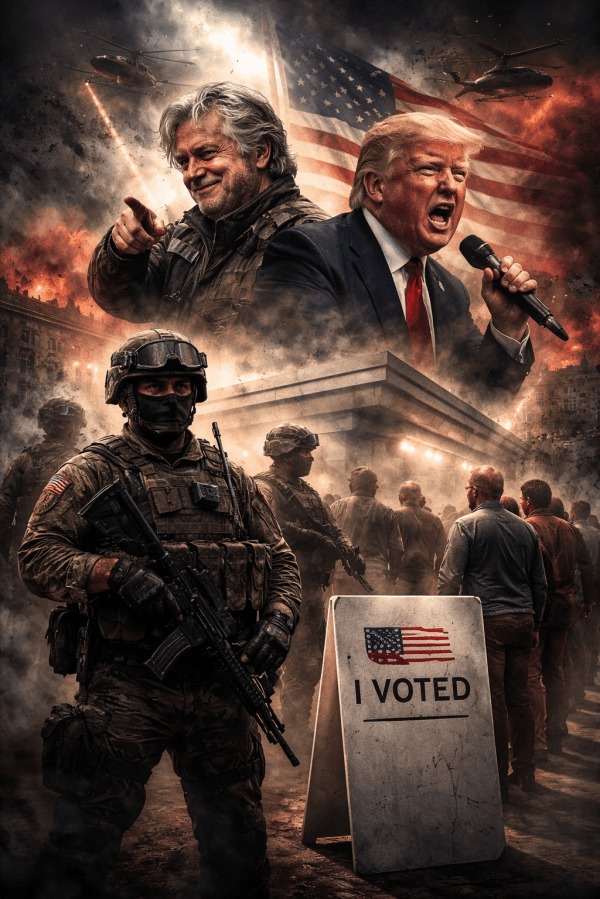
Martyrdom as Mandate: How Repressive Spectacle Violence Fuels Trump’s Technofascist Purge
From the sanctification of Charlie Kirk to National Guard deployments in Black communities, the regime turns grief into mandate and spectacle into machinery of repression. By Prince Kapone | Weaponized Information | September 15, 2025The Script of Martyrdom and VengeanceJoey Garrison’s September 15, 2025 piece in USA Today is written less as a report than... Continue Reading →
Charlie Kirk, Zionism, and the Cracks in a Crumbling Empire
The Grayzone turns a feud between donors and their disciple into intrigue about Israel, but the deeper story is U.S. polarization, Gaza’s genocide, and empire in decay.By Prince Kapone | Weaponized Information | September 15, 2025The Manufacture of Martyrdom: How Propaganda Frames the Death of Charlie KirkOn September 12, 2025, The Grayzone ran with a... Continue Reading →
Hankow 1958: Mao’s Checklist Against Bureaucratic Decay
From Chengtu’s questions to Hankow’s battlefield, Mao sharpened the class line, armed the masses with democracy, and struck at the overlord style that threatened to hollow out the revolution.Weaponized Statecraft Series | Mao in Hankow, 1958By Prince Kapone | Weaponized Information | September 14, 2025From Chengtu’s Questions to Hankow’s BattlefieldApril 1958, Hankow. Weeks after forcing... Continue Reading →
Mao at Chengtu: Fighting Brain Rot, Forging Creative Revolution
In March 1958, weeks after issuing his Sixty Points on Working Methods in Nanning, Mao gathered Party leaders at Chengtu. If Nanning warned against bureaucratic drift in the wake of victory, Chengtu waged ideological war against dogmatism, empty boasting, and the paralysis of thought. Here Mao demanded investigation over imitation, mass critique over silence, and... Continue Reading →
Congress, Trump 2.0, and the War Machine: Repeal, Spectacle, and the Crisis of Imperialism
The House vote to roll back old war powers signals not restraint but spectacle—masking bipartisan complicity, a trillion-dollar war economy, and the contradictions of technofascist consolidation. By Prince Kapone | Weaponized Information | September 12, 2025 Oversight Theater: How ‘Forever Wars’ Become Forever Narratives On September 11, 2025, Common Dreams ran a piece by staff... Continue Reading →
F-35s Over Guyana: Exxon’s Oil, Venezuela’s Claim, and the Empire’s Fear of Multipolarity
Washington flies warplanes to guard Exxon’s contracts, calls it “stability,” and smears Venezuela as the aggressor. Yet beneath the noise lies the real contradiction: a people’s fight for sovereignty against the Fortress Americas project in a world breaking toward multipolarity.By Prince Kapone | Weaponized Information | September 12, 2025Investor Calm at the Barrel of a... Continue Reading →
Resilience for Whom? The EU’s 2025 Strategic Foresight Report and the Crisis of Hyper-Imperialism in a Multipolar Transition
Brussels calls it “Resilience 2.0.” In reality it is a manual for managing imperial decline: shifting Europe from Russian pipelines to U.S. LNG, seizing assets through lawfare, codifying dependence on American cloud and chips, militarizing budgets, and policing speech. Across the Global South, a multipolar counter-project points toward another horizon—cooperation, sovereignty, and solidarity. The choice... Continue Reading →