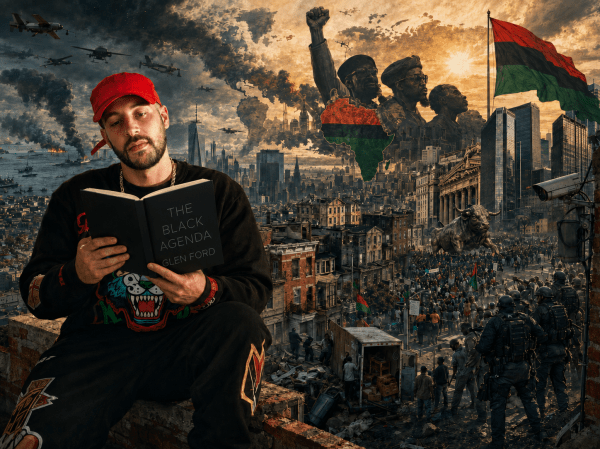
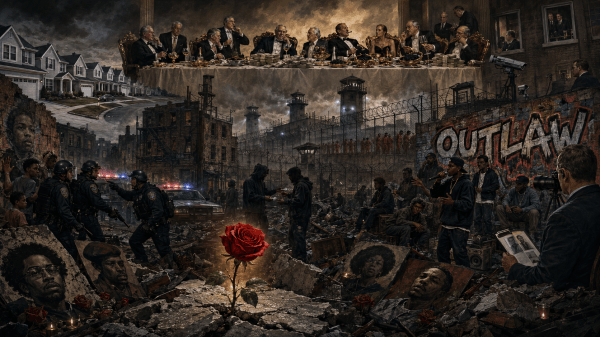
Dean Van Nguyen's "Words for My Comrades" passionately reclaims Tupac Shakur as a pivotal voice in the Black revolutionary movement, tracing his roots back to the powerful yet fragmented legacy left by the Panthers. While capitalism commodifies Tupac's image, the essence of his revolutionary spirit remains alive, urging listeners to confront issues of systemic oppression and identity. Van Nguyen illuminates the contradictions in Tupac's life, linking them to a larger inheritance shaped by state repression and cultural rebellion. Ultimately, Tupac's significance lies not in providing a finished political framework but in sparking inquiry into collective struggle and revolutionary continuity, creating pathways toward genuine transformation.
The Market Came Armed: Sven Beckert and the World Capital Built by Conquest
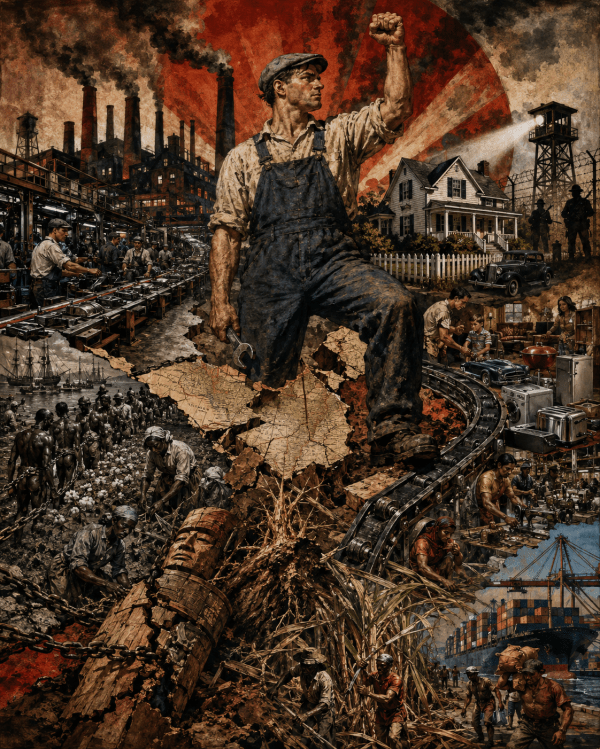
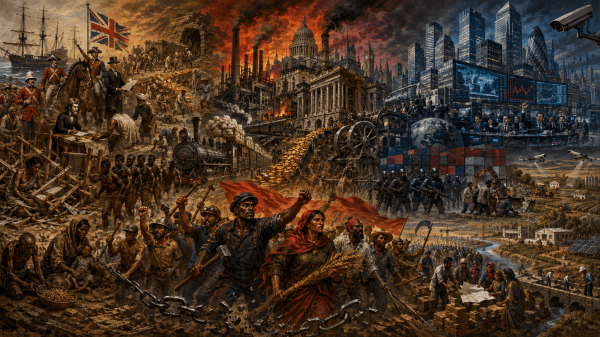
Sven Beckert demolishes capitalism’s favorite myth: that it emerged from free markets, innovation, and peaceful exchange. His global history shows a system built through conquest, slavery, colonial dispossession, state power, coerced labor, and repeated counterrevolution. Yet Beckert repeatedly turns rebellions, socialist revolutions, and anticolonial victories into episodes in capitalism’s adaptation. This review seizes his historical arsenal while rejecting that retreat, arguing that a world made through organized class and colonial power can be remade only through the organized power of workers and oppressed peoples.
No Freedom Without Power: Machiavelli, Rome, and the Republic Built on Ruins
Machiavelli’s The Discourses is not a genteel treatise on republican ideals but a gritty how-to on wielding power from the depths of defeat. This work confronts the myth of liberal innocence, asserting that liberty arises not from consensus but through chaos, violence, and organized resistance against domination. Machiavelli's insights expose the harsh realities of historical conflict and the necessity of institutional discipline, emphasizing that true power is built on struggle, not sentiment. Yet, amidst its rich lessons, The Discourses reveals a troubling contradiction: the same republic that fosters internal liberty thrives through imperial conquest and exclusion. This duality beckons revolutionaries to seize its pragmatic lessons while rejecting its imperial legacy.
The Throne Was Always Cracked: Radhika Desai and the Myth of American Hegemony
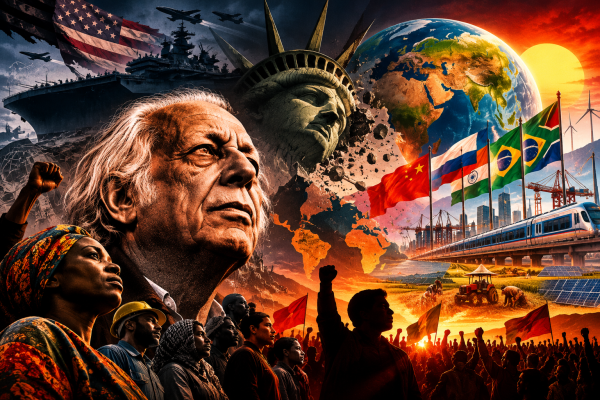
Radhika Desai’s Geopolitical Economy obliterates the illusion of a stable, American-led world, revealing that capitalism thrives on conflict, not unity. The book exposes capitalism’s instability, punctuated by crises that merely reshift the burdens onto workers and debtor nations. Desai argues for a multipolar world not as a peaceful transition to a new hegemon, but as a rupture from monopolistic control, fostering opportunities for sovereign development and socialist planning. However, liberation demands that working people reclaim the means of production and governance. The narrative warns against complacency; the emerging multipolarity is ripe for struggle, shaping the future based on who wields power over resources and development.
Capitalism After the Robbery: Adam Smith, the Wealth of Nations, and the Clean Alibi of Bourgeois Political Economy
Adam Smith’s The Wealth of Nations is a twisted tale masquerading as a free-market manifesto, one that defies the naive faith bestowed upon it by neoliberals. It exposes capitalism's fundamental contradictions, revealing how labor produces wealth while class divides it unjustly. Smith acknowledges the state's crucial role in maintaining this order, contradicting the myth of an autonomous market. He scrutinizes colonialism and monopoly yet ultimately upholds capitalist structures. Historical materialism challenges his framework, demanding accountability from the beneficiaries of this exploitation. As we dissect Smith's insights, we unearth his omissions, seeking a world where labor governs—transforming capitalism's alibi into an indictment of its foundation.
Code and Conquest: The Technological Republic and the Blueprint for a New Imperial Order
In Weaponized Intellects' scathing review of The Technological Republic, Karp and Zamiska unveil a chilling trajectory where Silicon Valley's crisis morphs into a blueprint for imperial tech dominance. They argue for an alliance between state power and engineering prowess to reinforce U.S. supremacy, shedding liberalism in favor of militaristic ingenuity. What transpires is a dissection of consumer capitalism’s futility, advocating for weaponized AI to restore glory. This critique masquerades as patriotic duty while advocating technofascism—a seamless marriage of capital and state. In rejecting this, the revolution must neither accept imperial myths nor a hollow liberalism, but fight for a world where tech serves humanity, not dominance.
Capital vs. the Commons: The War on Women, Land, and the World Proletariat
This Weaponized Intellects review of Caliban and the Witch by Silvia Federici excavates how capitalism emerged not as progress, but as a counter-revolution forged through land theft, colonial conquest, and the violent subjugation of women’s bodies. It traces the medieval struggles of peasants, workers, and heretics to show that another world was not only imagined—but... Continue Reading →
Settlers in the Wreckage: J. Sakai, Technofascism, and the War for the Future
J. Sakai’s interviews force the U.S. left to confront the settler-colonial foundations it has spent generations avoiding. His analysis exposes the myth of the revolutionary white proletariat, the collapse of liberal illusions, and the expansion of war into every domain of life. But Weaponized Information pushes further, grounding his insights in monopoly finance capital, technofascism,... Continue Reading →
The World System Before European Hegemony: How the West Hijacked a System It Did Not Build
Janet Abu-Lughod's "Before European Hegemony" ruthlessly dismantles the myth that Europe rose to global prominence due to inherent superiority or brilliance. Instead, it reveals a pre-existing world economy crafted by diverse, thriving civilizations from which Europe, late to the game, benefited through exploitation and rupture. By tracing this narrative, Abu-Lughod forces us to confront uncomfortable truths: Europe did not create history; it emerged through the erosion of powerful systems created by others. History wasn’t predestined; it was violently reshaped.
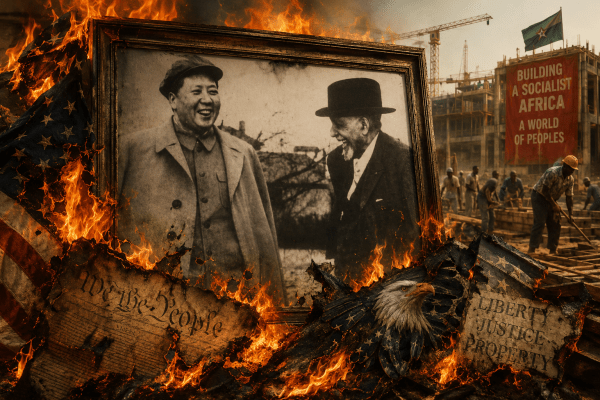
Africa Against the World Market: Hosea Jaffe, Imperialism, and the Long Struggle for Liberation
A Weaponized Intellects review of A History of Africa that excavates Hosea Jaffe’s uncompromising analysis of colonialism, class formation, and imperial domination—situating his intervention within the liberation struggles of his time and assessing its enduring relevance for understanding Africa, the world system, and the unfinished project of revolutionary transformation today. By Prince Kapone | Weaponized... Continue Reading →