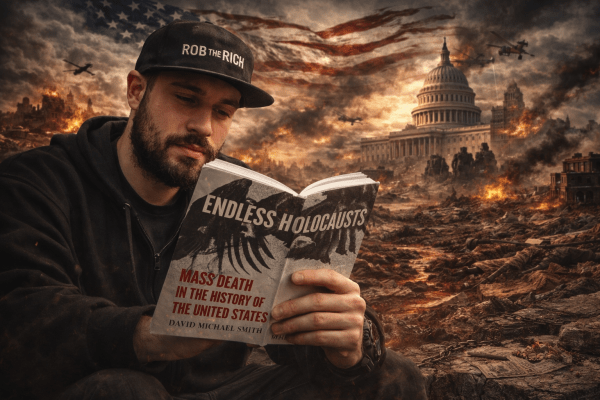
This Weaponized Intellects Book Review dismantles the myth of American innocence by tracing a continuous line from settler genocide and racial slavery to industrial exploitation and global war. It argues that these are not separate injustices but interconnected expressions of a single imperial system, one that reproduces itself through organized violence, ideological cover, and the... Continue Reading →
Politico and the Art of Imperial Whispering: How Narrative Manages Crisis, War, and a Fracturing Western Bloc
What presents itself as sober reporting reveals, on closer inspection, a carefully arranged narrative that fragments reality into isolated claims while obscuring the material ground beneath them. A close reading exposes the specific devices through which uncertainty is manufactured, alliances are subtly disciplined, and strategic tensions are recast as manageable intrigue. When the missing historical,... Continue Reading →
Blackout and Blockade: Empire’s War on Cuba and the Cracks in the American Pole
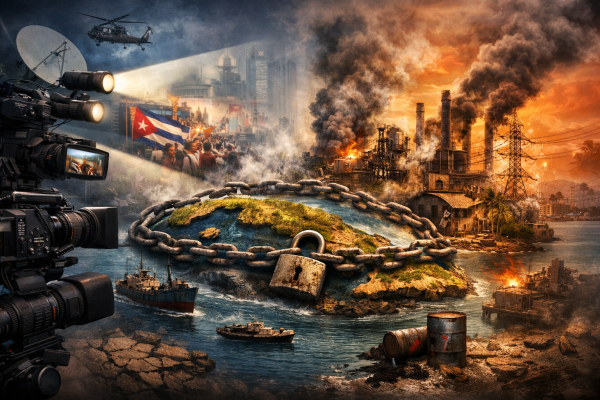
As U.S. imperialism tightens its grip on the hemisphere through economic warfare, Cuba stands at the front line—where the struggle between domination and sovereign development, between imperial command and emerging multipolar possibility, is being fought in real time. By Prince Kapone | Weaponized Information | March 17, 2026 When a Siege Learns to Speak the... Continue Reading →
When the Signal Becomes the Weapon: Empire, Media, and the New Discipline of Narrative
As the United States loses its monopoly over global storytelling, regulatory power, media concentration, and wartime pressure converge to manage a fractured information order—and reveal how narrative control adapts under imperial strain. By Prince Kapone | Weaponized Information | March 17, 2026 When Power Clears Its Throat and Calls It a Debate In Dominick Mastrangelo’s... Continue Reading →
Axios at the Oil Chokepoint: How Imperial Aggression Gets Packaged as Maritime Order
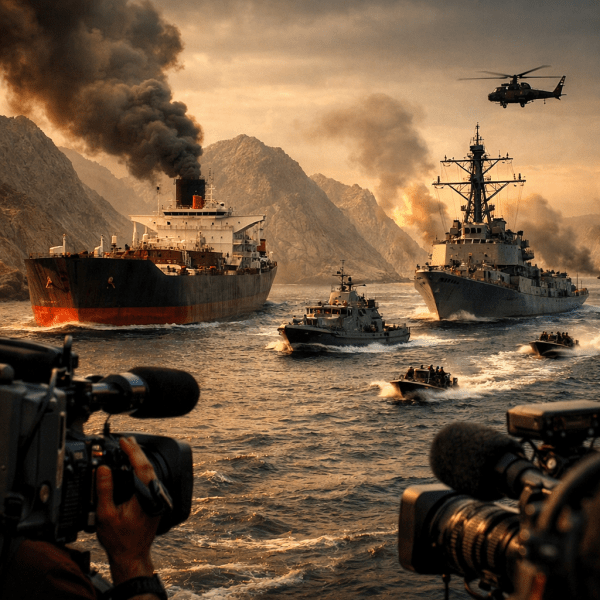
This WPE dissects how Axios turns a threatened expansion of war into the language of shipping, order, and responsible management. It reconstructs the material terrain beneath that narrative: the Strait of Hormuz as a world energy artery and Kharg Island as a critical node in Iran’s oil system. It then reframes the crisis as a... Continue Reading →
The Birth of Weaponized Information: How the Empire Lost Its Monopoly Over Truth
For a generation the American empire dominated not only the battlefield but the global narrative. Corporate media framed wars, justified sanctions, and explained imperial power to the world. But leaks, whistleblowers, digital networks, and rival media systems shattered that monopoly over reality. This essay traces the historical collapse of the imperial information order and the... Continue Reading →
NBC’s Cuba Narrative and the Siege It Refuses to See
NBC’s coverage frames Cuba’s economic adjustment as a dramatic crisis, but a close reading of the article reveals the narrative techniques and framing devices used to construct that impression. Beneath the headline lies a far denser economic terrain shaped by sanctions, energy shortages, inflation, and the long search for productive stability under siege. When these... Continue Reading →
After the Empire — Before the Collapse
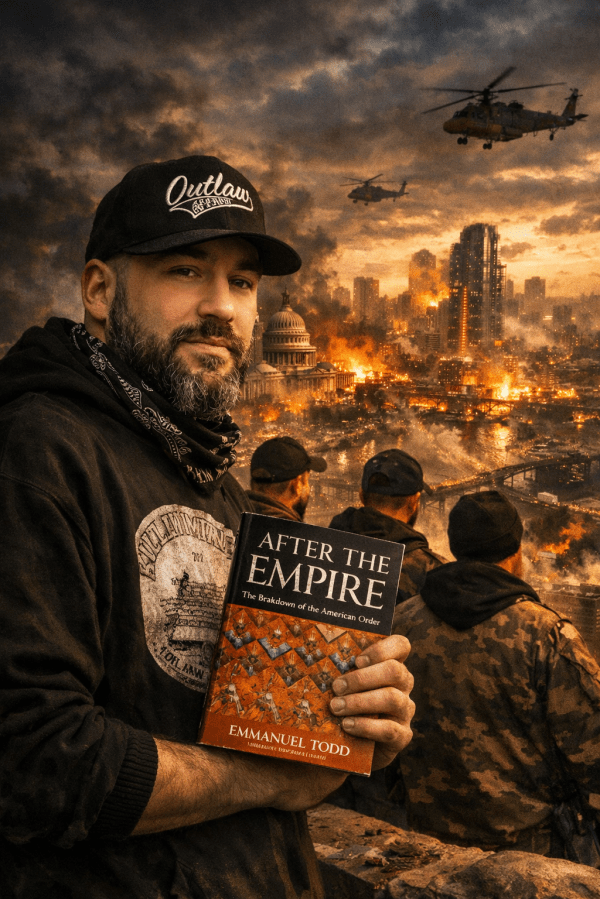
When Emmanuel Todd wrote After the Empire, Washington still believed it ruled a permanent unipolar world. Todd saw something different: an empire sustained less by production than by financial tribute and military spectacle. Two decades later the contradictions he described—economic dependency, micromilitarism, and ideological decay—have matured into the turbulent transition now reshaping global power.By Prince... Continue Reading →
Axis of Empire: The Coup, the Shah, and the War Against Iranian Sovereignty
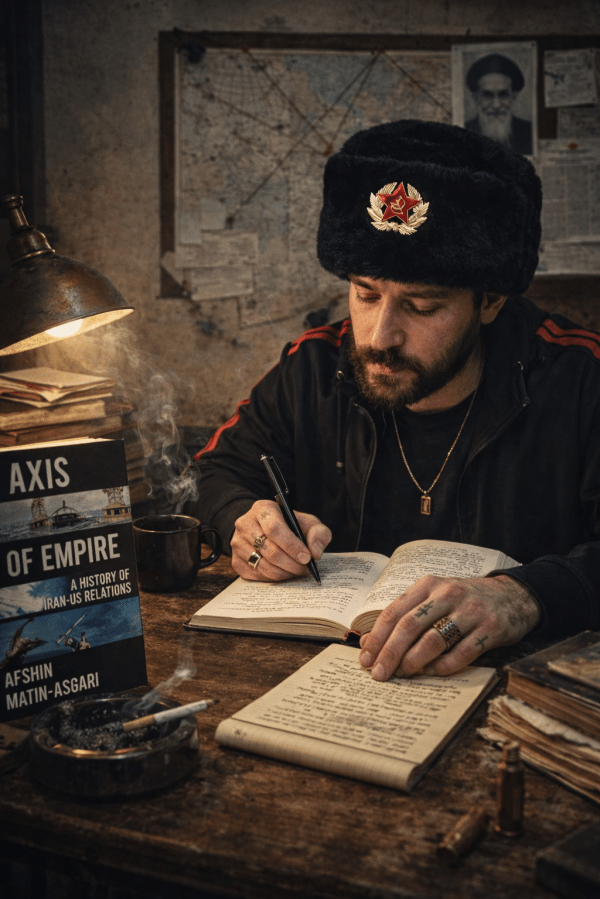
Afshin Matin-Asgari’s history exposes how U.S.–Iran relations were forged not through partnership but through intervention, oil politics, and the overthrow of democratic sovereignty. This review excavates the buried architecture of empire behind the 1953 CIA coup and the construction of the Shah’s authoritarian client state. It follows how the Iranian Revolution shattered that imperial arrangement... Continue Reading →
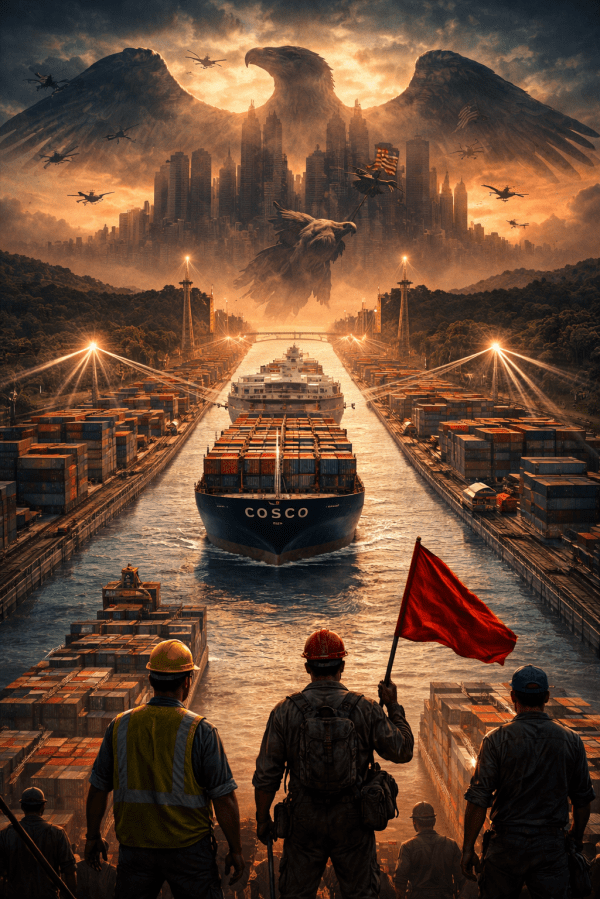
From COSCO to BlackRock: The Hidden Struggle Over the Panama Canal Chokepoint
A logistics trade report tells us COSCO left Panama’s Balboa terminal because of a tidy legal dispute, the sort of story written from the boardroom side of the dock. Look closer and the facts show something rougher: U.S. pressure, ports changing hands, and global finance capital circling one of the narrow passages through which the... Continue Reading →