By Prince Kapone, Weaponized Information
Civilization at a Crossroads
The terminal crisis of capitalism is not theoretical—it is ecological, political, and civilizational. As the oceans rise, the forests burn, and urban infrastructures implode under the weight of speculation and neglect, the ruling class clings to a final fantasy: that technology, financial engineering, and authoritarian governance will preserve its privileges while the rest of the world is left to drown, starve, or submit.
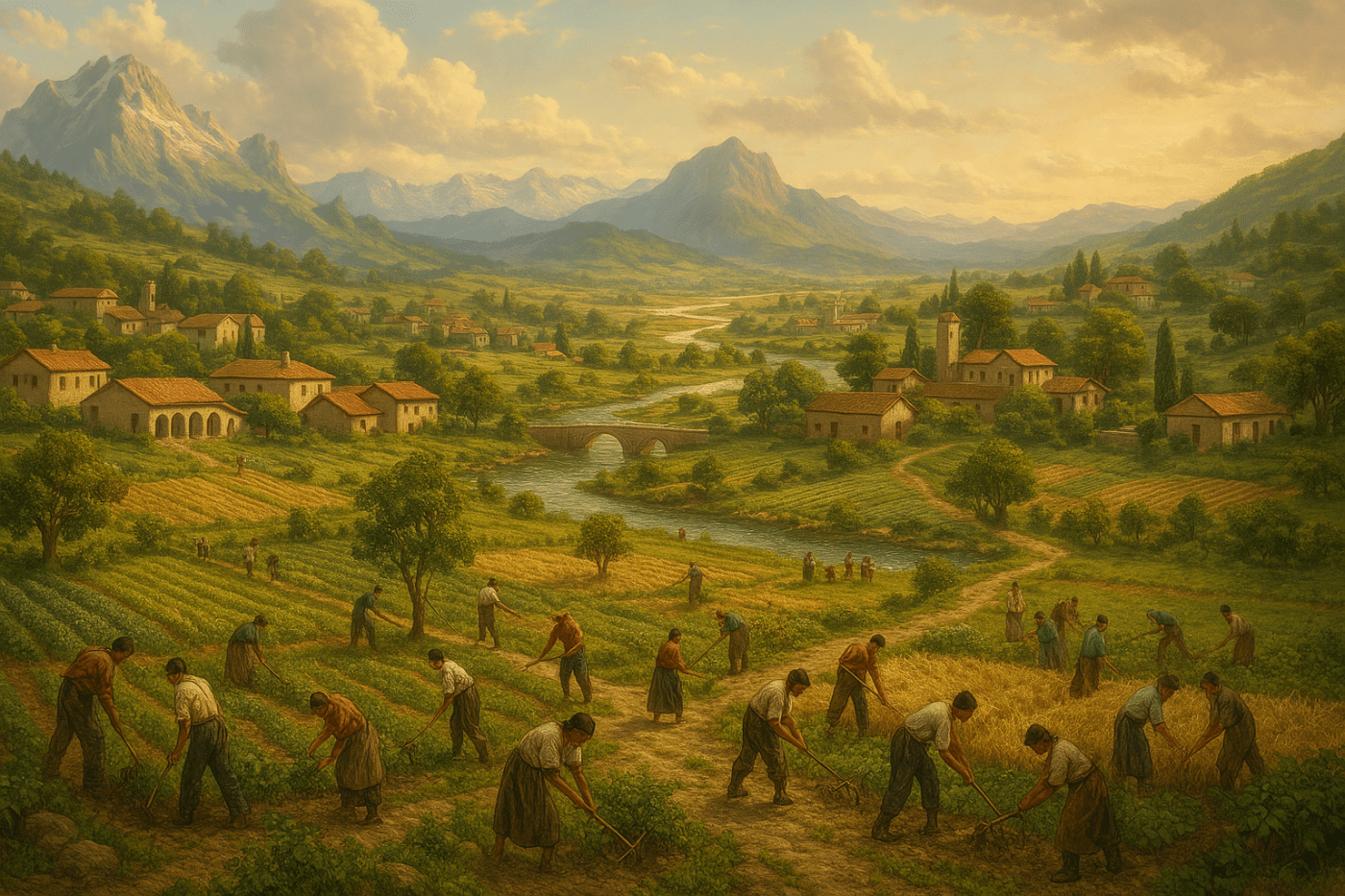
But from beneath the ruins, something else is growing. Across the Global South and the imperial core alike, oppressed peoples are reviving the most subversive and practical institution in revolutionary history: the commune. This final chapter contends that the path beyond collapse lies in the mass proliferation of communally governed territories, federated infrastructure, ecological planning, and democratic life rooted in land and labor.
What Is a Commune in the 21st Century?
The commune is not simply a rural co-op or an intentional community. It is a political-economic unit of socialist transformation—one that:
- Collectively stewards land, labor, and resources for the well-being of all
- Integrates education, health, care, food production, and ecological management
- Practices bottom-up planning and direct democracy
- Coordinates with other communes in regional and global federations
The commune rejects capitalist civilization’s separations: between human and nature, city and countryside, production and reproduction, politics and life. It is the nucleus of a new society—not postmodern, but post-imperialist; not tech-utopian, but ecologically grounded and proletarian in content.
Revolutionary Planning vs. Technocratic Greenwashing
Let us be clear: there can be no ecosocialist future without a total break from capitalist planning. The UN’s Sustainable Development Goals, the Paris Accords, or the World Bank’s climate finance programs are not solutions—they are mechanisms of enclosure, extraction, and green imperialism.
Revolutionary planning must be rooted in territorial autonomy and ecological regeneration. It must be guided by the wisdom of those who have lived outside or against the capitalist world system: Indigenous land stewards, subsistence farmers, water protectors, and the radical memory of movements like the People’s Communes of China, the Zapatista caracoles, and the Cuban cooperative sector.
From Dual Power to Civilizational Transition
The commune is not a stopgap—it is a structure of dual power, capable of replacing the decaying organs of bourgeois rule. As capitalist institutions hollow out under crisis, the commune steps in to feed, house, educate, and organize the people.
But unlike past communes that were isolated, rural, or easily crushed, the 21st-century commune must be:
- Federated: linked across regions and biomes, sharing infrastructure, logistics, and defense
- Hybrid: rooted in land but connected to digital tools under collective control
- Militant: capable of resisting state repression and imperialist sabotage
- Cosmopolitan: grounded in local culture but oriented toward global solidarity and proletarian internationalism
The Commune as Infrastructure of the Future
We must replace the infrastructure of empire—data centers, pipelines, gated cities, and megafarms—with the infrastructure of liberation. This means:
- Decentralized energy grids owned by communities
- Commoned water systems and watershed planning
- Cooperative manufacturing and tool sharing
- Agroecological corridors coordinated by rural-urban assemblies
- Militias for self-defense, not imperial occupation
And yes, it means radical pedagogy, cultural production, and the cultivation of new values: reciprocity, ecological humility, revolutionary discipline, and communal joy.
Conclusion: The Commune Is the Horizon
The commune is not behind us. It is ahead. It is the form through which the working class and the landless can reorganize society to meet human need and planetary survival. It is how we de-link from capital, resist empire, and build new relations of life.
We are not trying to save capitalism from collapse. We are trying to bury it with our hands in the soil and our eyes on the horizon.
Land, labor, liberation—federated. The commune is the infrastructure of the future.
 Weaponized Information
Leave a comment