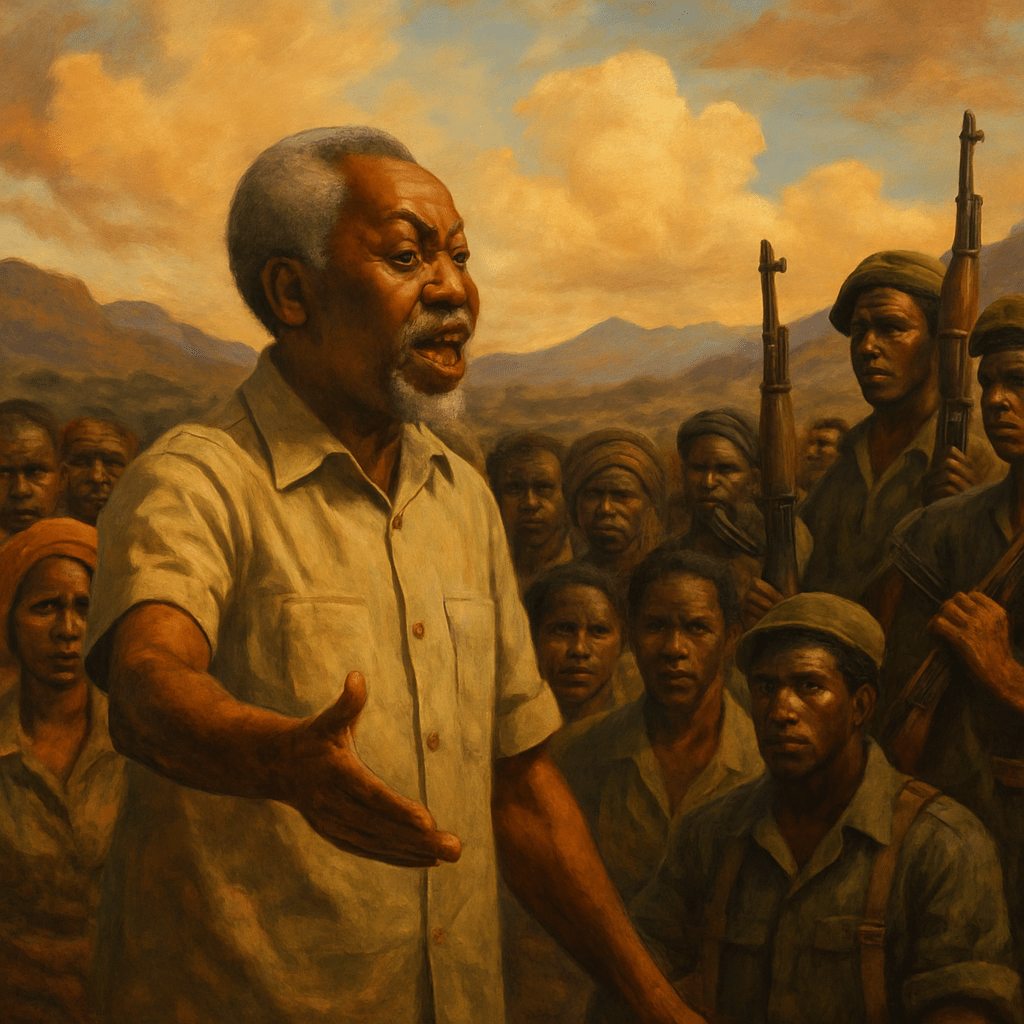
Julius Nyerere: The Teacher Who Tried to Liberate Africa Without Selling It
“Capitalism means that the masses will work, and a few people—the capitalists—will benefit. Socialism means that the people will work for the benefit of the people.”
The Educator-in-Chief of African Socialism
Julius Nyerere didn’t seize power with a gun or inherit it through lineage. He was a schoolteacher who believed that liberation wasn’t just about removing colonial flags but about dismantling the structures that kept Africa subjugated. He envisioned a socialism rooted in African traditions—ujamaa or “familyhood”—emphasizing communal living and mutual aid.
While others chased foreign aid and neoliberal dreams, Nyerere focused on self-reliance. He nationalized key industries, promoted education, and sought to build a society where wealth wasn’t concentrated in the hands of a few. His Arusha Declaration in 1967 laid out this vision, emphasizing equality, dignity, and collective ownership.
Part I: The Making of Mwalimu
Born in 1922 in British-ruled Tanganyika, Nyerere was educated in colonial schools but remained critical of their intent to produce subservient subjects. He pursued higher education in Edinburgh, becoming one of the few Africans of his time to study abroad. Upon returning, he founded the Tanganyika African National Union (TANU), leading the country to independence in 1961.
Unlike many post-colonial leaders who became mere replacements for colonial rulers, Nyerere sought genuine transformation. He believed that political independence without economic liberation was hollow. His policies aimed to redistribute wealth, promote education, and reduce reliance on former colonial powers.
Part II: Ujamaa—Socialism the African Way
Nyerere’s vision of ujamaa was not a copy of Soviet or Chinese models. It was an attempt to adapt socialist principles to African realities. He emphasized collective agriculture, nationalized major industries, and prioritized education and healthcare. The goal was to create a self-reliant nation where resources benefited all, not just a privileged few.
However, implementing ujamaa faced challenges. Resistance from traditional leaders, logistical issues, and external pressures strained the system. Despite setbacks, Nyerere remained committed to his ideals, believing that true development couldn’t be imported but had to be built from within.
Part III: Tanzania as a Liberation Base—Revolutionary Solidarity in Action
Nyerere’s commitment to liberation extended beyond Tanzania’s borders. He transformed the country into a sanctuary for African liberation movements. Groups like FRELIMO (Mozambique), ANC (South Africa), and SWAPO (Namibia) found refuge and support in Tanzania.
Training camps, such as the one in Kongwa, were established to prepare fighters. Nyerere provided not just moral support but tangible resources, understanding that the liberation of one African nation was tied to the freedom of all.
Nyerere’s Flame Still Burns
Julius Nyerere wasn’t without flaws. His policies faced criticism, and some initiatives didn’t achieve their intended outcomes. However, his unwavering commitment to justice, equality, and African unity set him apart. He stepped down voluntarily in 1985, a rarity among leaders, and continued to advocate for Pan-Africanism and social justice until his death in 1999.
In an era where many leaders prioritize personal gain over public good, Nyerere’s legacy serves as a beacon. He demonstrated that leadership rooted in humility, vision, and genuine care for the people is not only possible but essential for true liberation.
 Weaponized Information
Leave a comment